~ Montenegro day trip ~
We decided to do something a little bit out of the box with one of our days in Dubrovnik, take a day tour to minuscule Montenegro! We had heard lots of good things recently from people who had been – majestic mountains, breathtaking beaches, spectacular scenery and larger-than-life locals. We knew that we wouldn’t be able to see most of it, but we were excited to see a snapshot of what Montenegro had to offer! Up bright and early to catch our mini-van transfer, we met our tour guide and driver (many questions were raised throughout the day about their relationship) and our tour mates (who really didn’t speak at all throughout the whole day..a little strange) and we were on our way!
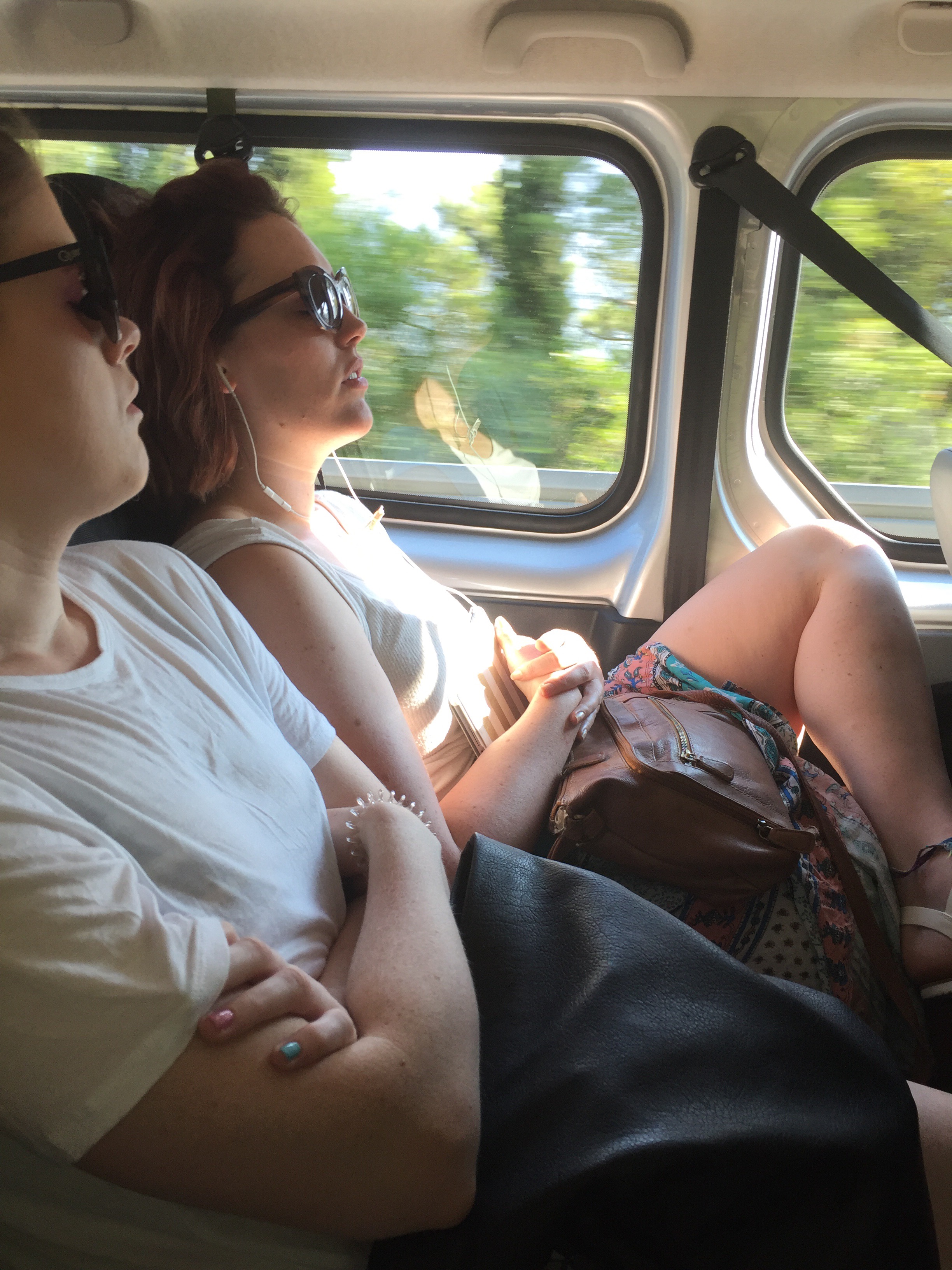
Our trip started relaxing (and trying very hard not to nap) in the van, and taking in the views of the beautiful Župa Dubrovacka valley and the Konavle region as we approached the border to Montenegro. Our guide told us some stories about some of the little islands we past on our drive including a botanical garden island which mostly consists of a national park and a quarantine island where they used to make sailers stay for 40 days before they could come to mainland Croatia to ensure no diseases were spread.
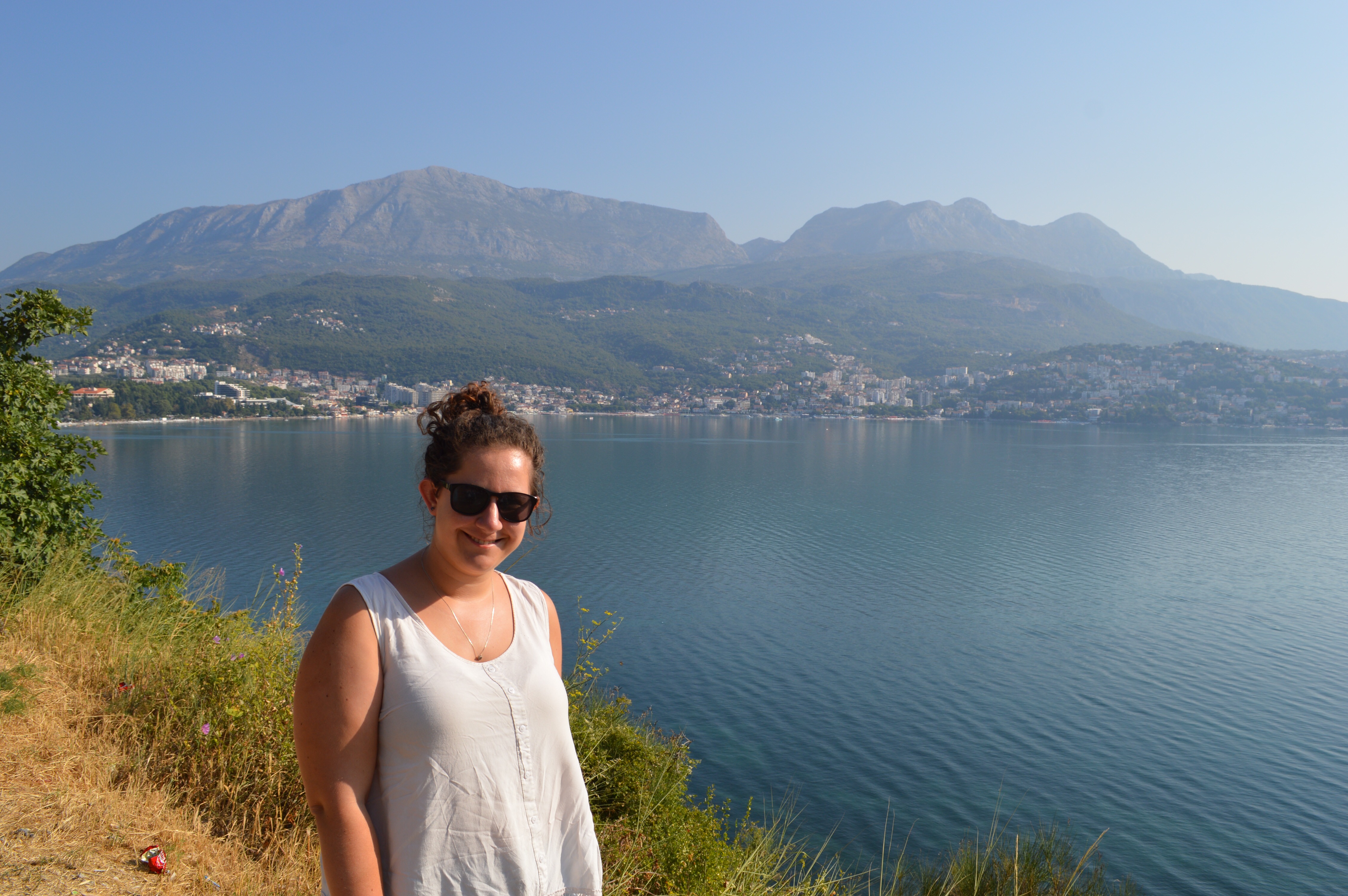
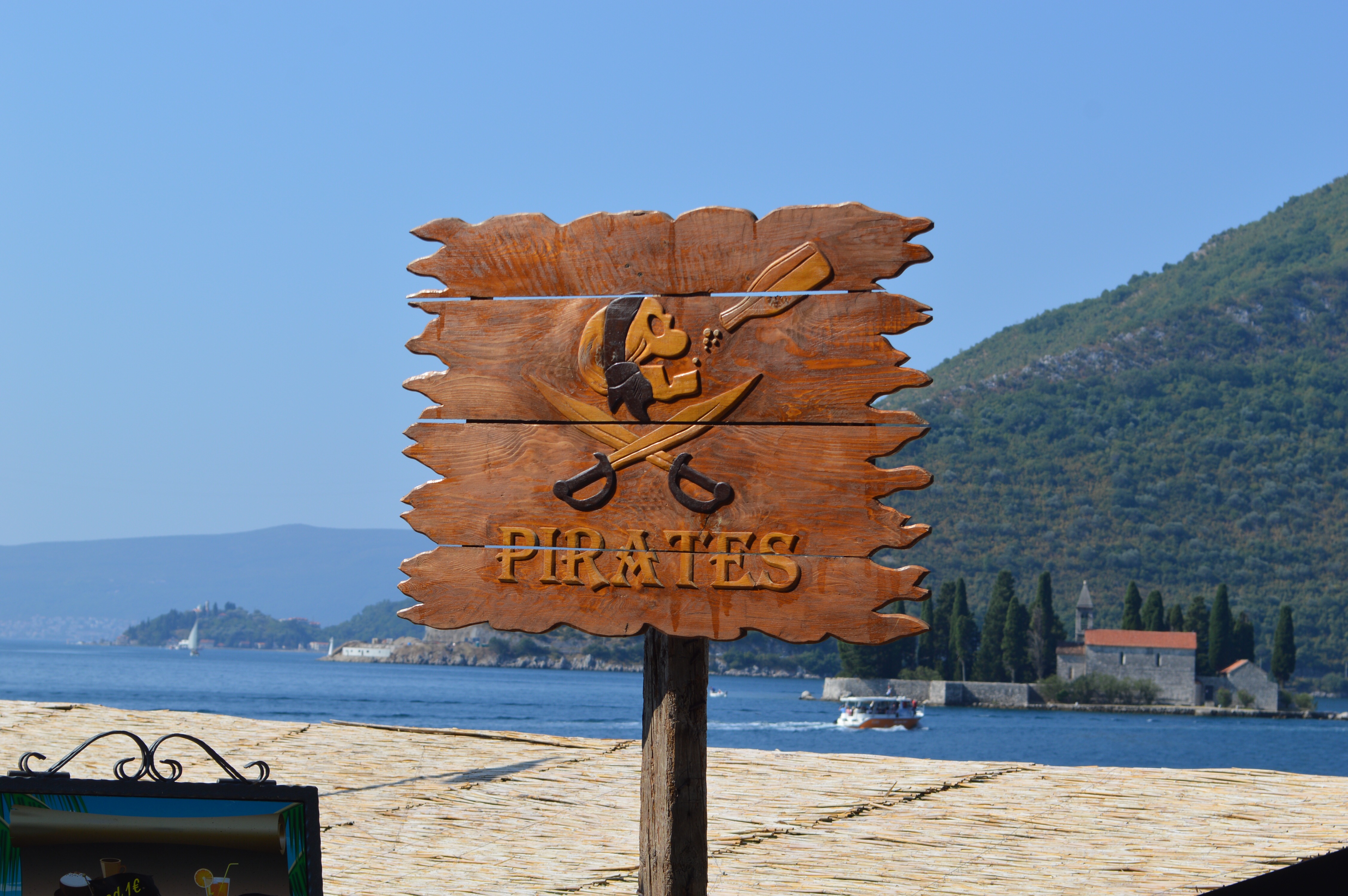
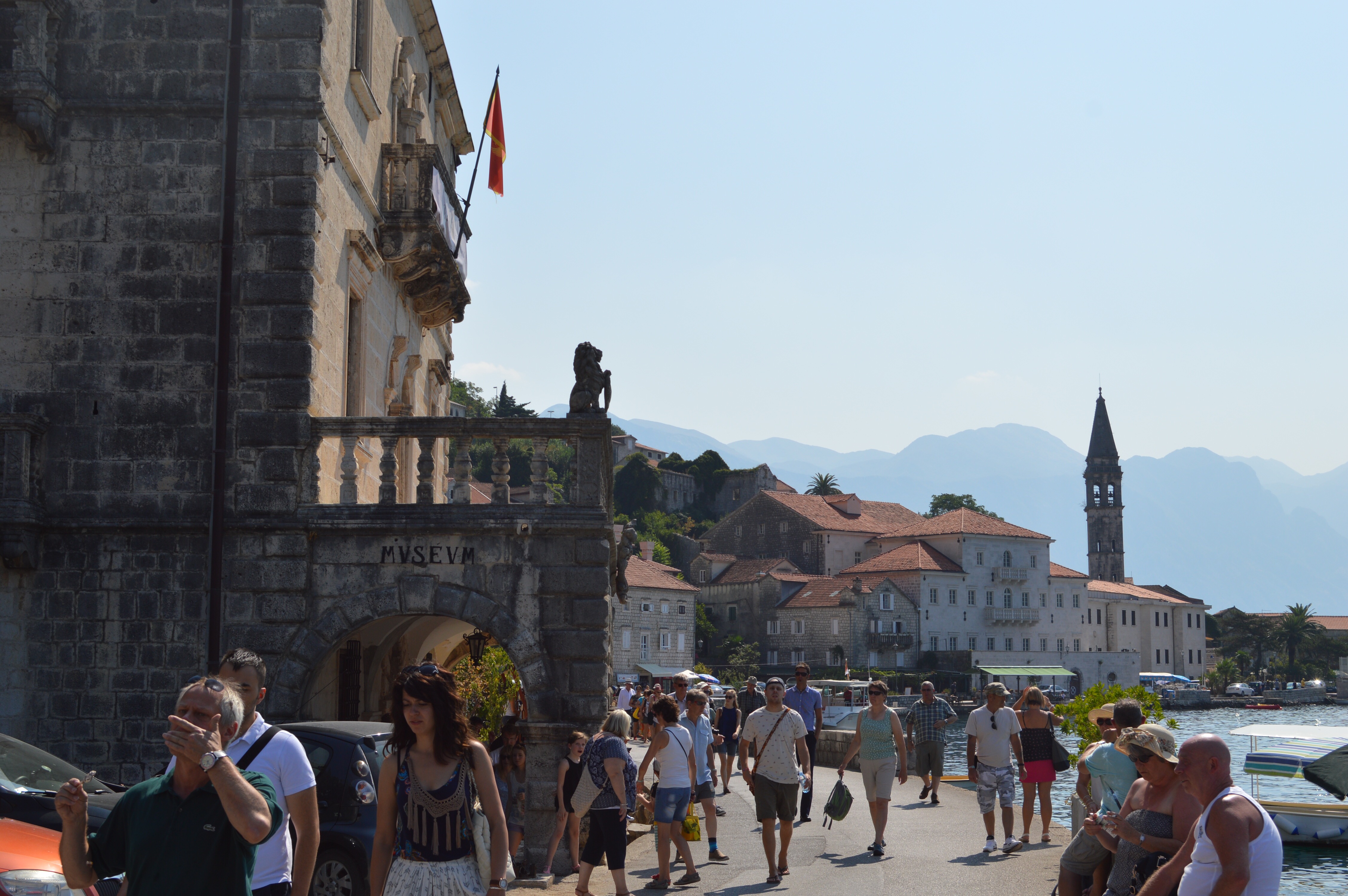
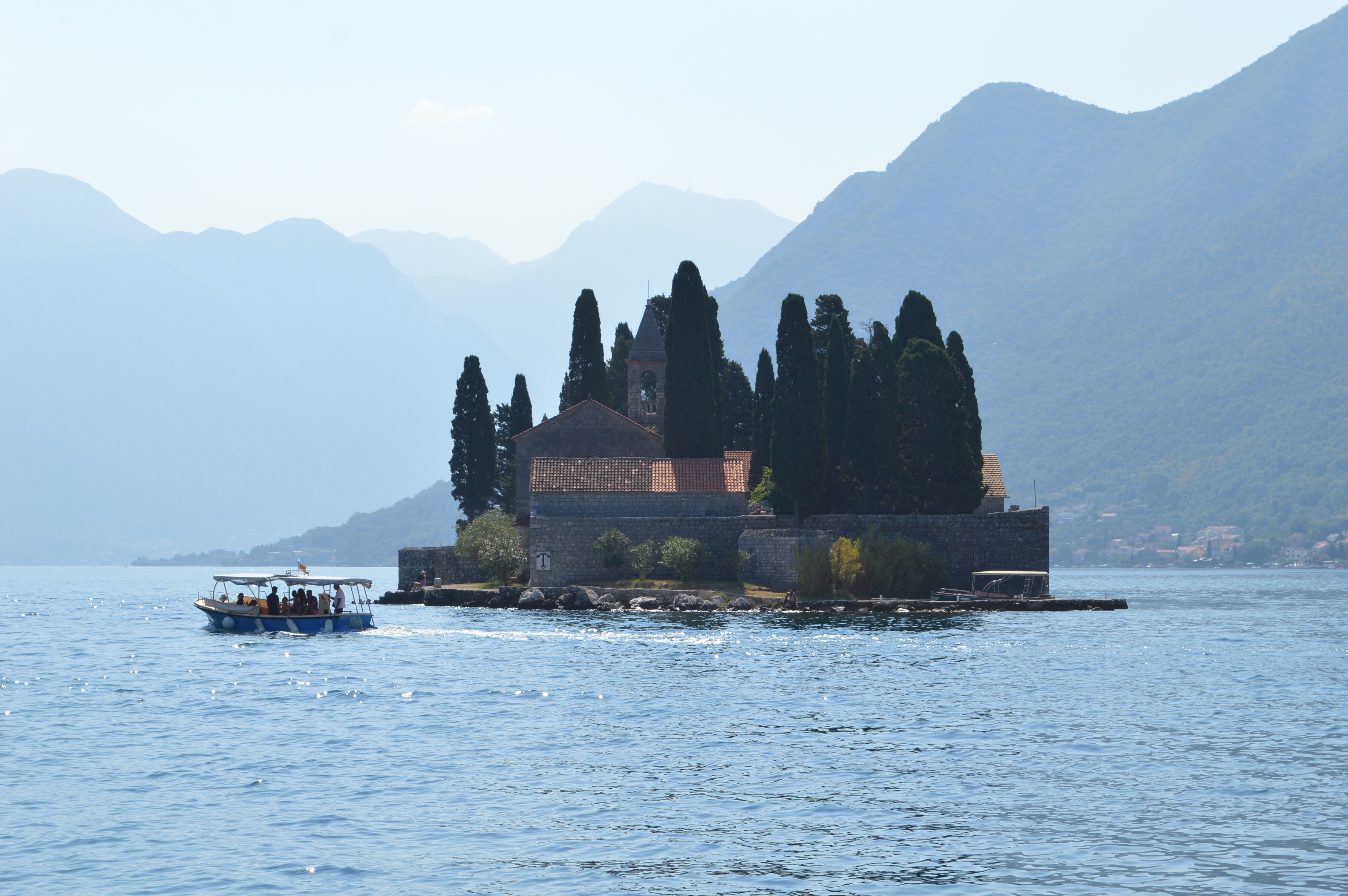
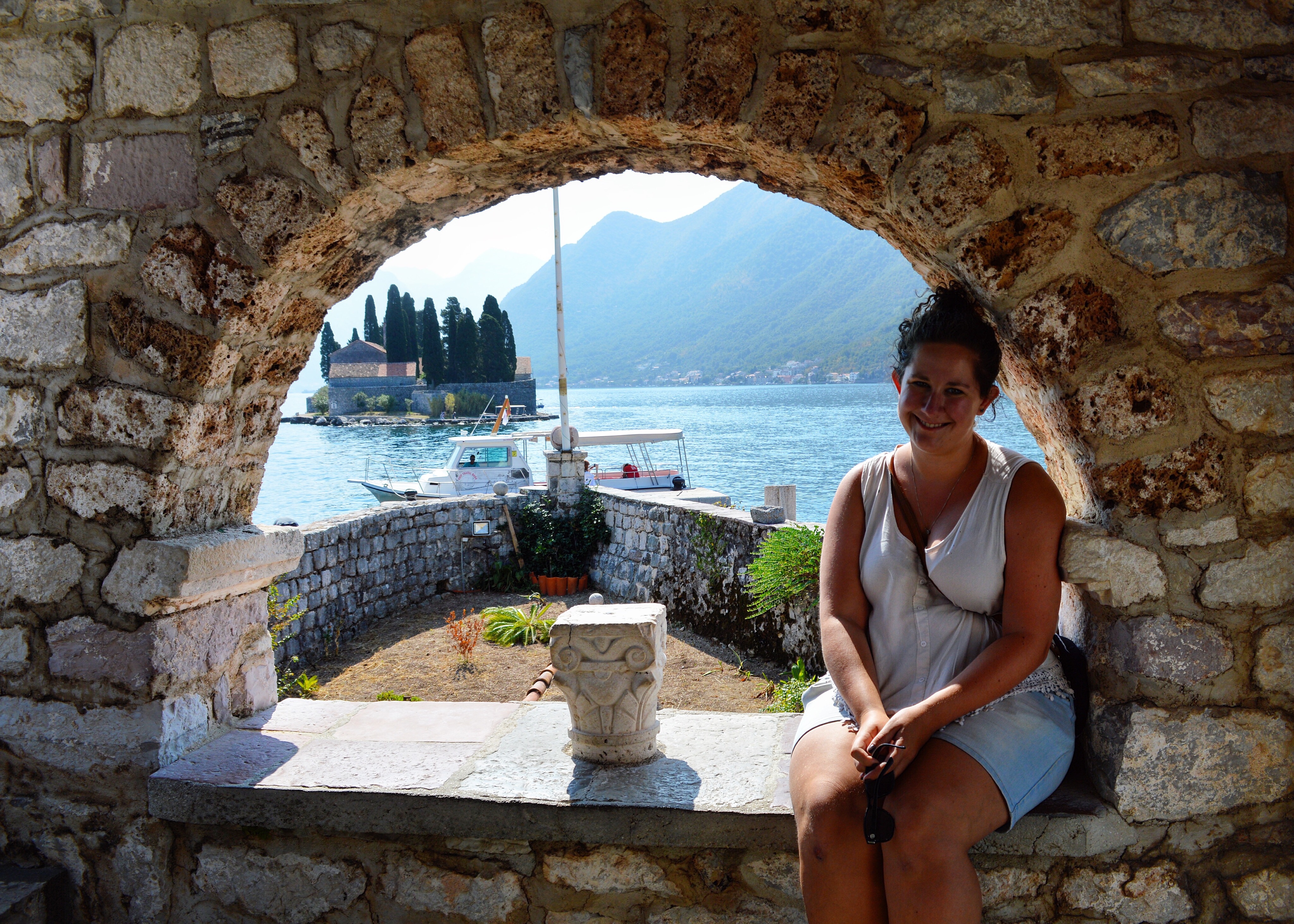
The boarder crossing occurred without a hitch and the picturesque views continued. Our first stop was the charming Persat – a tiny, old, waterfront town on the Bay of Kotor that used to be a rich and powerful place. Despite only one main street, our guide told us there are still 16 churches and 17 formerly grand palazzos one could explore. Persat looked like an adorable place, with some of the towns buildings in ruins sprouting vines and wild figs and others were new/renovated. However, we did not really get a chance to wander around Persat as its most famous landmarks aren’t on land at all, but are the peculiarly picturesque islets of St. George and Our Lady of the Rocks.
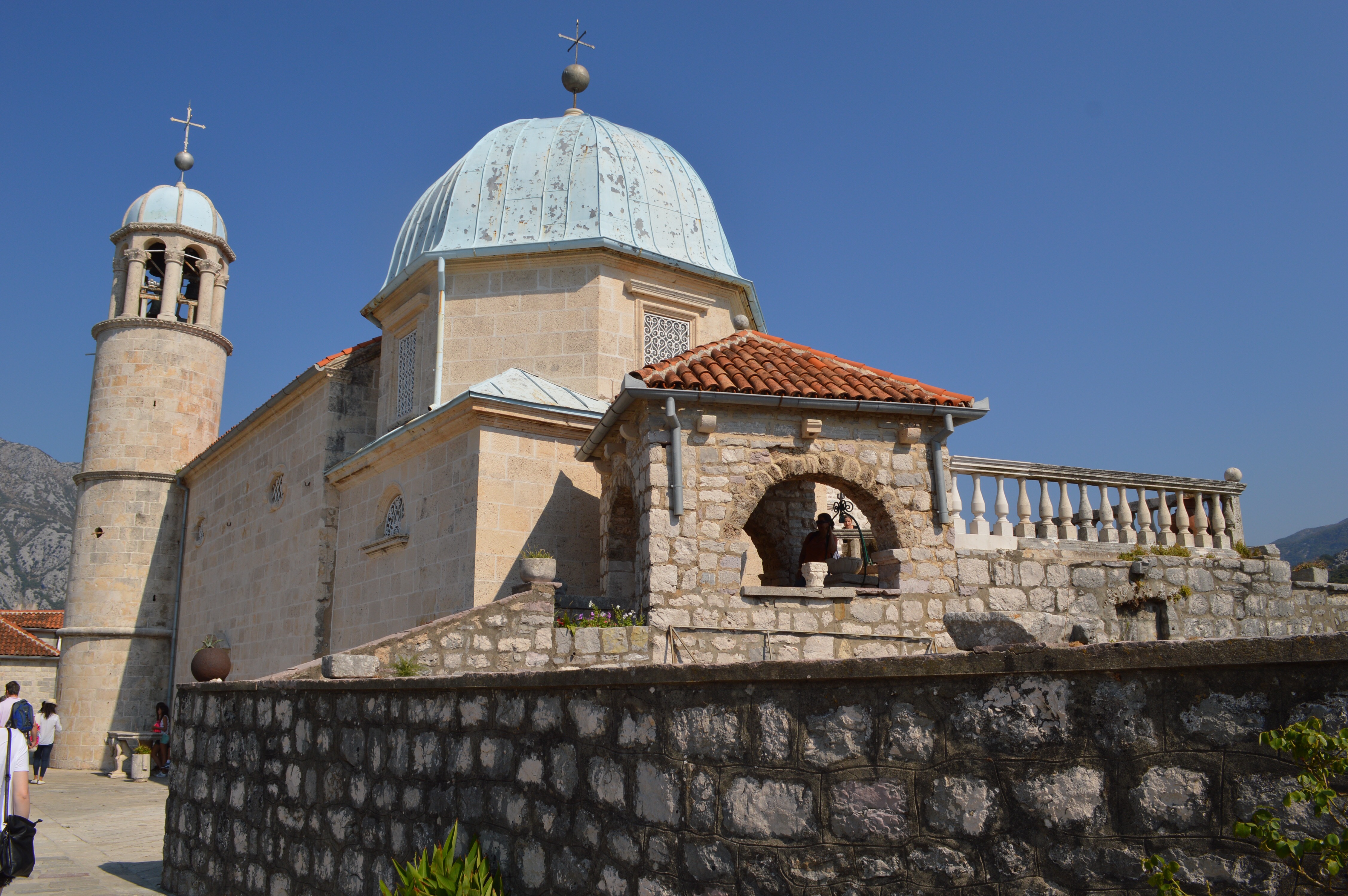
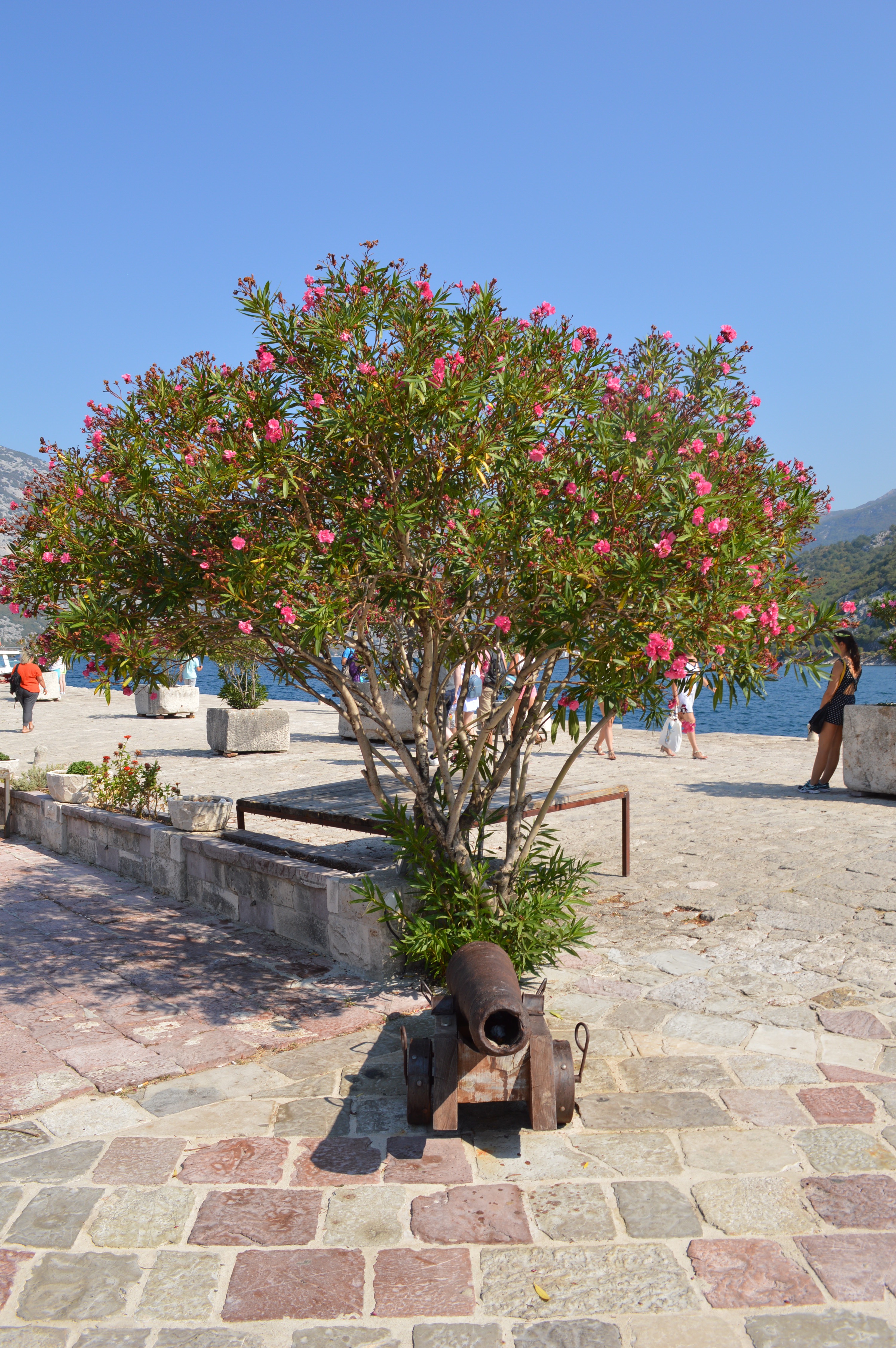
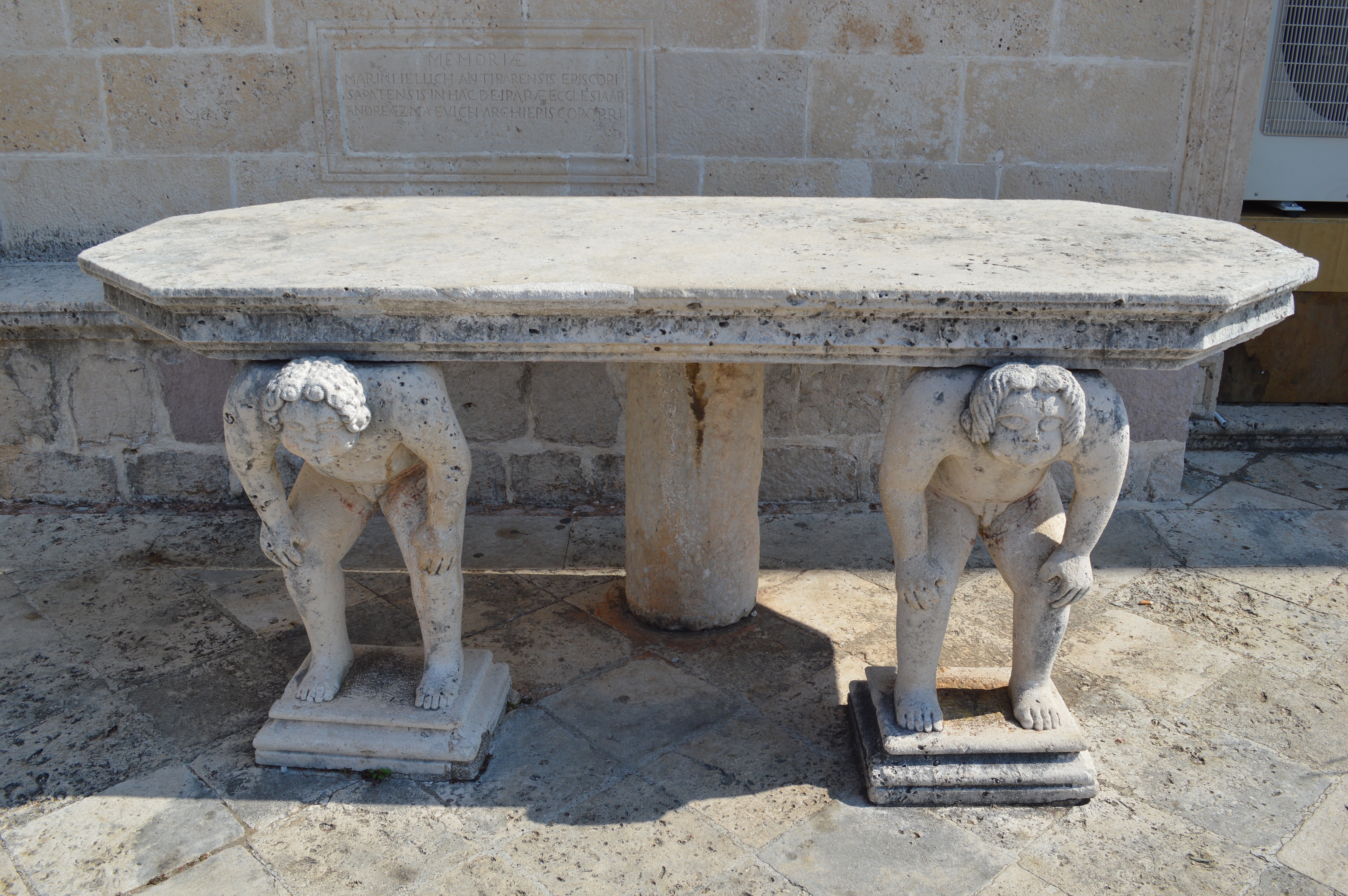
We jumped on a little boat and took off towards Our Lady of the Rocks (about a 5 minute trip). It is an artificial island built by fisherman who would sink old and seized ships loaded with rocks. According to a legend, the islet was made over centuries to house a church, in order to keep an ancient oath local fishermen made when they found the icon of Madonna and Child on a rock in the sea after being shipwrecked. The church is now dedicated to the Holly Mother of God, protector of sailors and fishermen. The entire point of going to the islet was to visit the 17th-century Baroque-style church and the museum attached (it’s most famous pieces being artwork by a local artist and an embroidery made over 30 years by a woman from Kotor out of golden and silver fibers as well as her own hair!), but unfortunately because of the amount of tours trying to get in we couldn’t in our time frame. This was very frustrating and seemed utterly ridiculous but we did have a nice time walking around the islet instead.
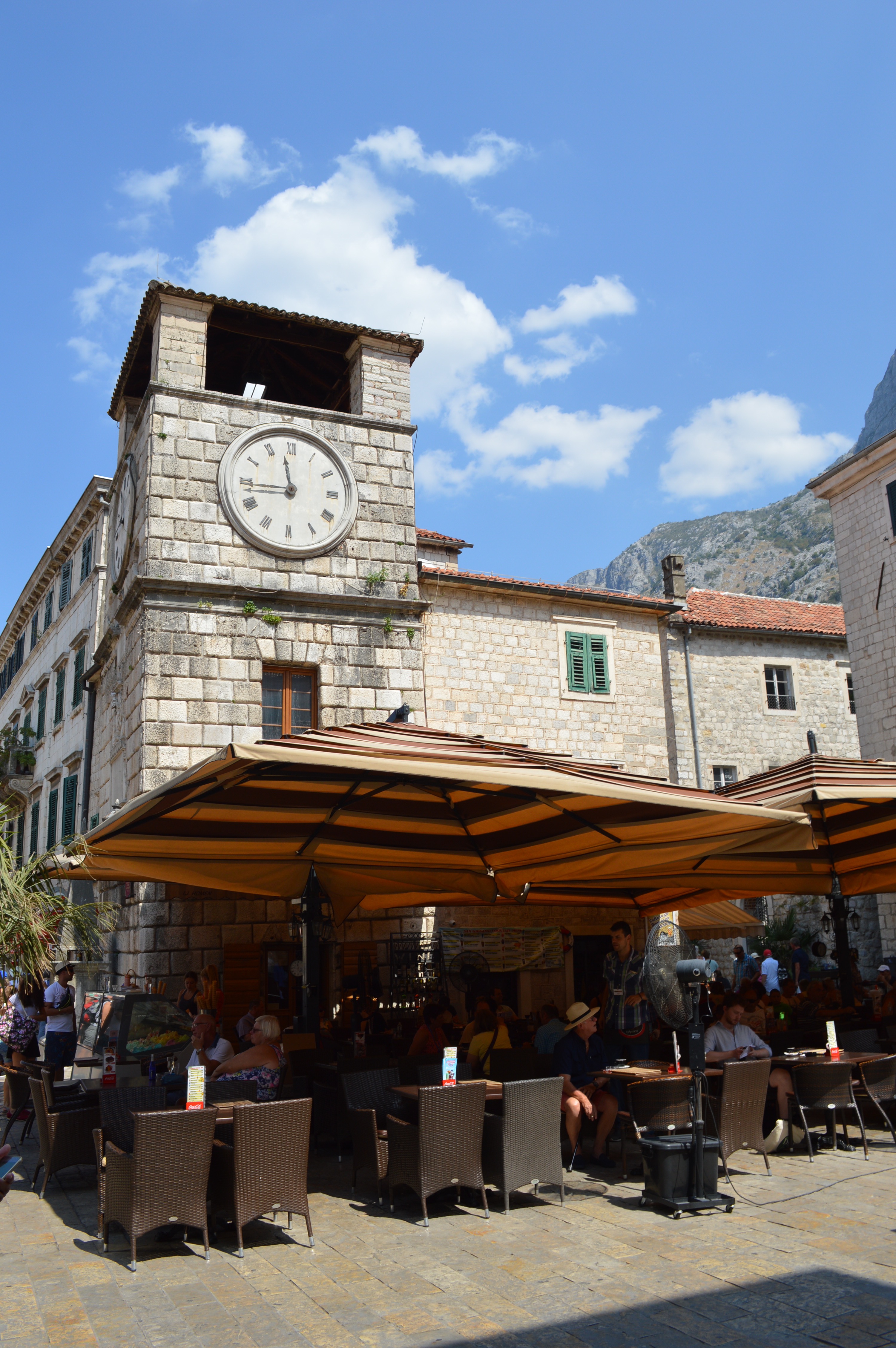
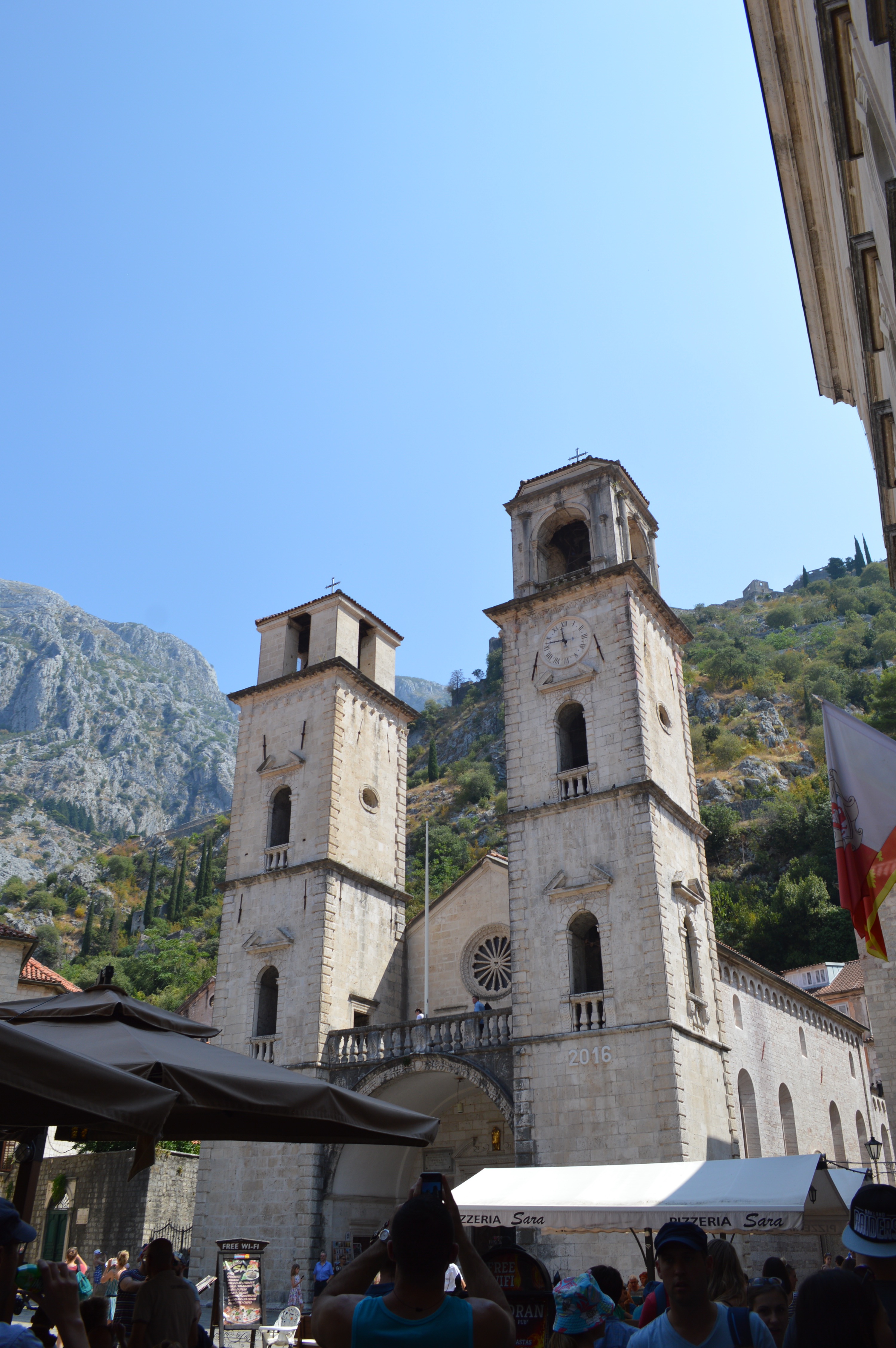
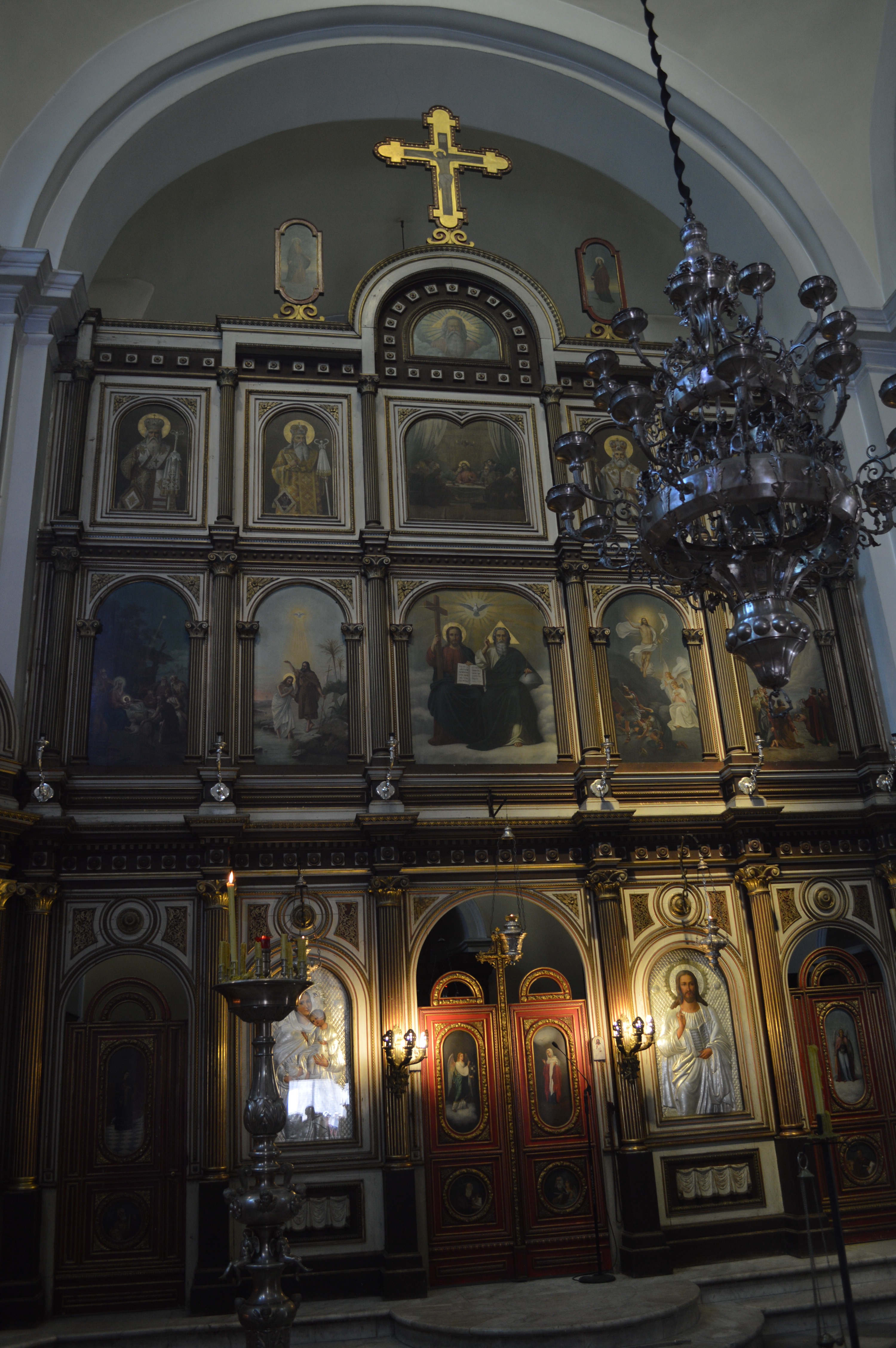
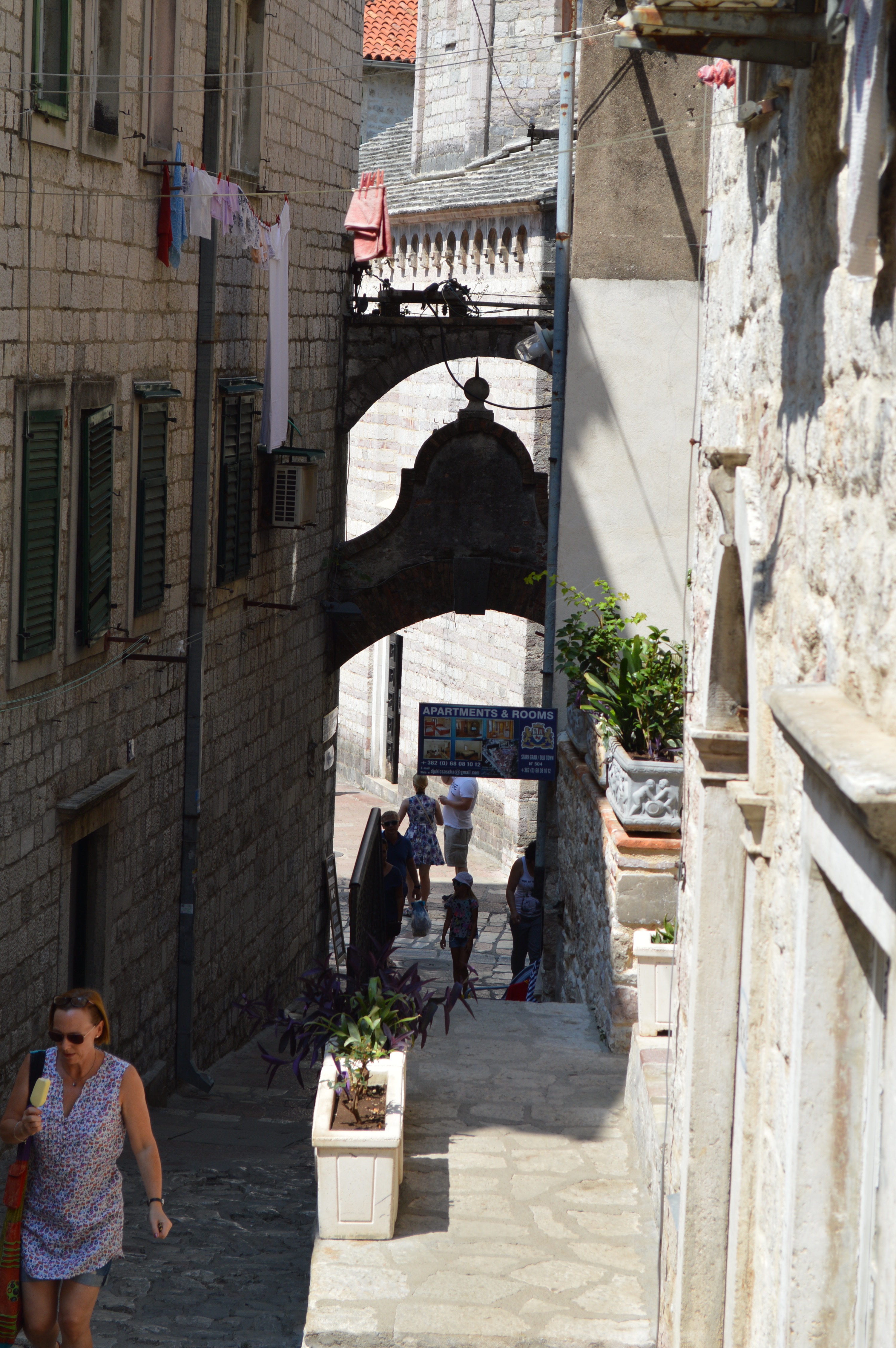
We hopped back in the minivan and continued our scenic drive to Kotor. Wedged between brooding mountains with limestone cliffs and a corner of the Adriatic Sea bay, Kotor is called a ria, a submerged river canyon. We parked in the modern part of town and walked the short distance to meet our local tour guide just outside the fortifications of the old town. Our guide was very nice and well informed. He took us around the Middle-Ages maze of museums, churches, cafe-strewn squares and Venetian palaces. He took us inside St. Nicholas, a Serbian Orthodox Church, which is one of the more recently built churches, built in 1909. Our tour finished up near the entrance to the old city walls. Kotor’s fortifications started to head up St John’s Mountain in the 9th century and were completed by the 14th century. The ascent totals 1200m via 1350 steps to a height of 260m above sea level; the views from up here are said to be glorious. Our guide told us we could climb them at our own risk (comforting) and that we were only allowed to climb up to the Church of our Lady of Remedy, or our Lady of Health, (about one third of the way up St John’s Mountain) because otherwise we would not make it back to the bus. He said we were lucky it was cooler weather today (36 degrees) because last week it was 47+ and no one was allowed to climb the wall…
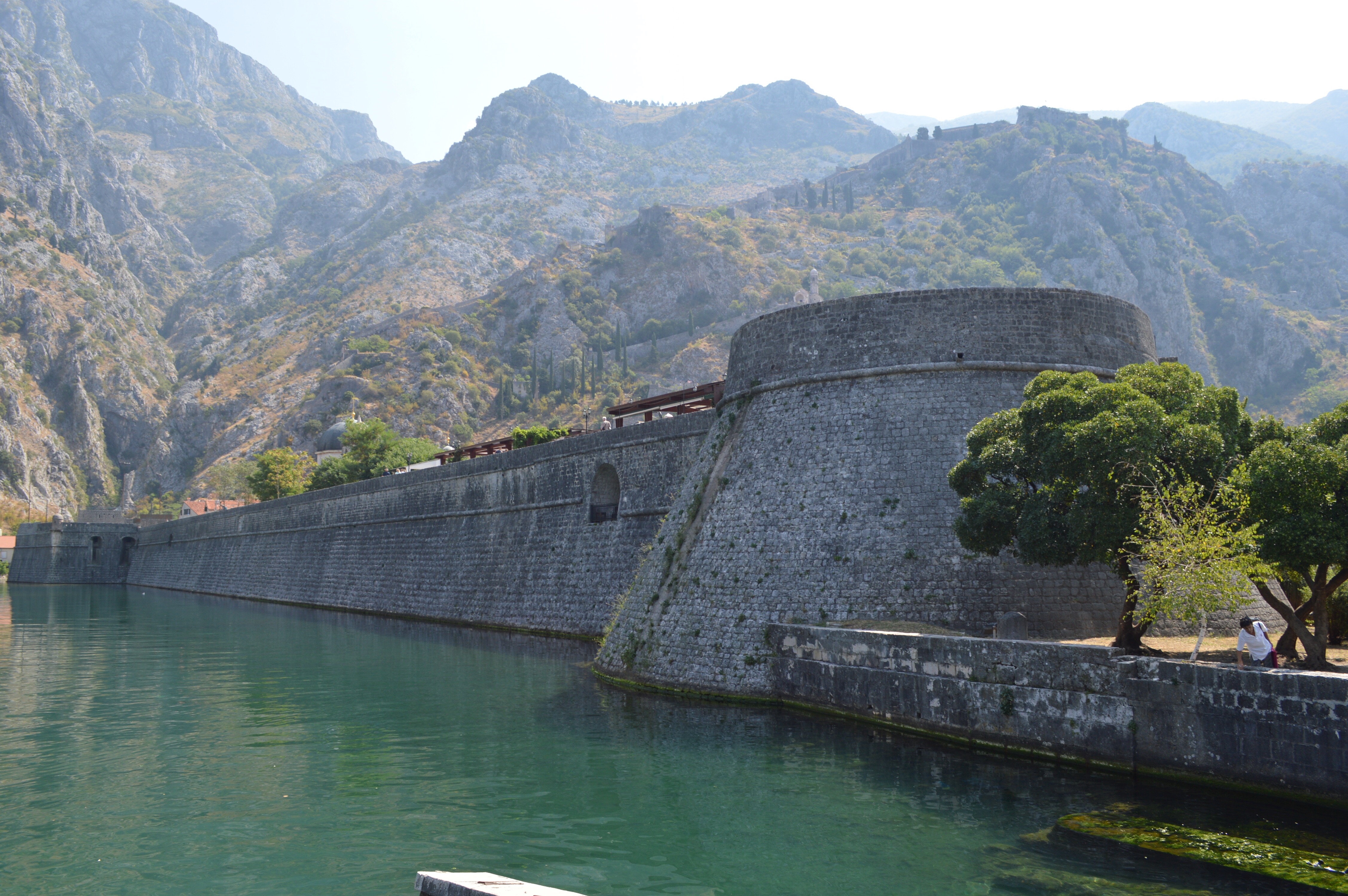
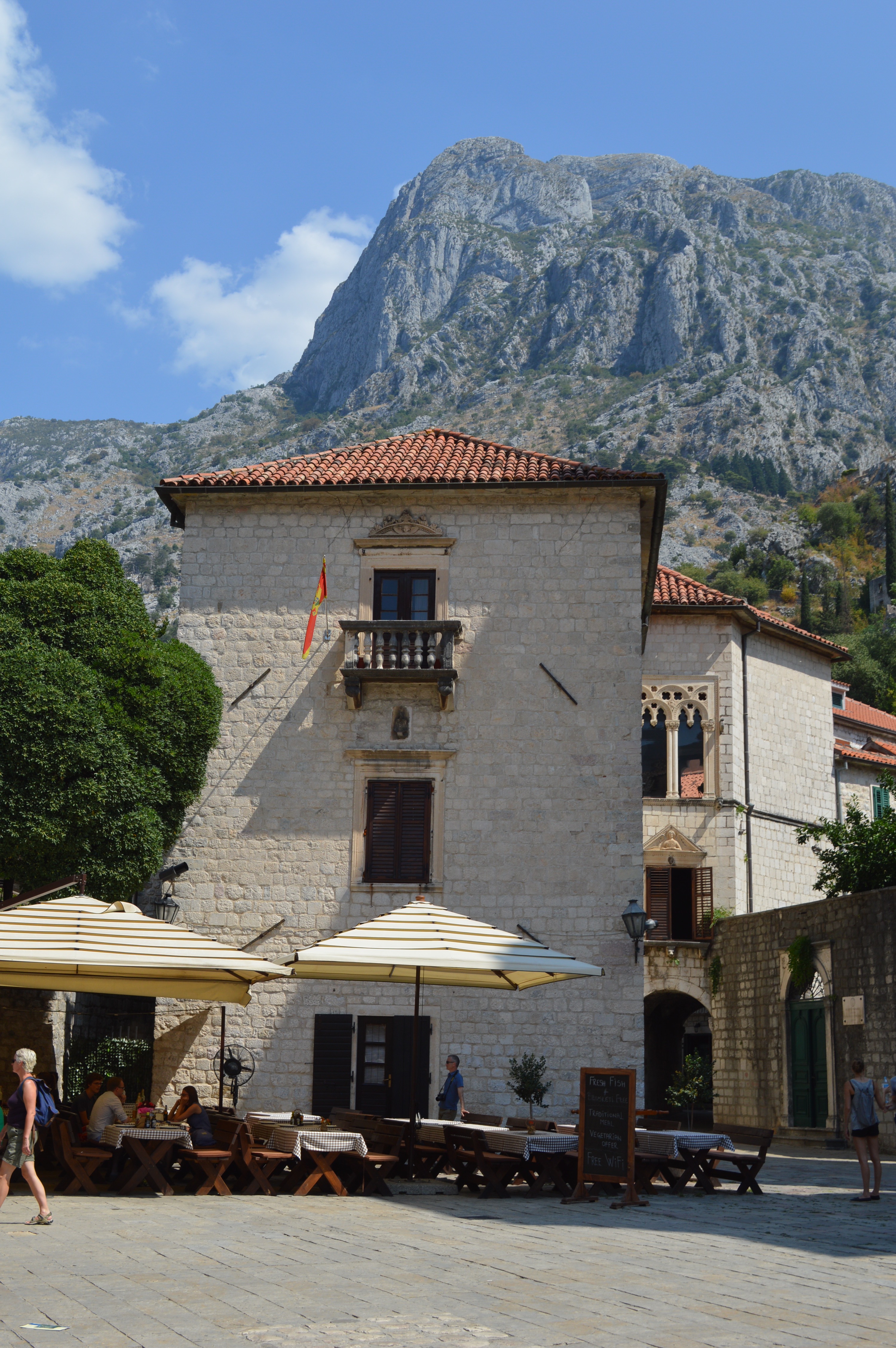
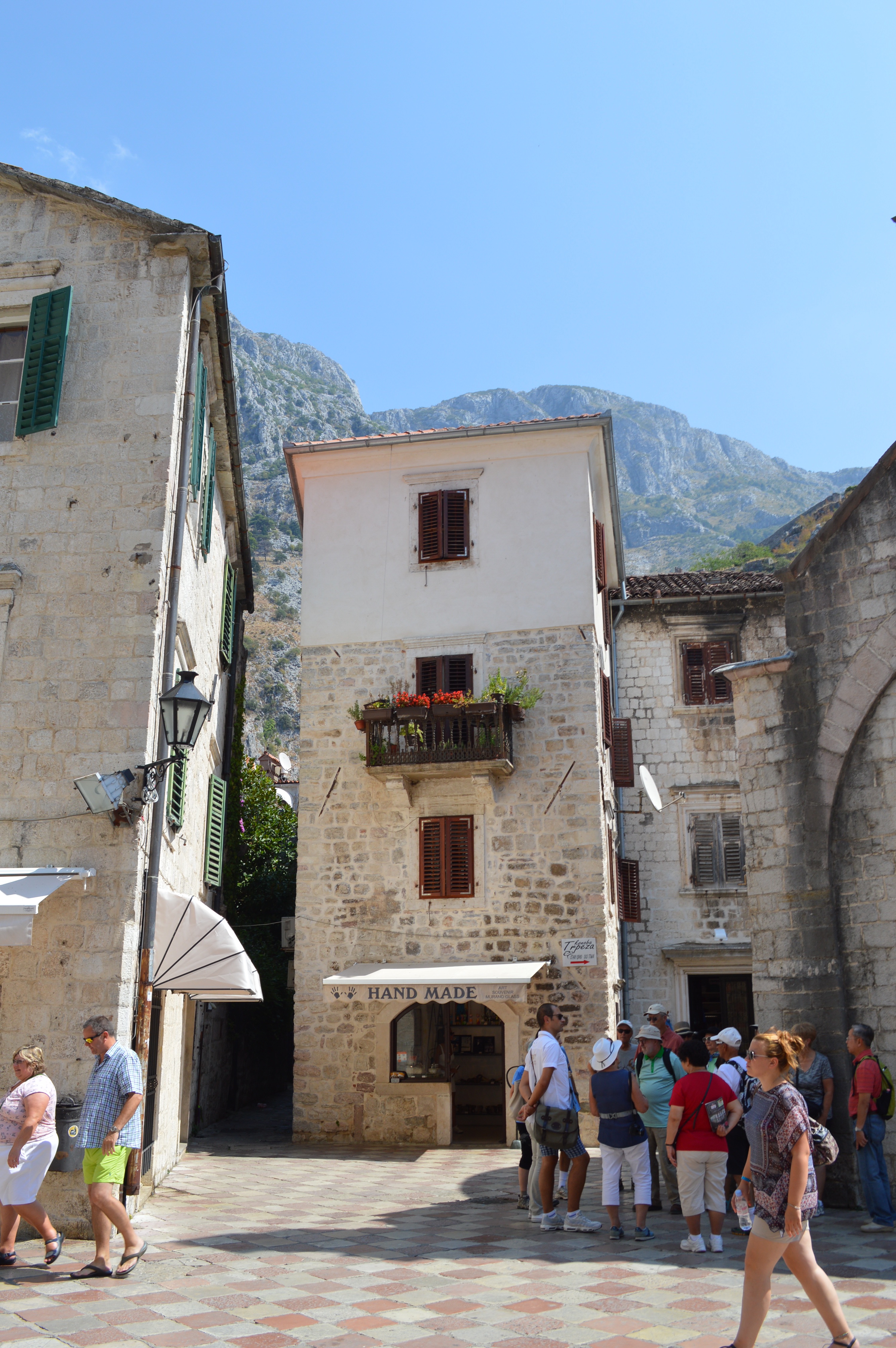
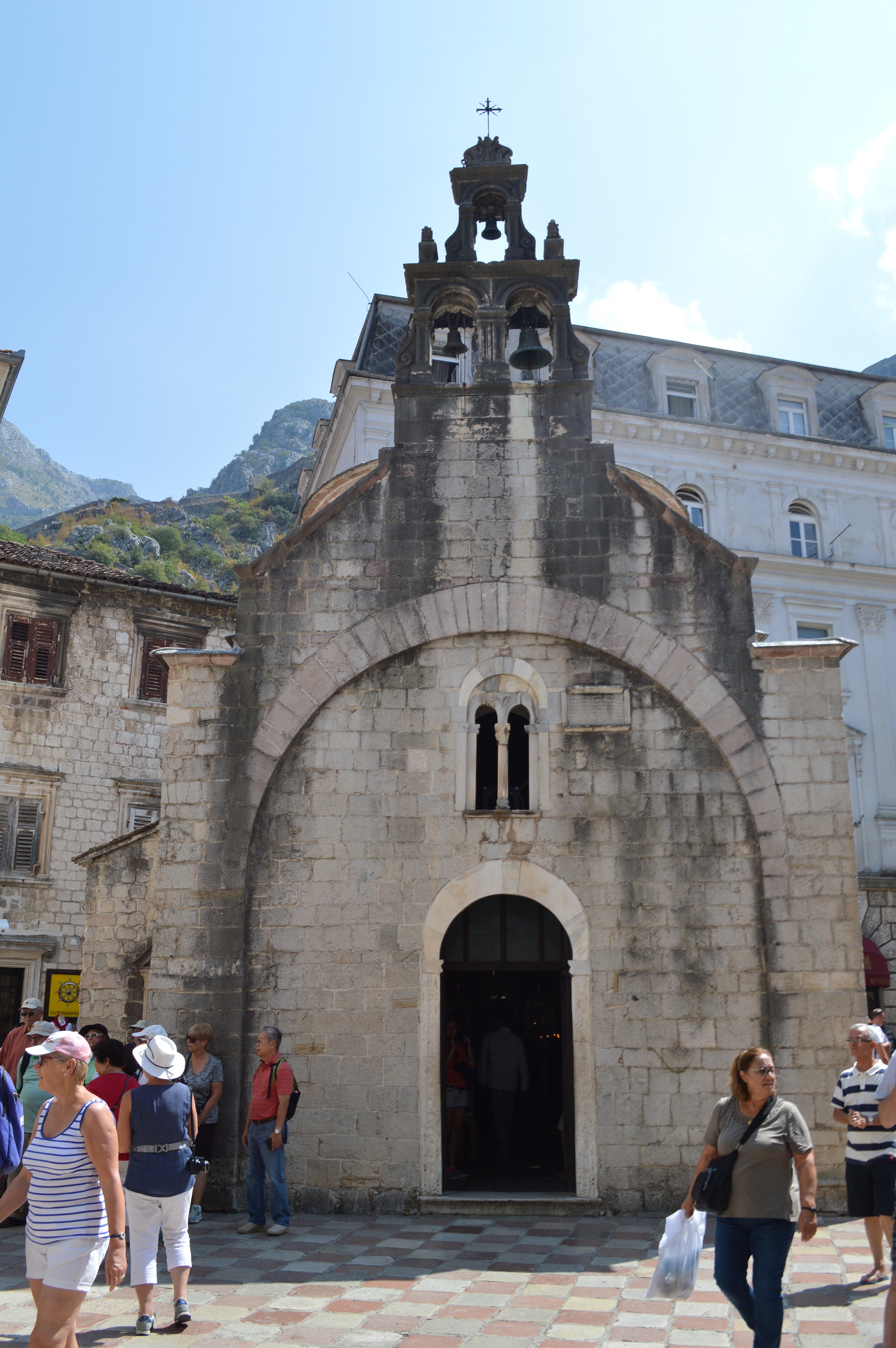
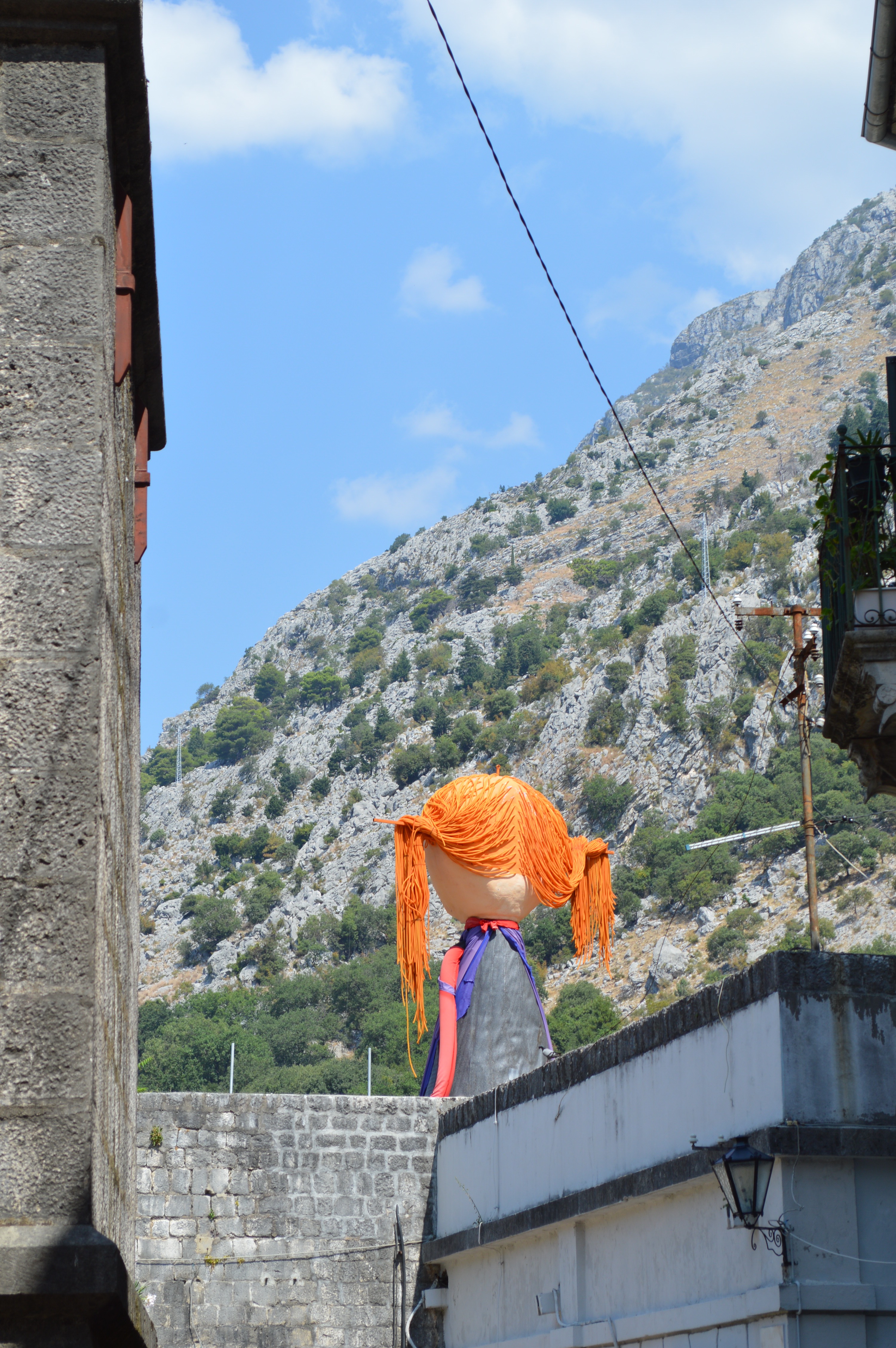
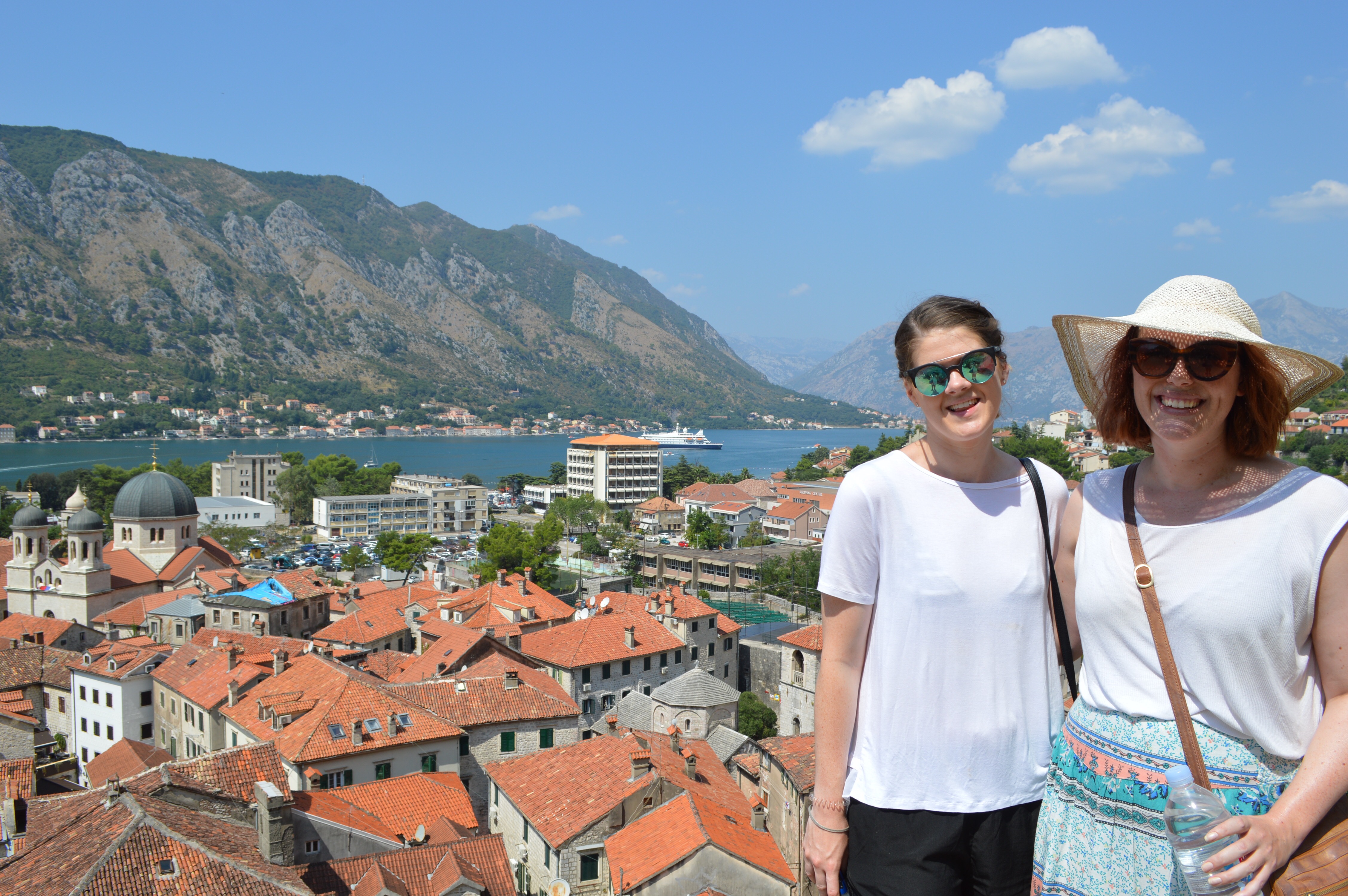
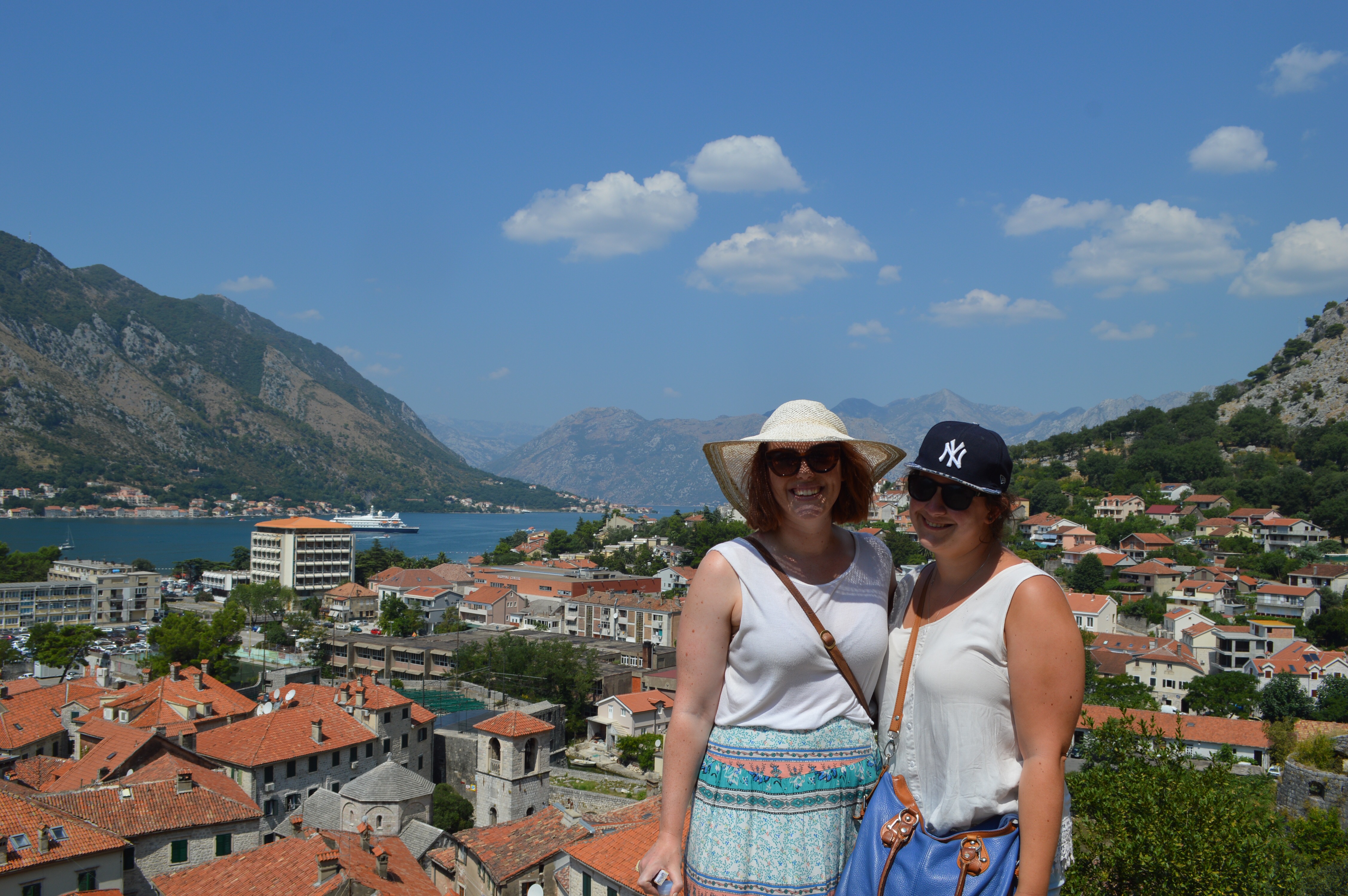
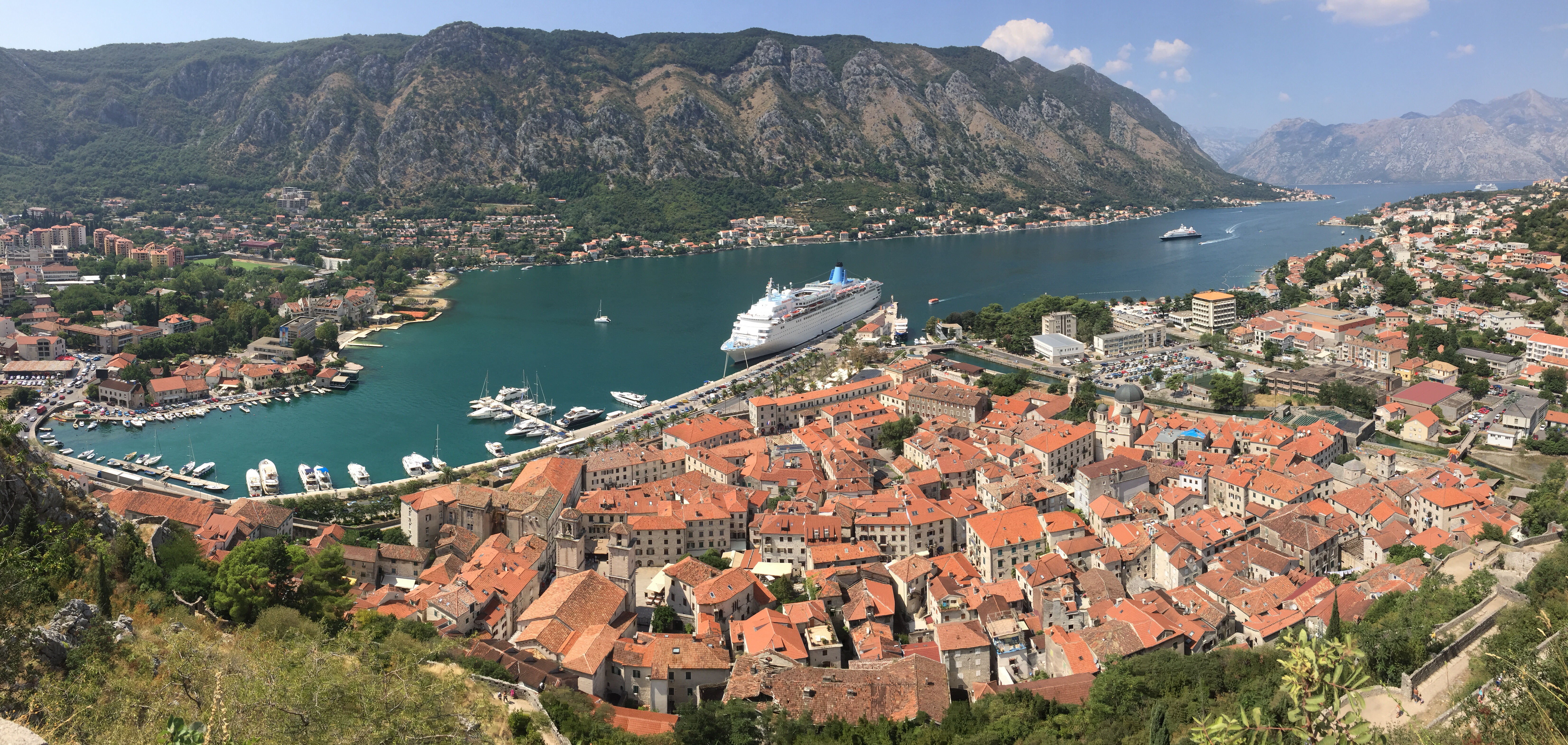
We decided to give it a crack and the ticket-seller wished us luck as we ventured up (again … comforting …). The walls varied in width as they zig-zagged on their way up the hill – in some places they were just a couple of metres wide and in others the path widened out into a terrace. The path was made up of rough cobbles so we thought the easiest place to walk would be along the steps at the side. We did have to keep jumping on and off onto the slope next to the steps though to make room for people coming down. We had seen lots of people slip on the cobbles if they tried to come down on the slope. Thankfully the views were stunning, the perfect excuse for me to stop and take some photos when my legs started protesting about the climb. The complete hike would certainly not be for the faint of heart, as the section we climbed certainly made us sweaty, and I’m glad I chose runners this morning! Once we made it to the church we stopped to catch our breath and to take in the views down onto the red roofs of Kotor below, the cruise ship in the harbour and across the whole Bay of Kotor. It was stunning and more than worth the energy expended!
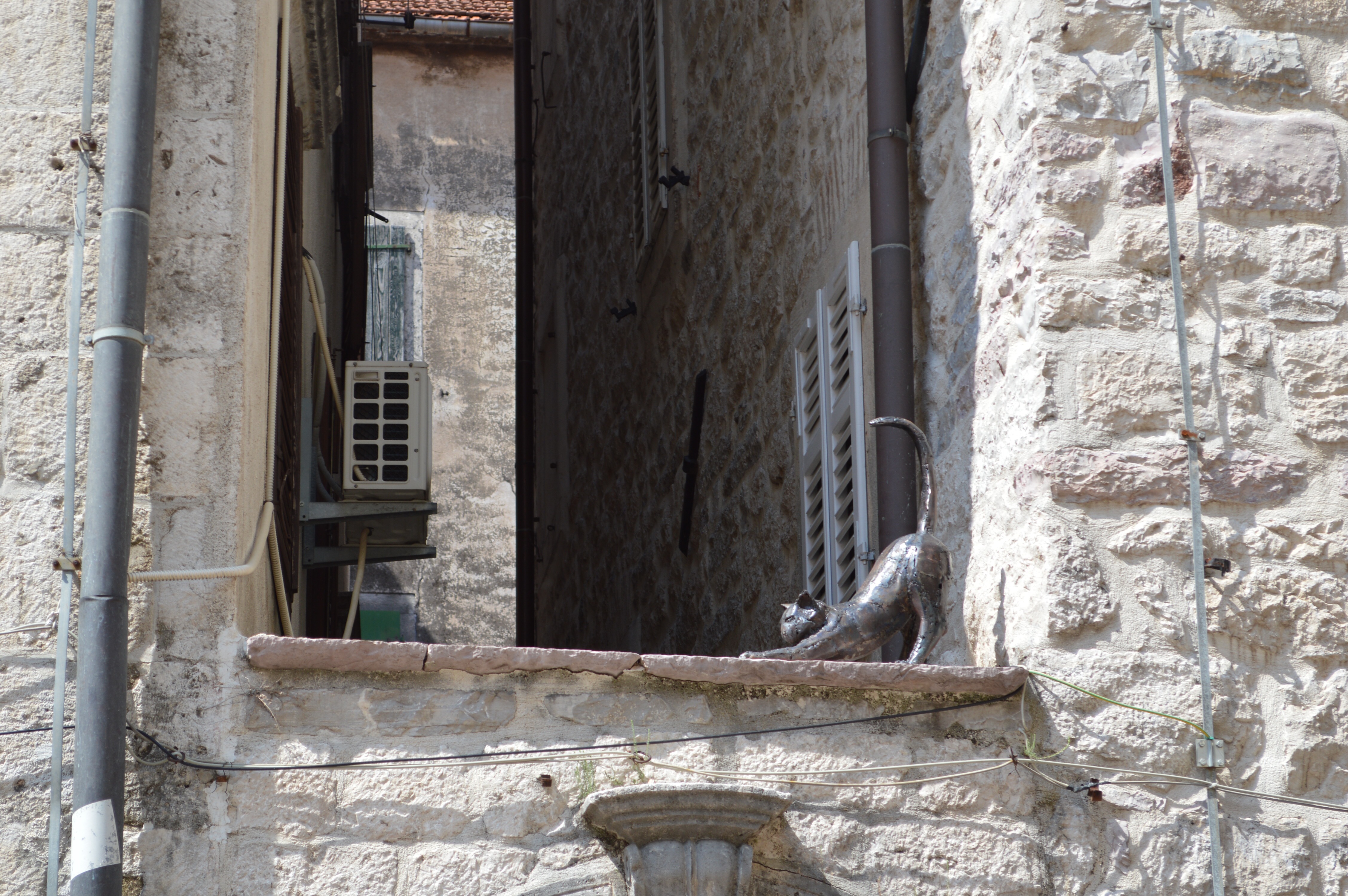
 We had a little bit of time left to explore this delightful city on our own – it seemed to be a place where the past coexists with the present; its cobblestones ring with the sound of children playing, lines of laundry flutter from wrought-iron balconies, and hundreds of cats – the descendants of seafaring felines – loll in marble laneways. The cats of Kotor are actually so ubiquitous, they’ve become a prominent symbol of the city. Some say the official symbol of Kotor! It is now certainly one of my favourite old cities.
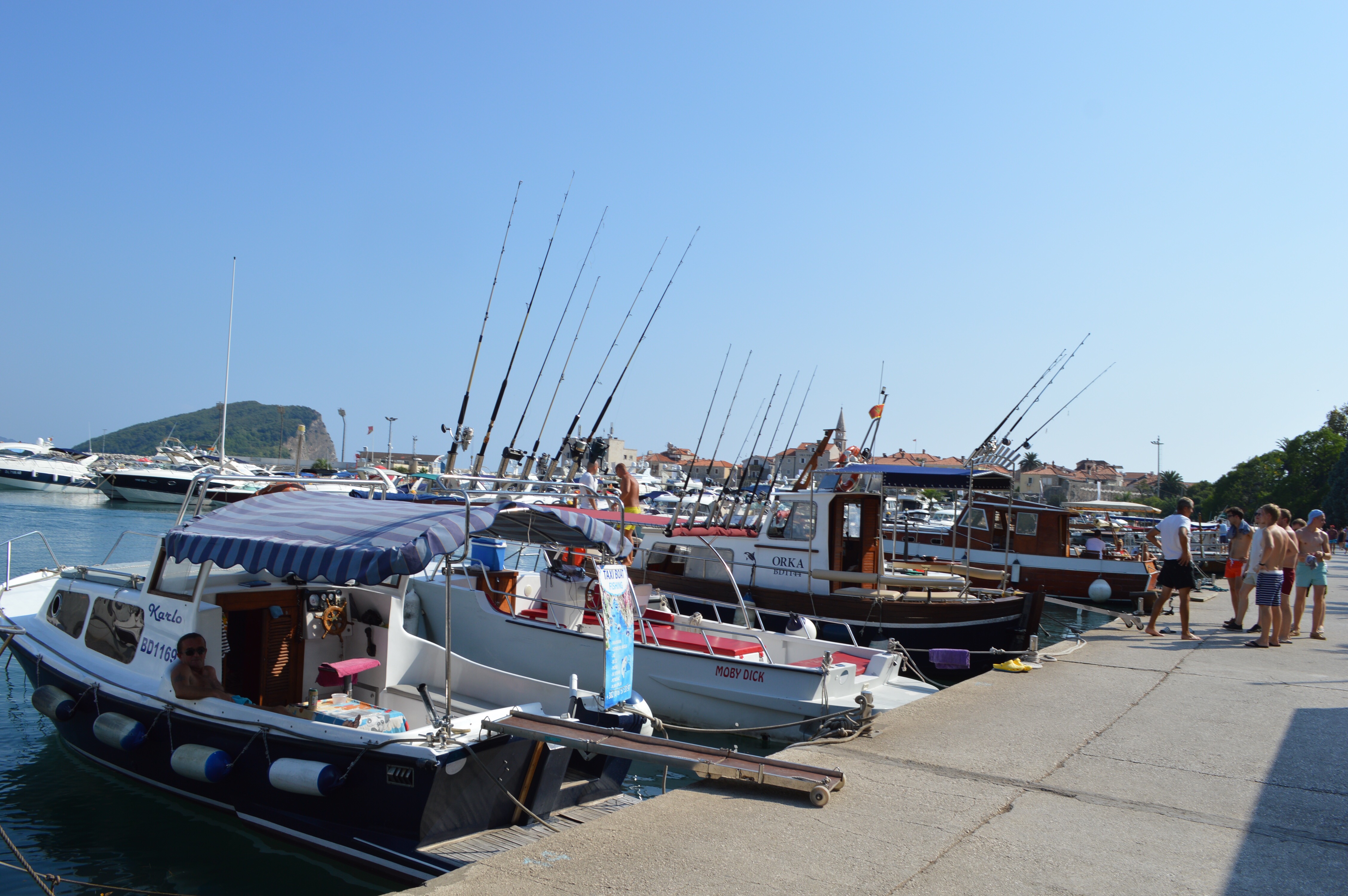
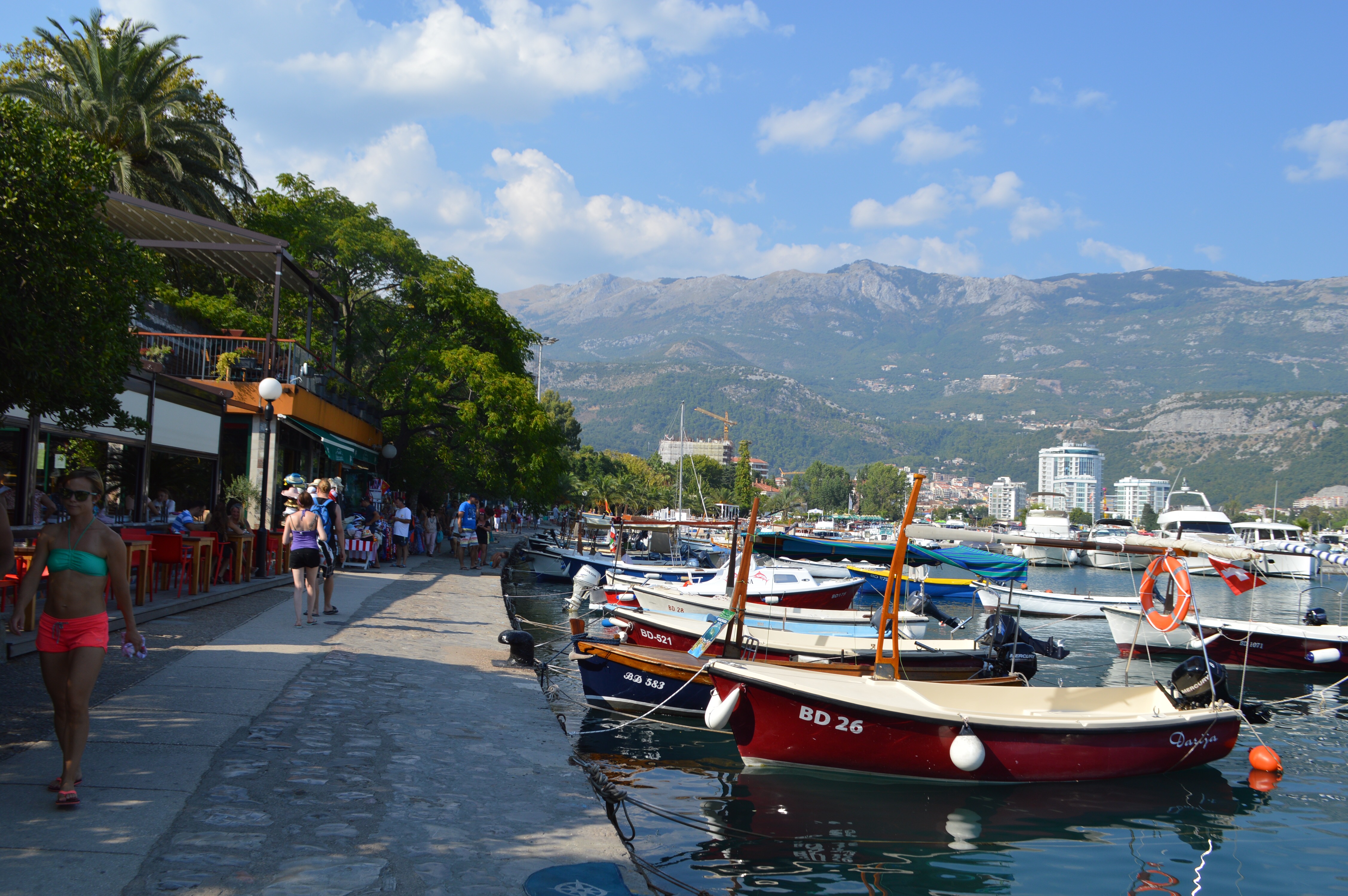
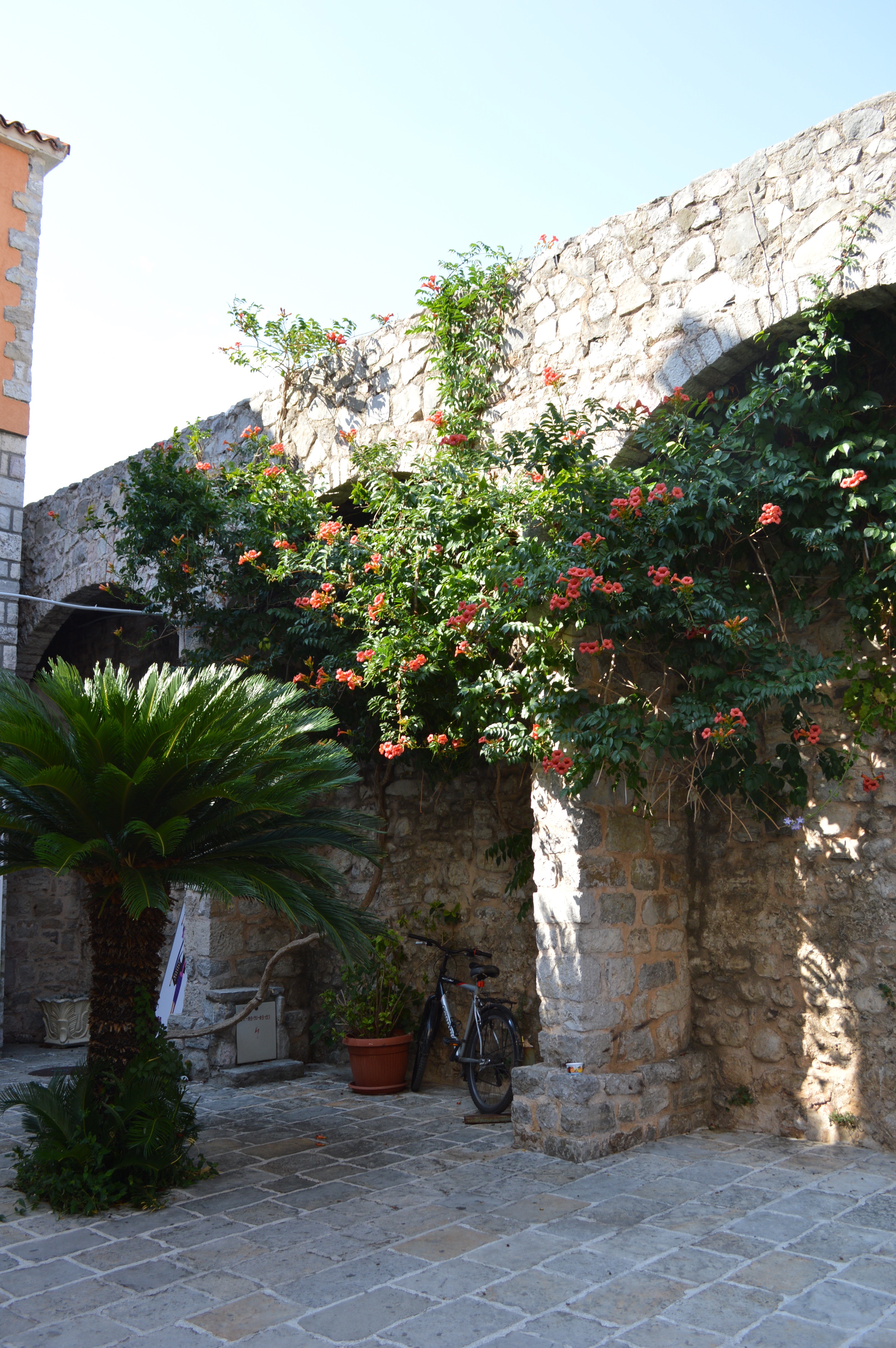
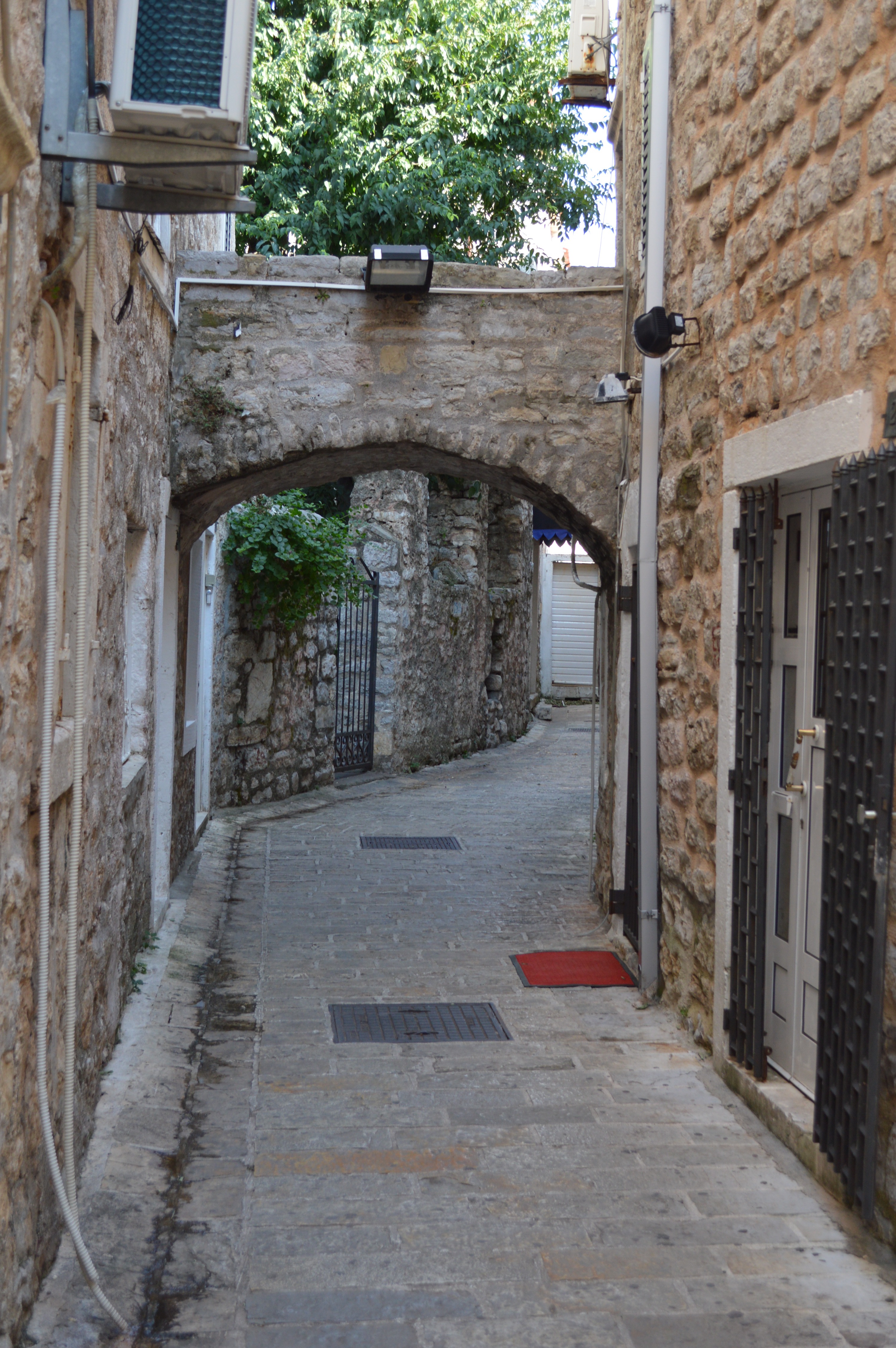
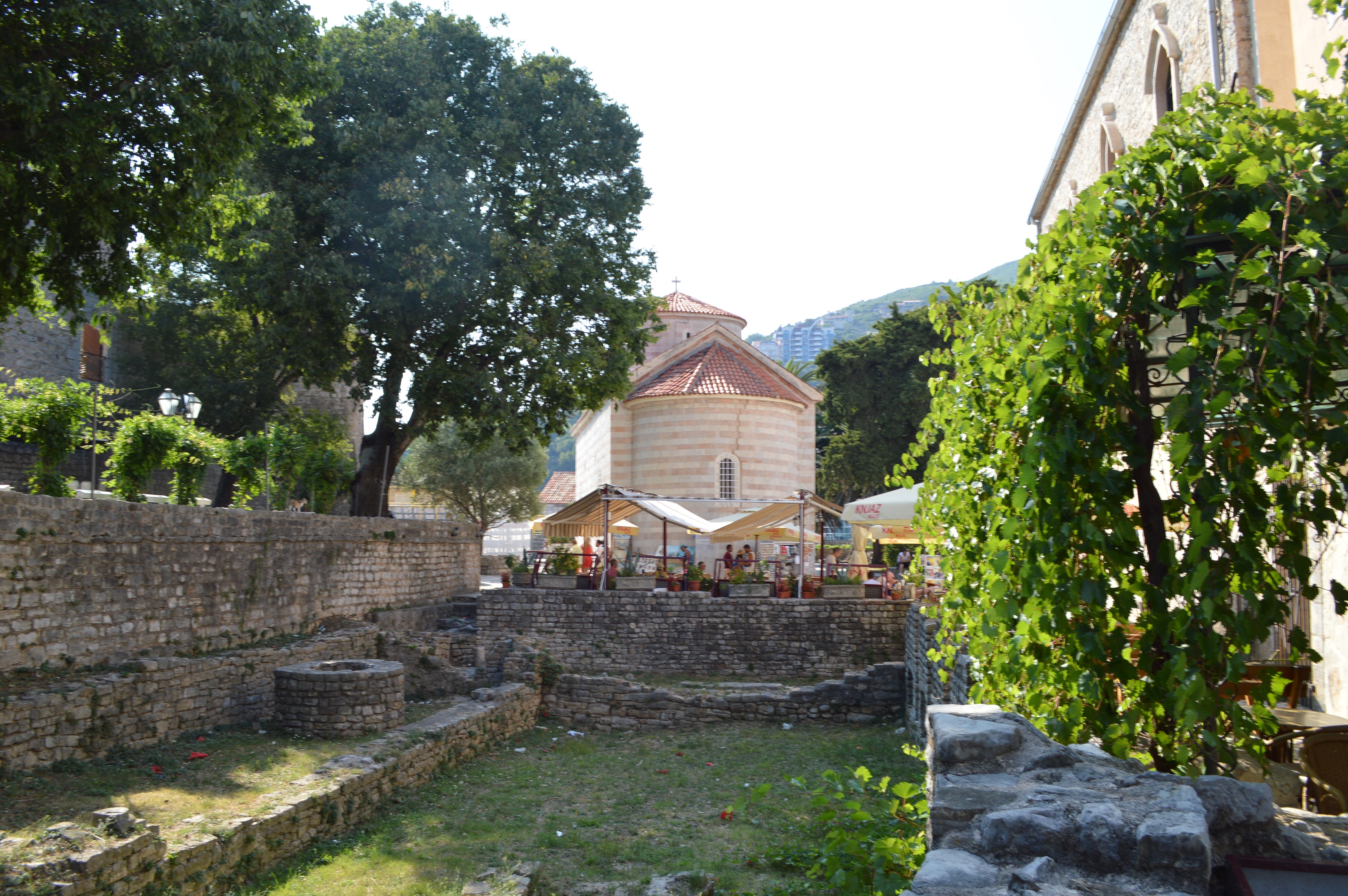
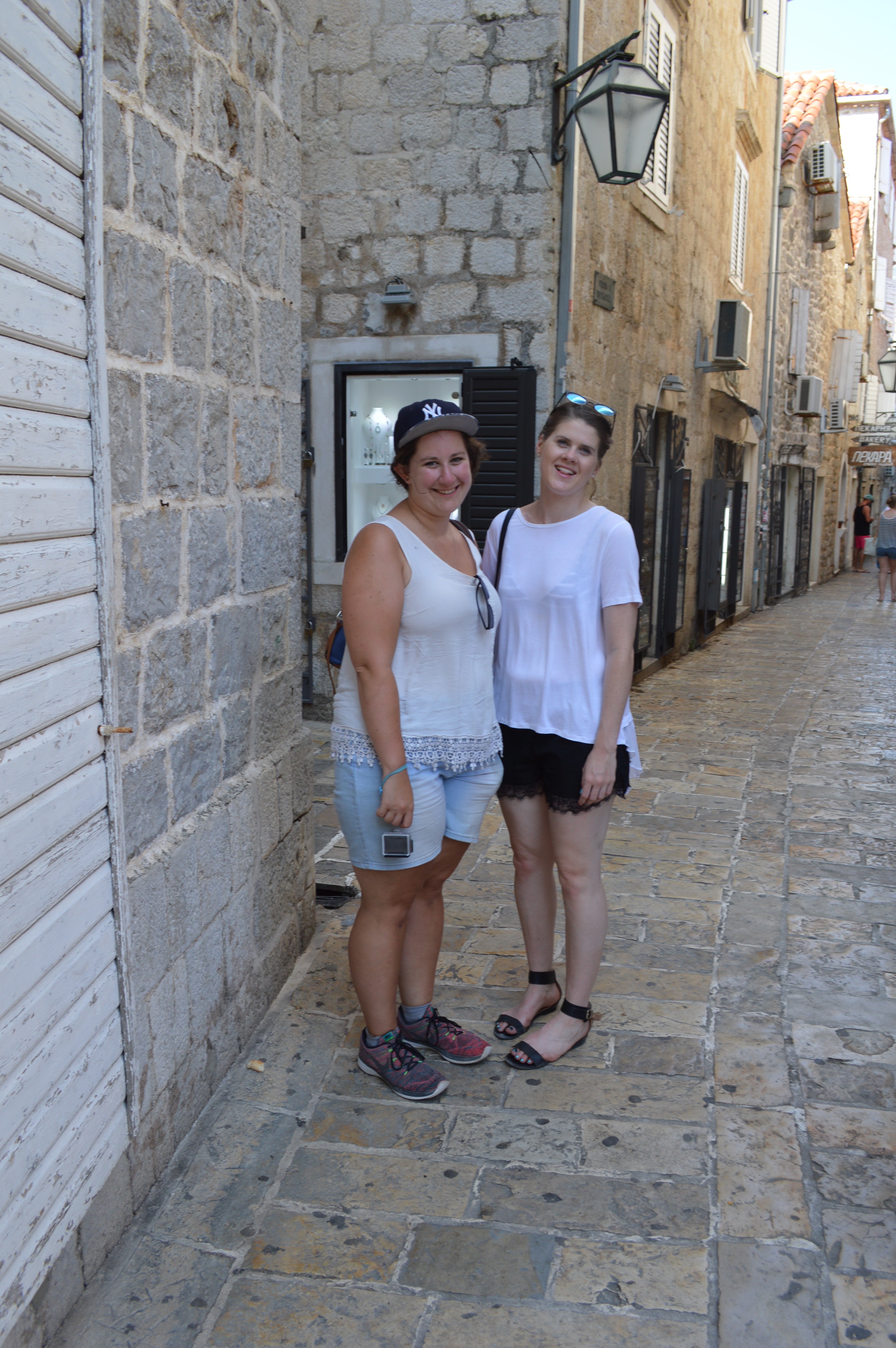
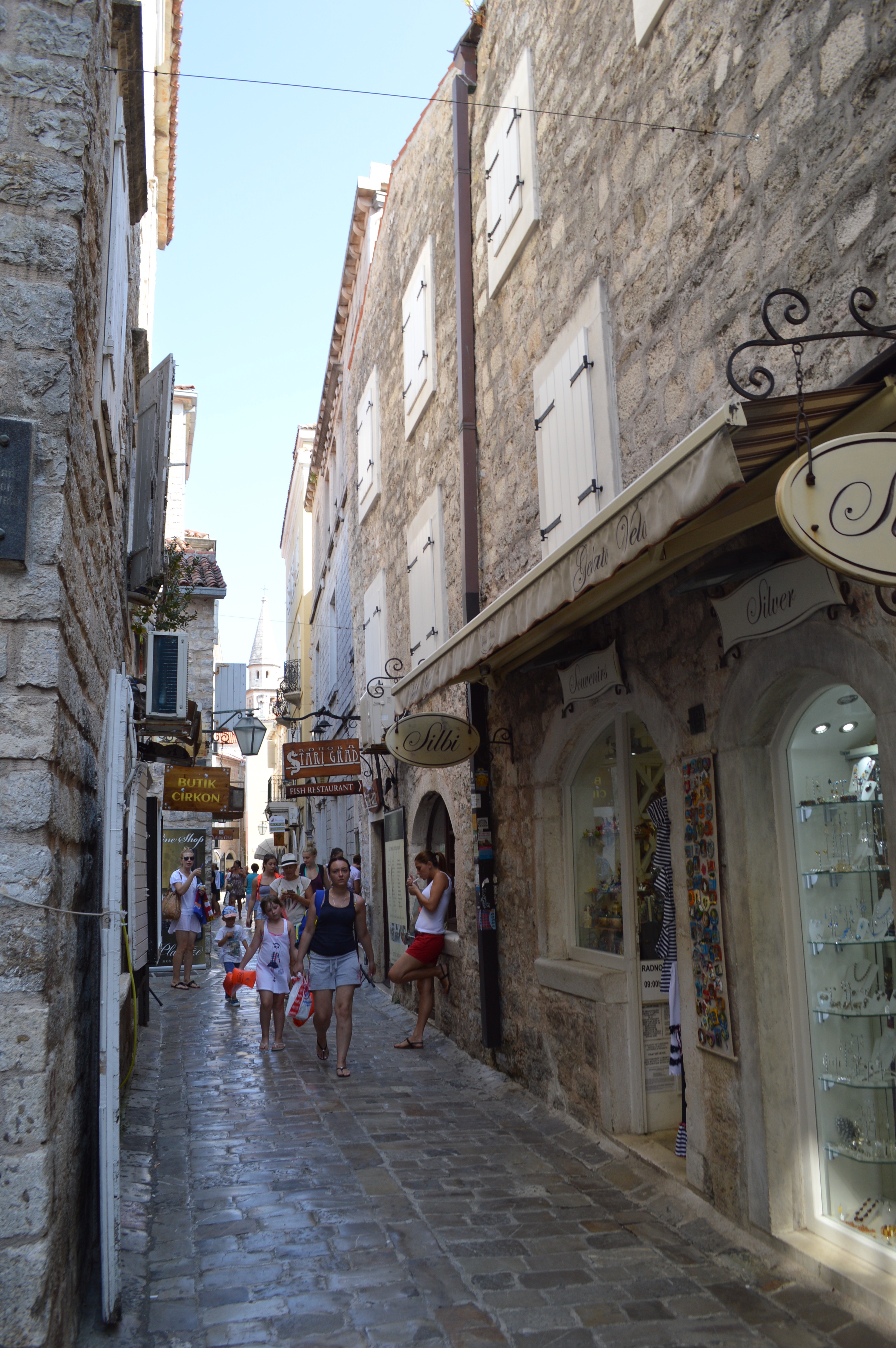
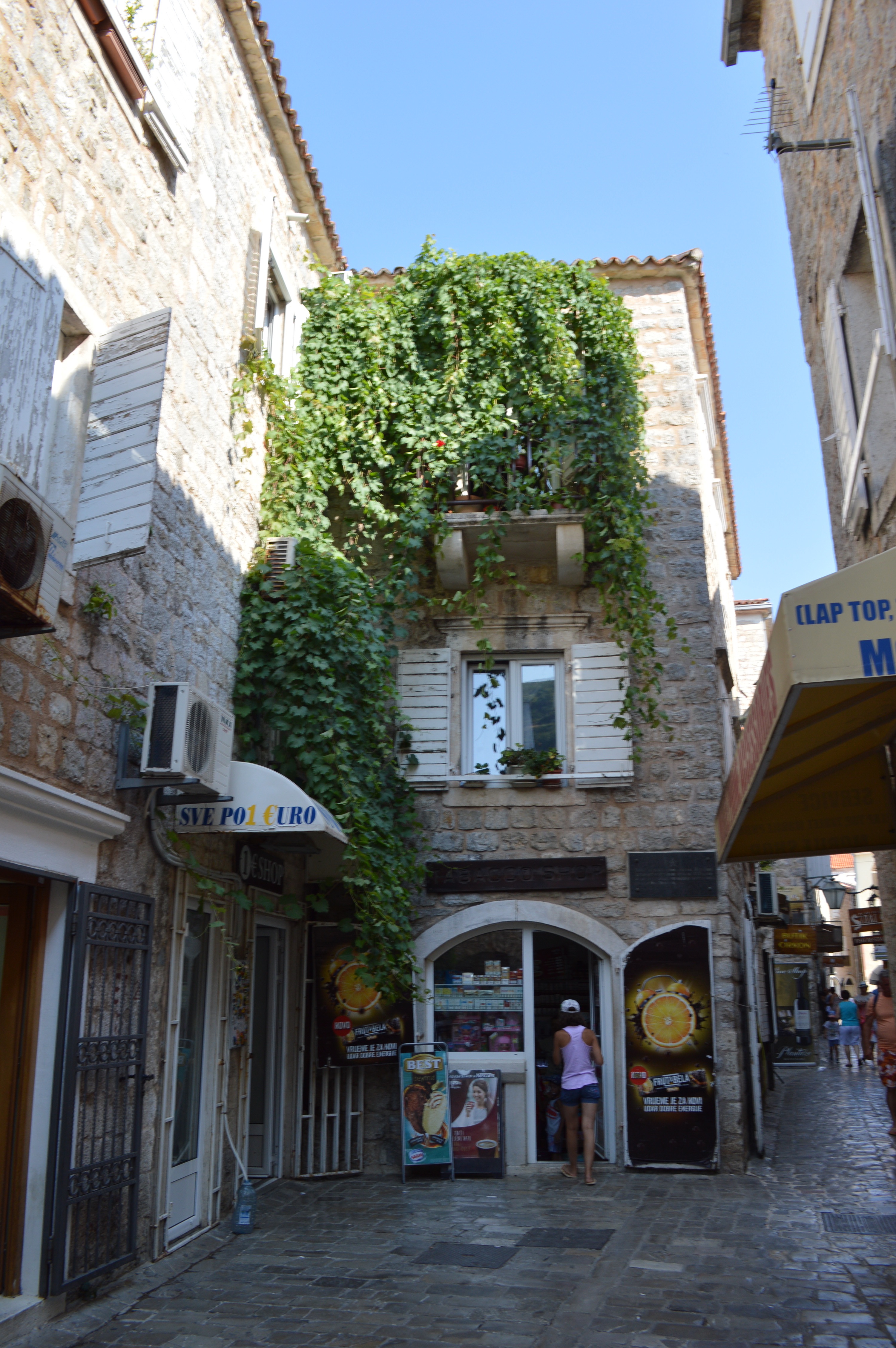
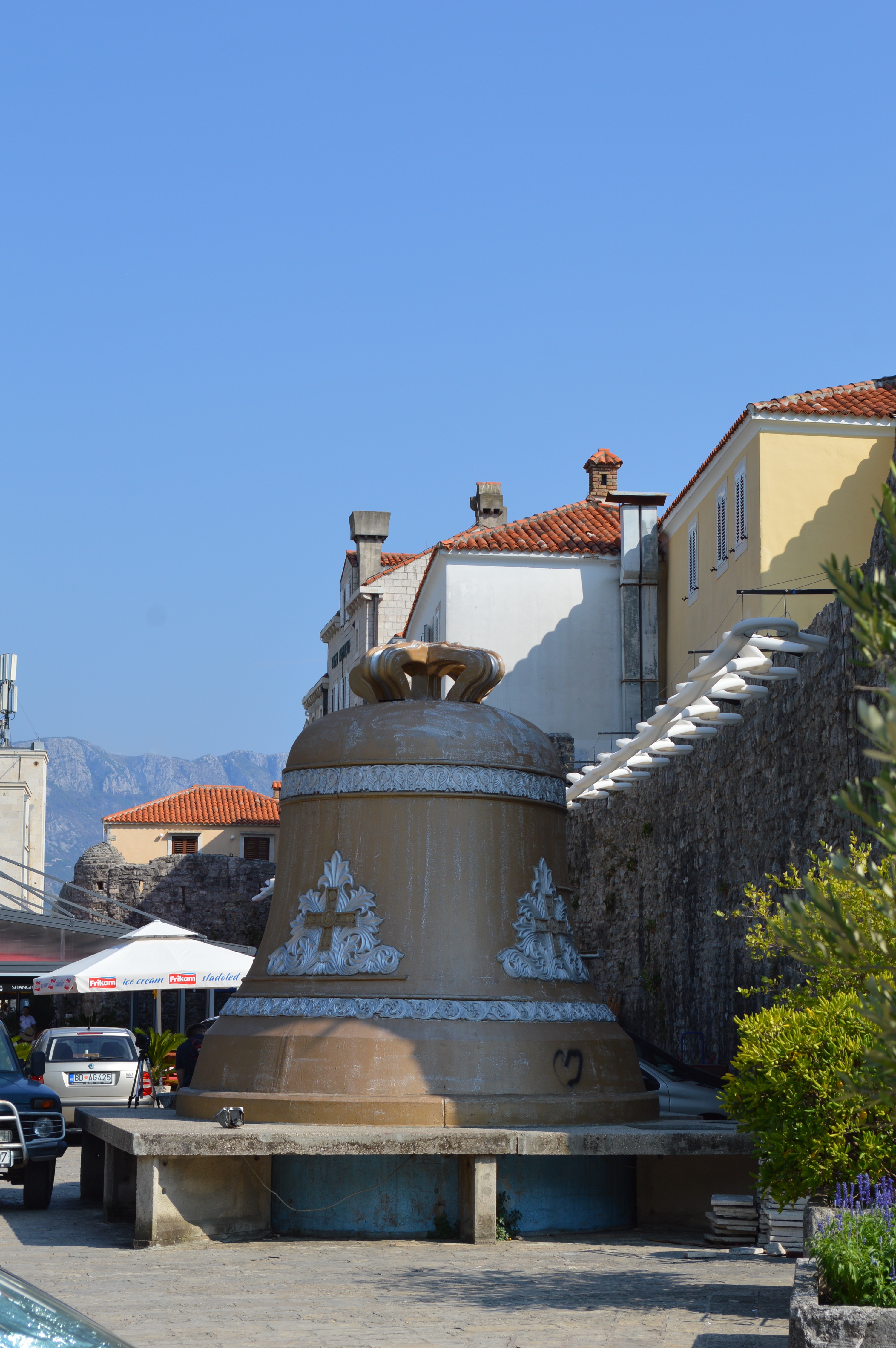
Our afternoon stop was Budva – the country’s most-visited destination. We walked along a strip of bars and clubs that all seemed to have weird and wonderful themes as we made our way towards the beach. We found lots of people lying on the pebbled shore, enjoying the sunshine, as well as hoards of boats and yachts in the marina. We then had a delicious seaside lunch at one of the restaurants alone the beach promenade before we wandered towards Budva’s best feature and star attraction – the Stari Grad (Old Town). It was much smaller than that of Kotor, but its atmosphere still rings true with marbled streets and Venetian walls rising from the clear waters below. Much of it was ruined by two earthquakes in 1979 but it has since been completely rebuilt and now houses more shops, bars and restaurants than residences. While we explored we gained an unwanted tag-along. A weird middle-aged man in his underwear. Thankfully we found salvation in a church – you need clothes to go in there – allowing us to escape our unwanted friend. The rest of Budva was less impressive – pretty much shiny and new with rampant development.
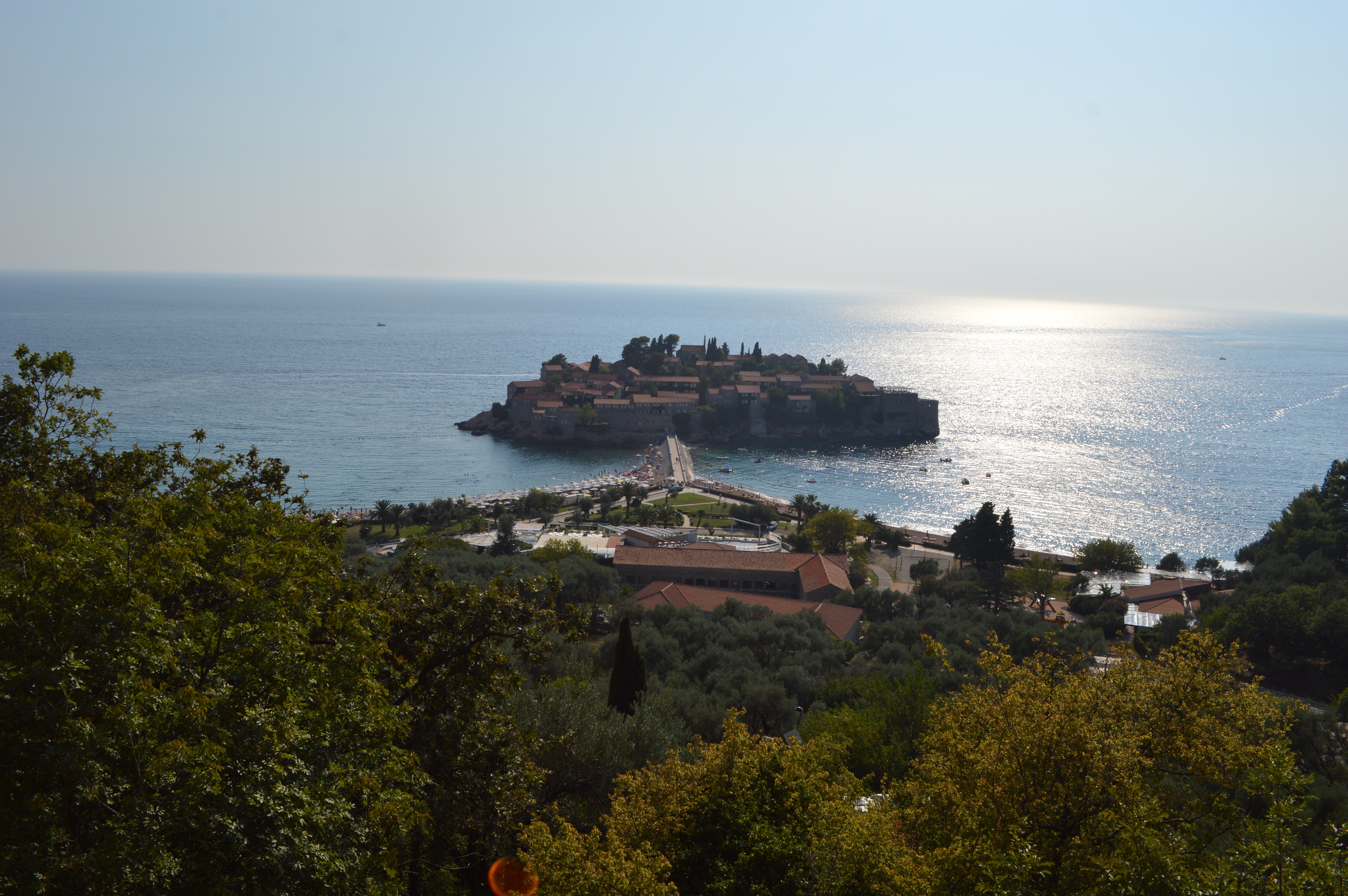
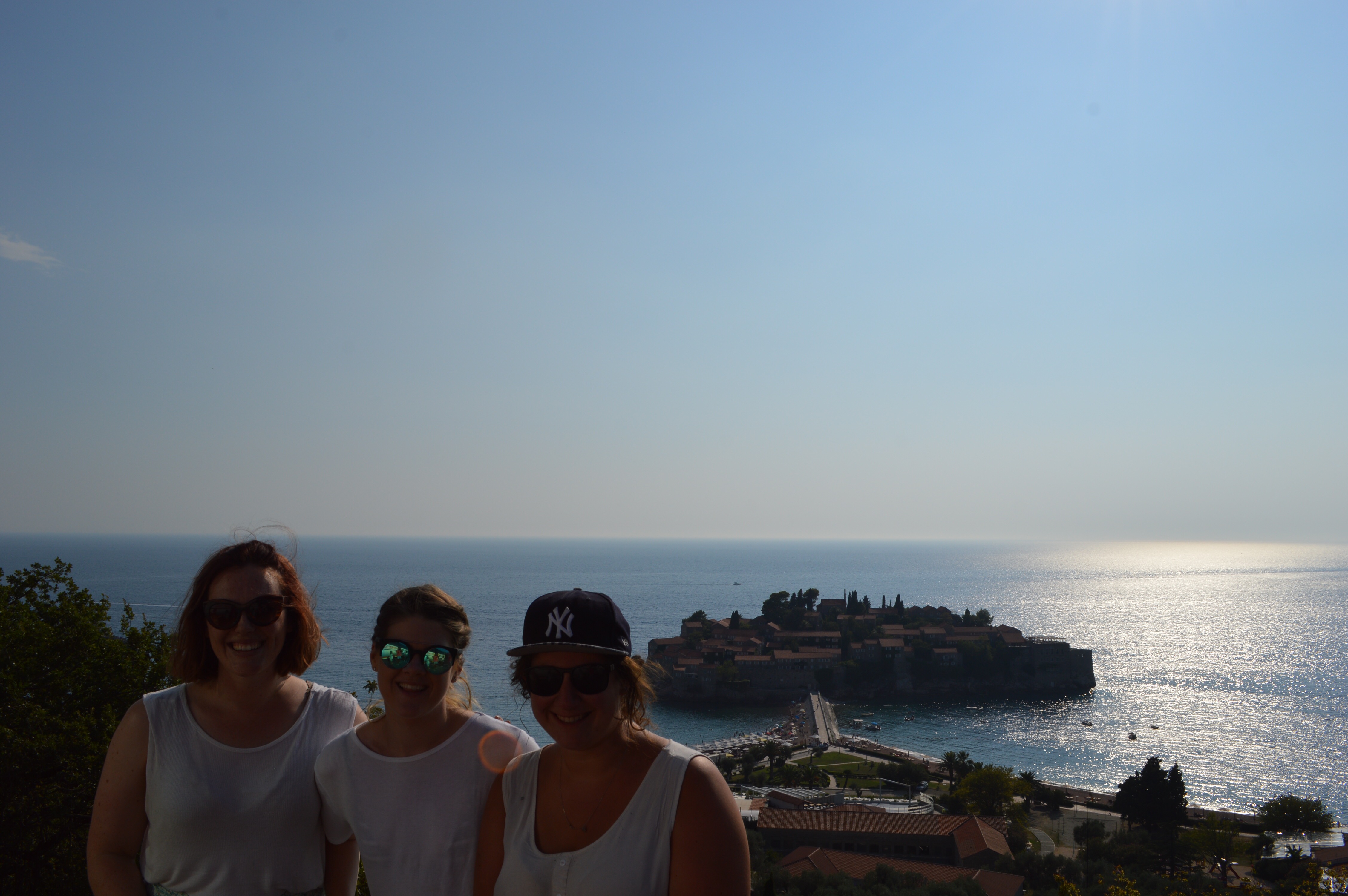
 We made one more “view stop” before heading back to Dubrovnik – the Sveti Stefan islet and 5-star resort. One of the most expensive resorts in the world, it is an Adriatic playground for the rich and famous. It consists of 50 rooms, cottages and suites including 8 grand suites at the Villa Miločer. One could really only dream of staying here, so we took some lovely panoramic photos and jumped back in the mini-van.
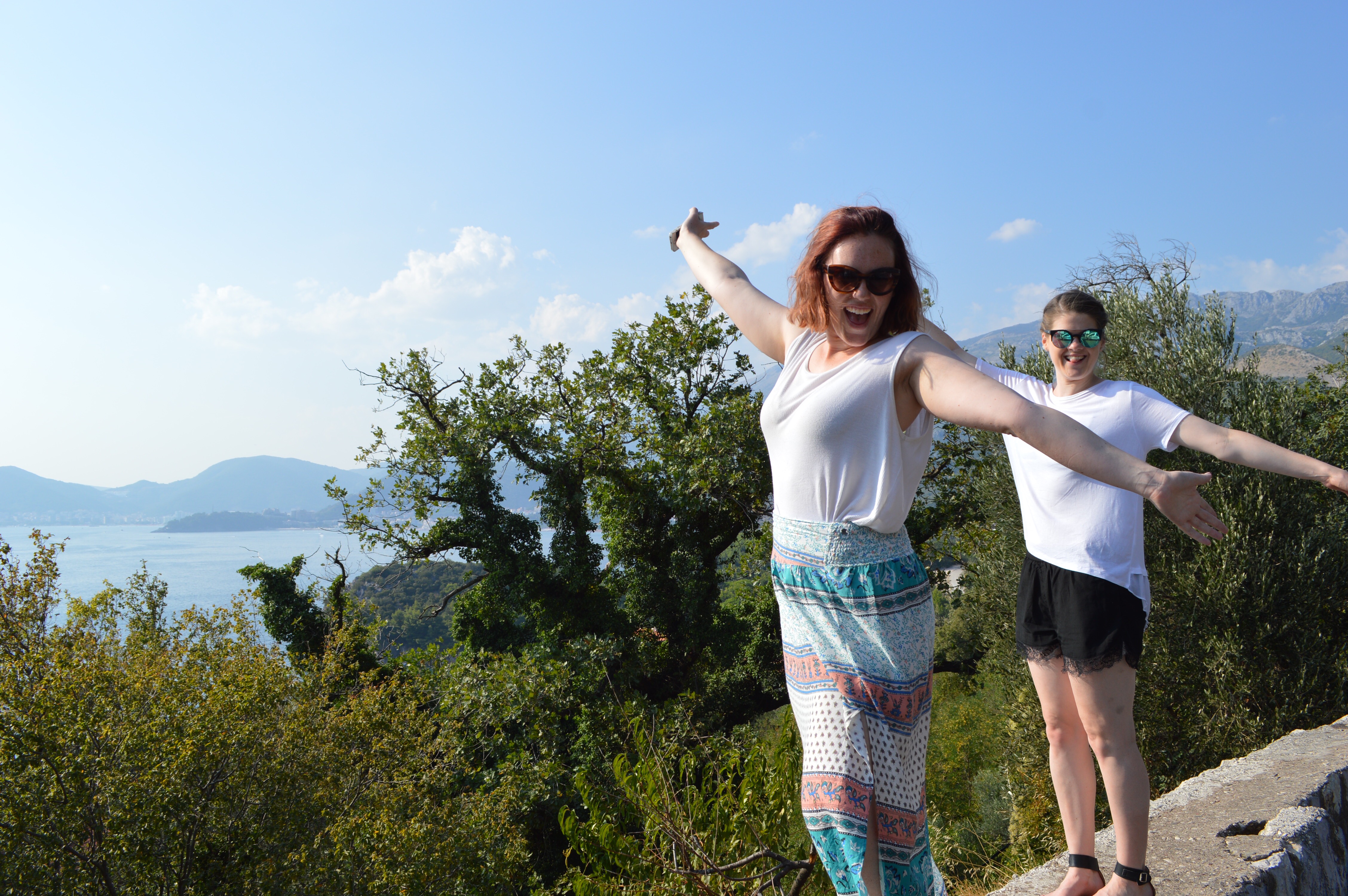
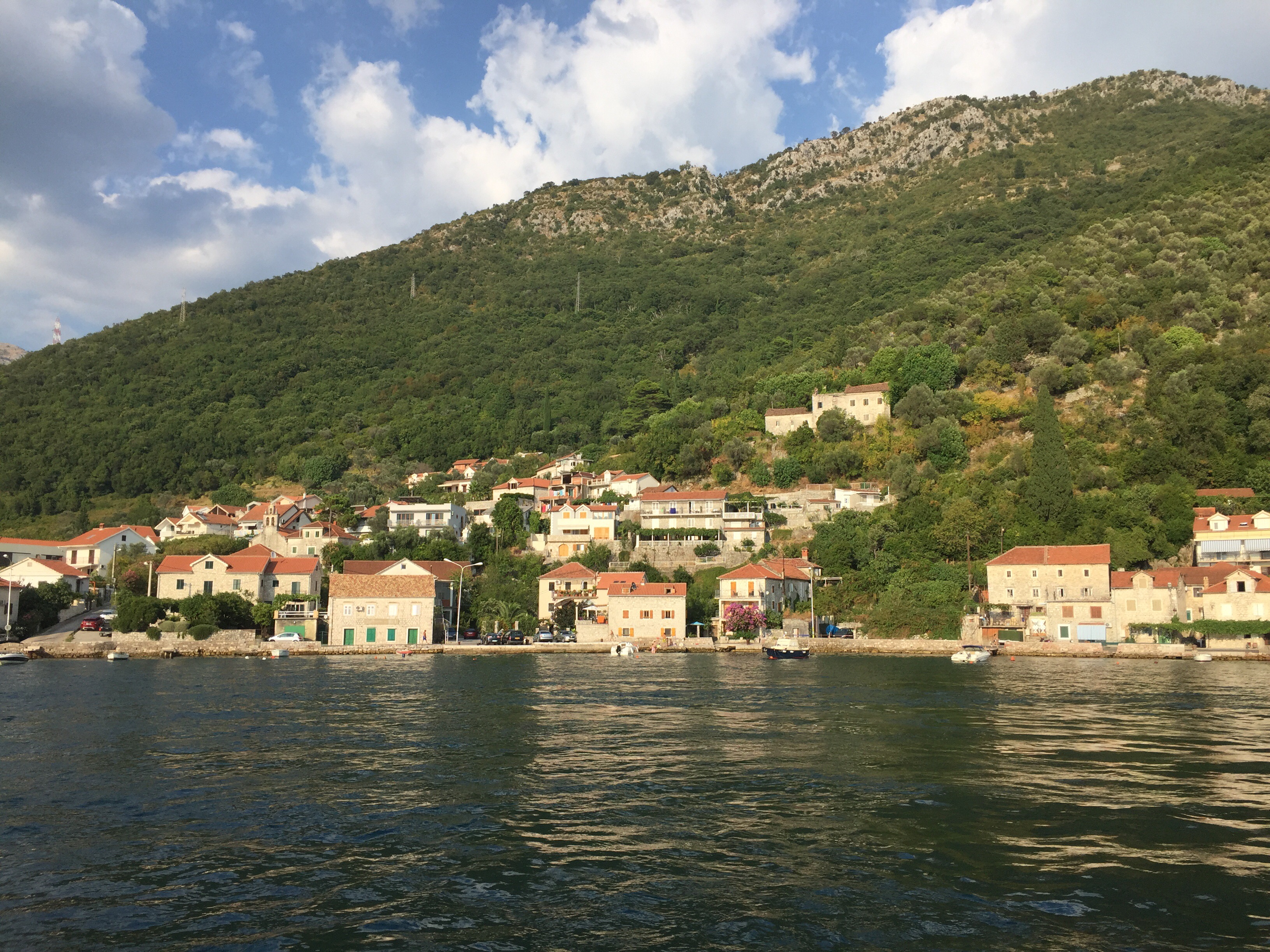
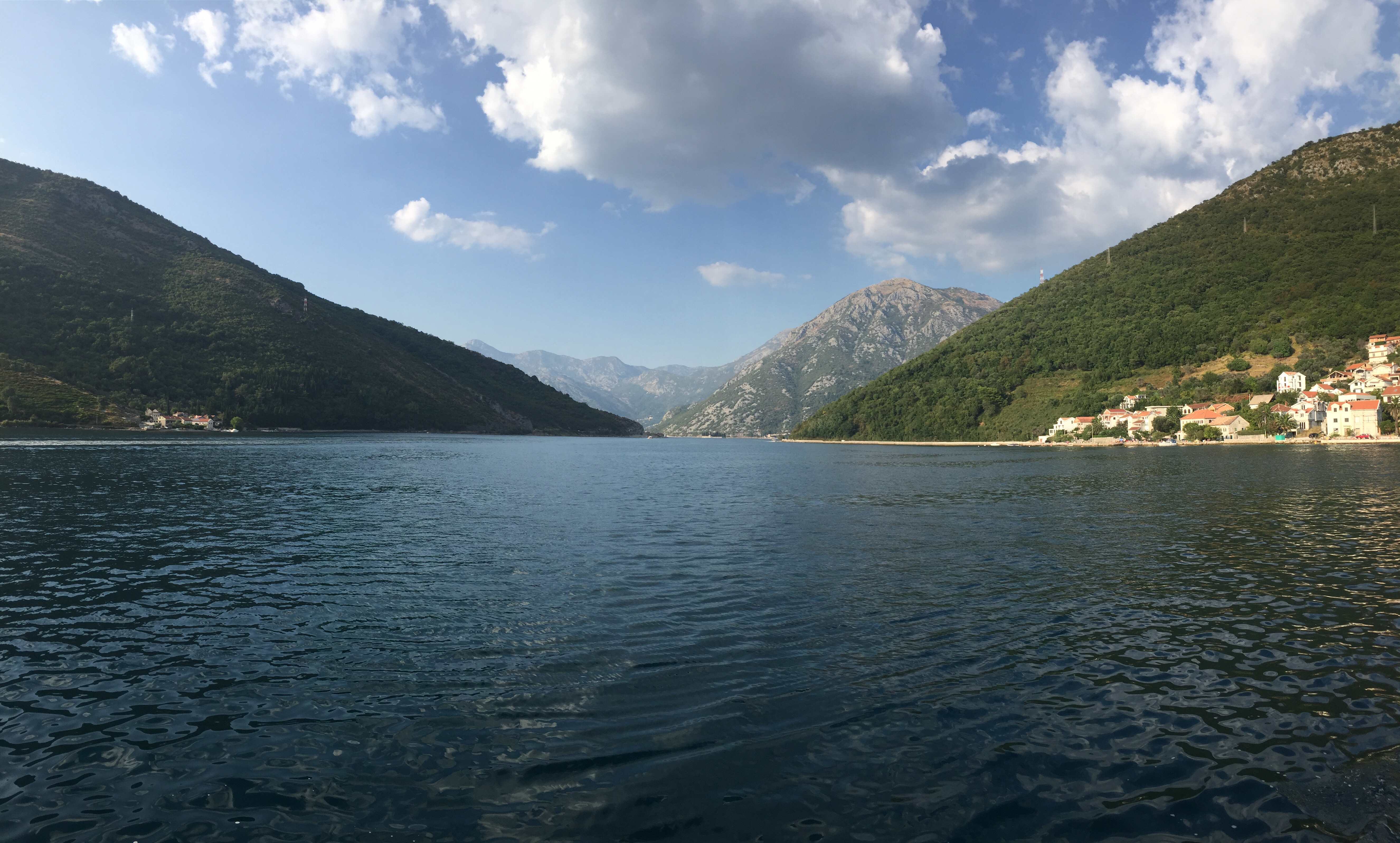
On the way back to Dubrovnik our drive was broken up by a short ferry trip (lasting approximately 7 minutes and consisted mostly of us trying to guess whether or not our tour guide and mini-van driver were dating or just flirting like crazy) across the Bay of Kotor and enjoy a scenic drive along the coastal roads of Montenegro. All-in-all a fabulous taster, but we certainly all walked away saying we need to come back and see more!
 stefanysees