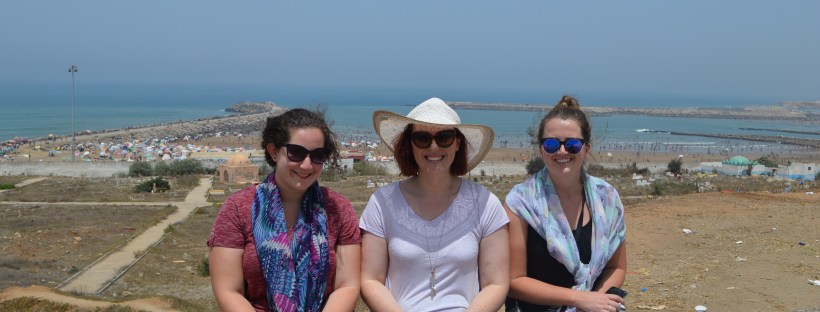
~ Casablanca to Meknes ~
After breakfast this morning we were back on the road and drove the 1 h 20 min (86.7 km) straight to Rabat, Morocco’s political and administrative capital since independence in 1956. While the scenery along the way was similar to day one, once we arrived in Rabat it was much more provincial than Casablanca. The colonial architecture was stunning, the palm-lined boulevards were well kept and relatively free of traffic, the atmosphere was cosmopolitan and far less grimy and frantic. We stopped off outside the gaits of the Royal palace and exchanged Mohamed for a local guide who was going to take us around throughout the morning.
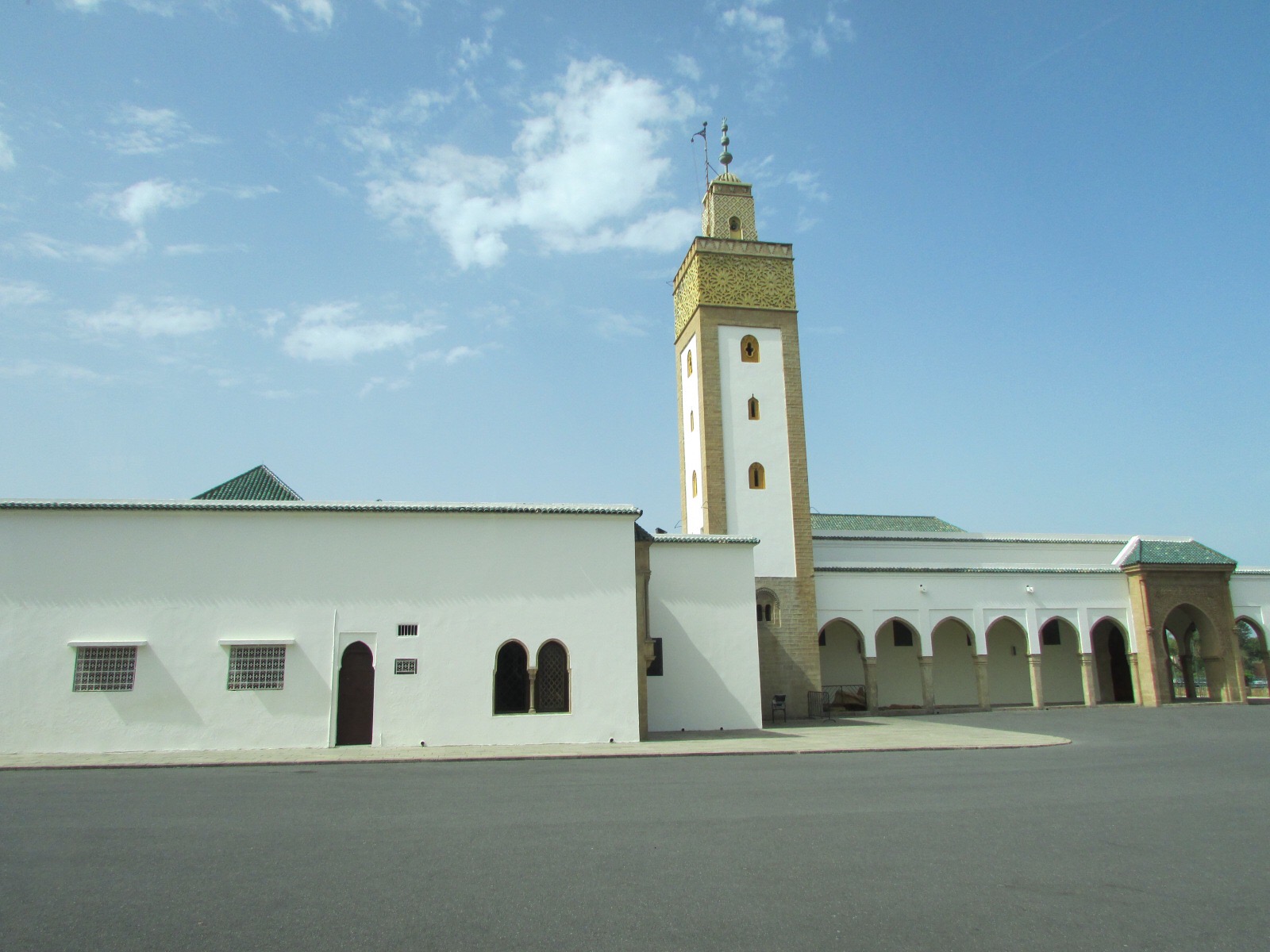
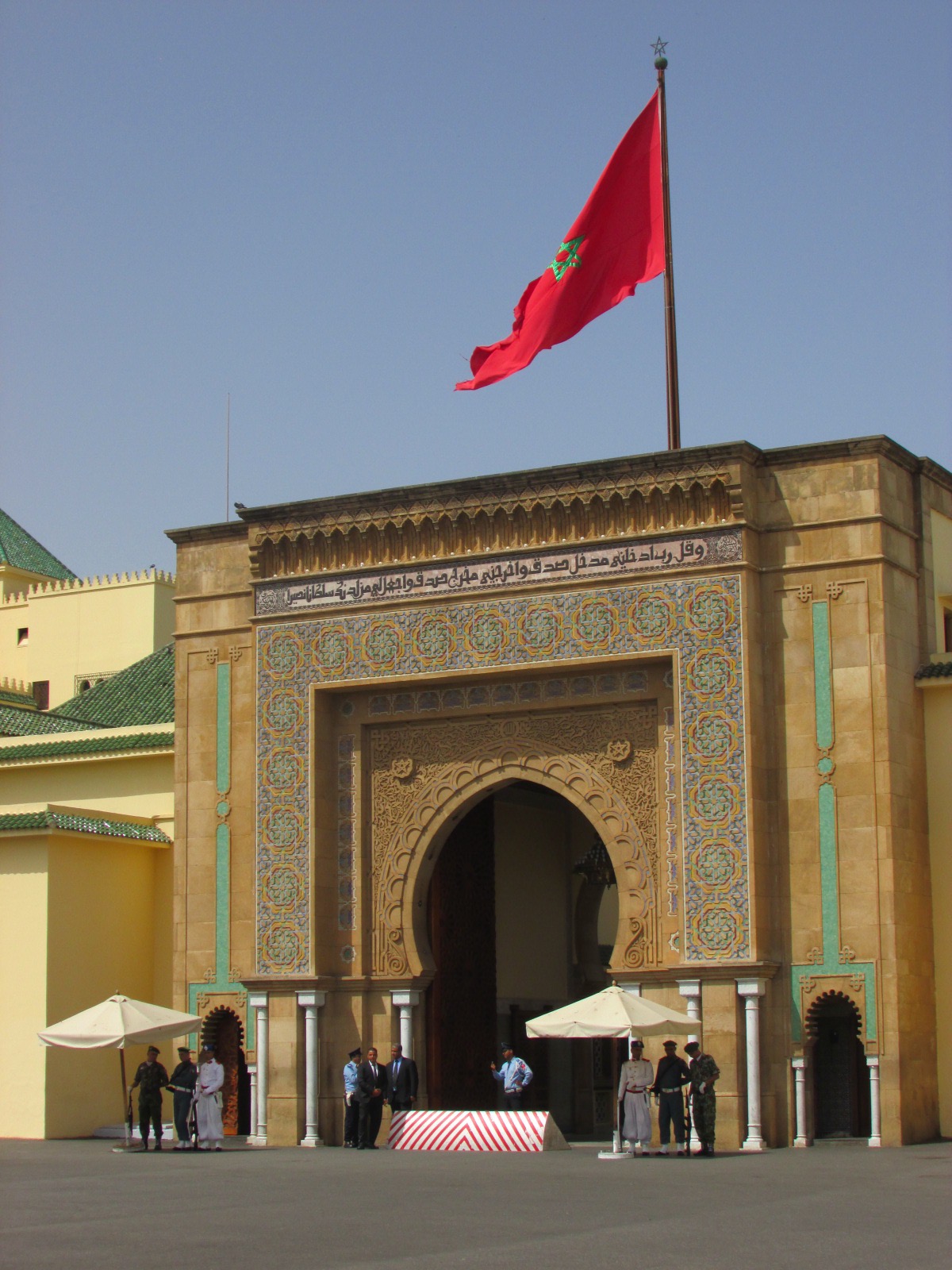
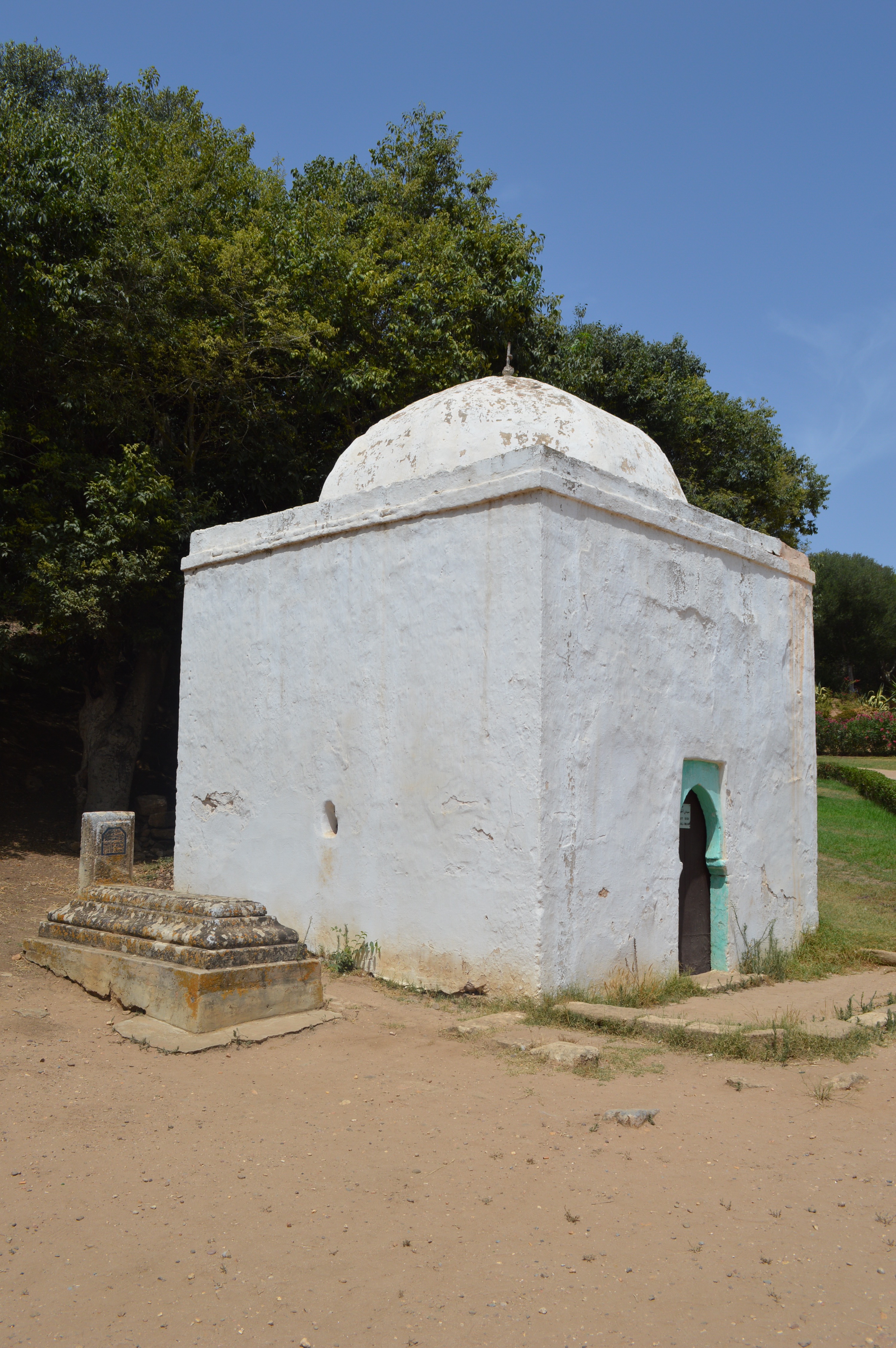
Our first destination was in fact, the Royal palace. We drove through the gaits and even the entrance was impressive. A long avenue with trees lead us to small mosque, Ahl-Fas, and then to the large parade ground infront of the royal palace. Your proximity to the palace is restricted by a few hundred meters and multiple guards from different areas of the military (as well as private guards) stationed outside the entrances. Our guide explained this was because it is the primary and official residence of the King of Morocco. As such, you cannot see the real beauty behind the walls or many other areas of the grounds. However, our guide told us a little bit about the different areas, including the College Royal, public assemblies, extensive gardens, houses and grounds for the staff. He also told us some of the changes that have been made since the current King Mohammed VI came to power in 1999 including giving women the vote, women having the right to ask to get divorced (and can now receive benefits from the divorce), polygamy is now only legal with the first wife’s consent, giving more benefits to create own businesses and encouraged the development of the cooperatives to support women workers and quality products. As we left the Royal grounds our guide seemed to trade cigarettes with the palace guards – this was when we had our first inclination that our guide was a little bit crazy.
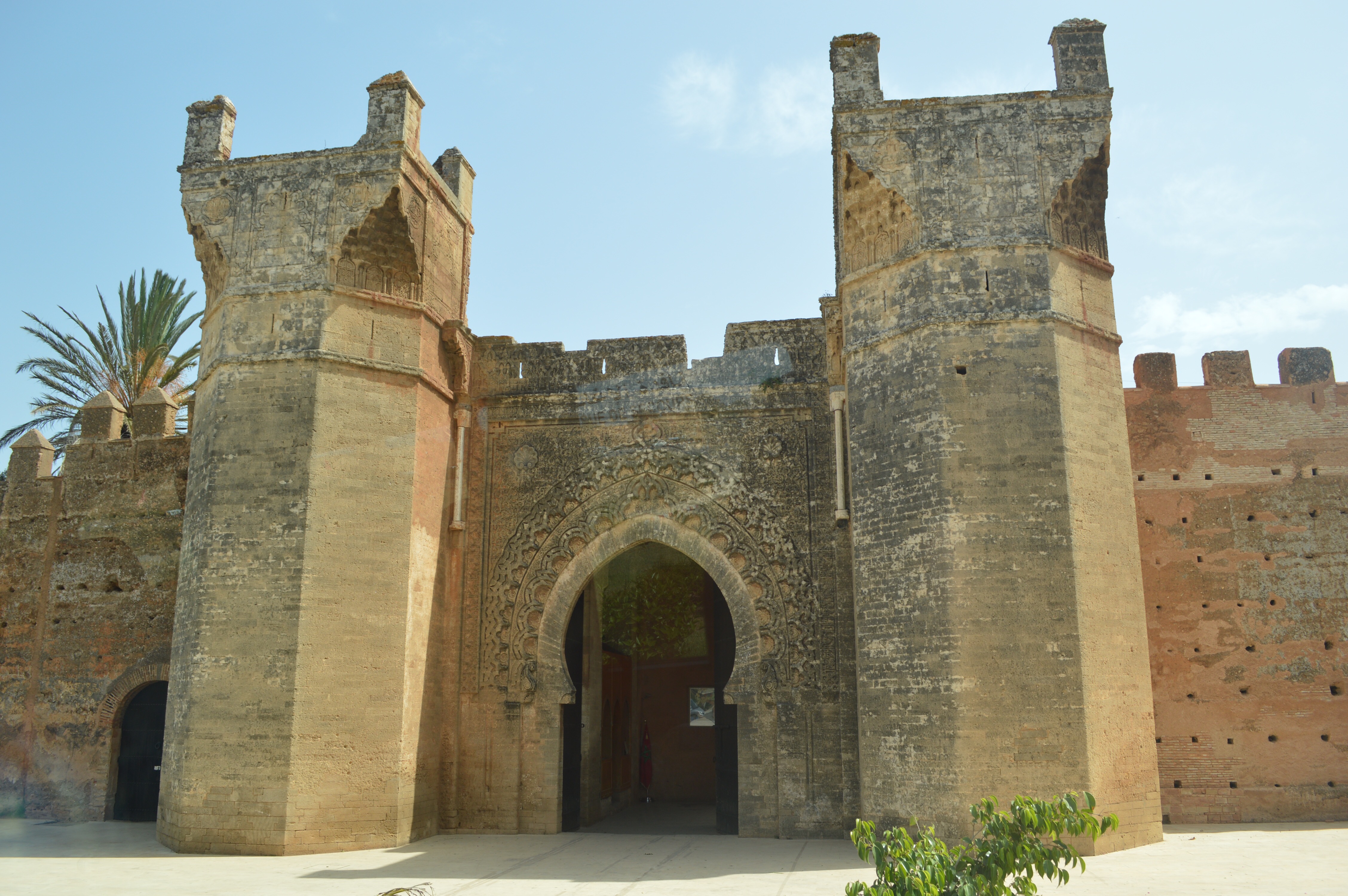
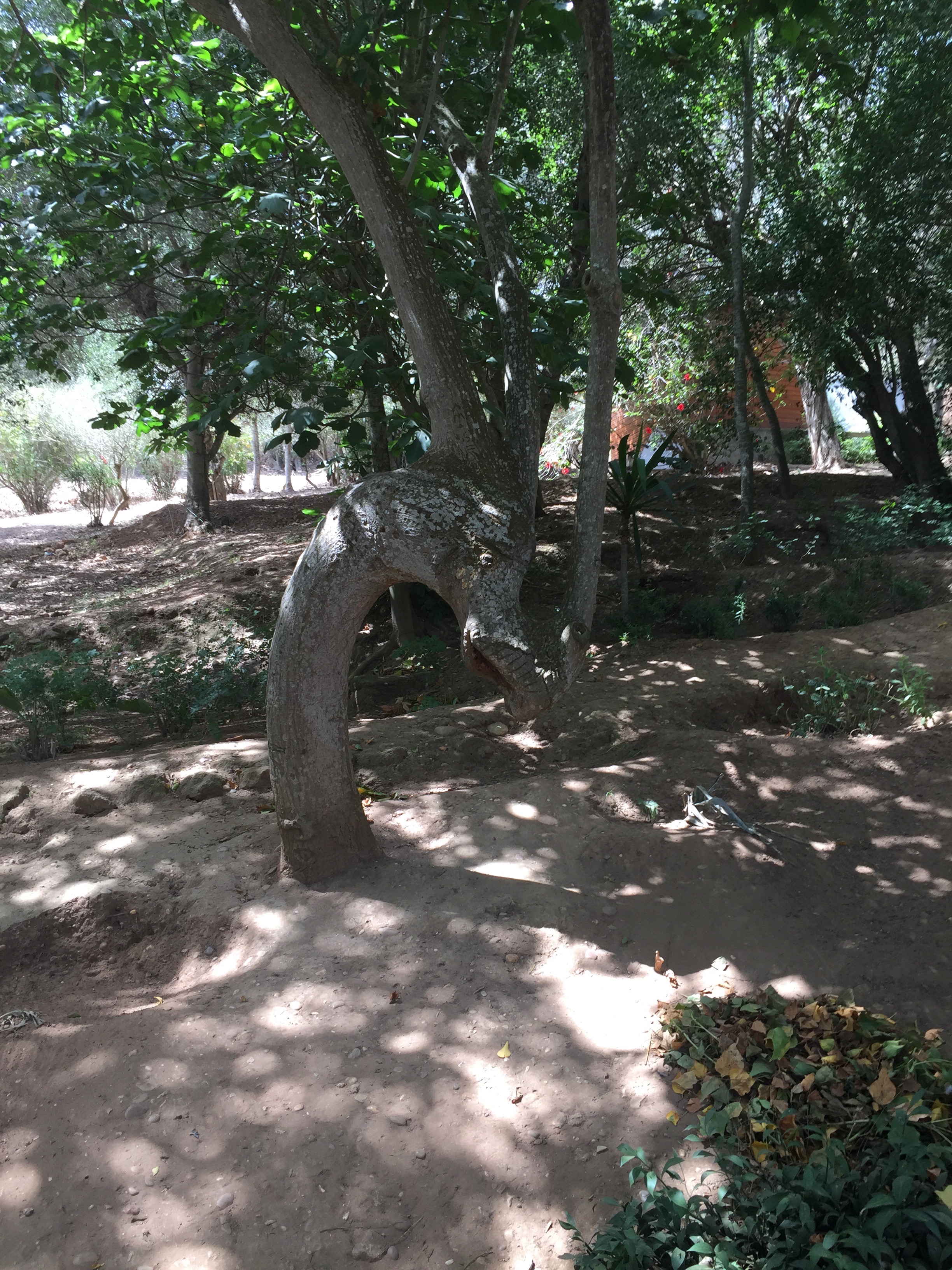
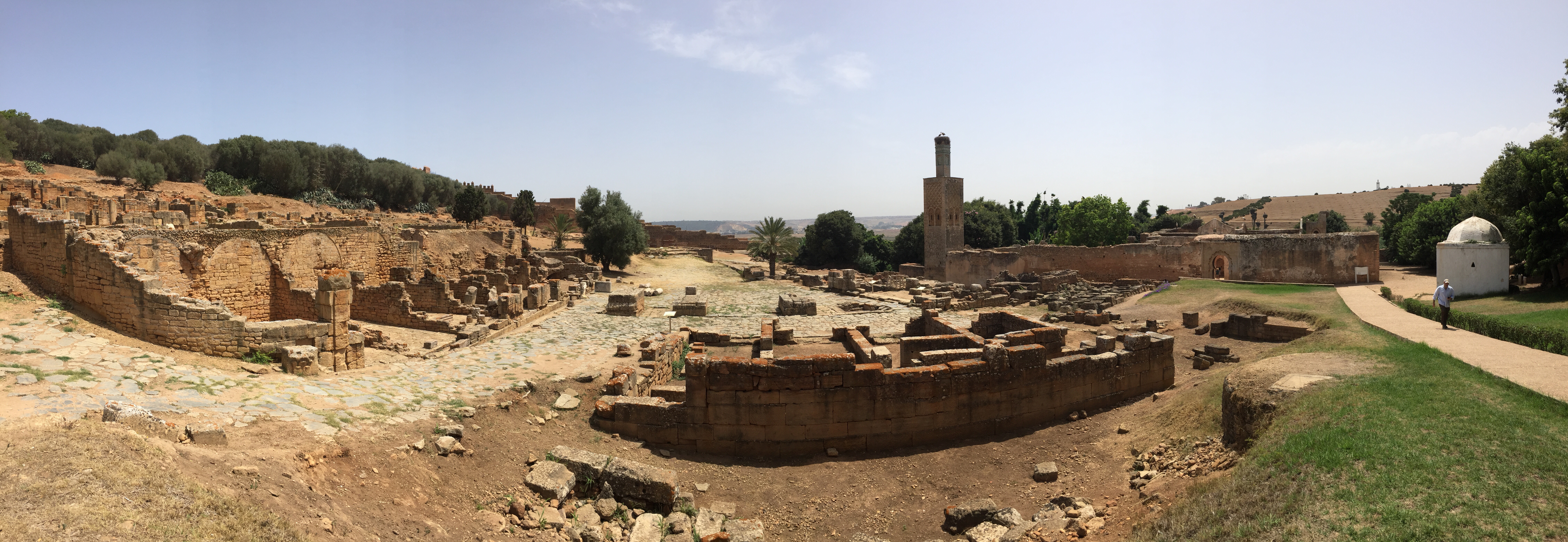
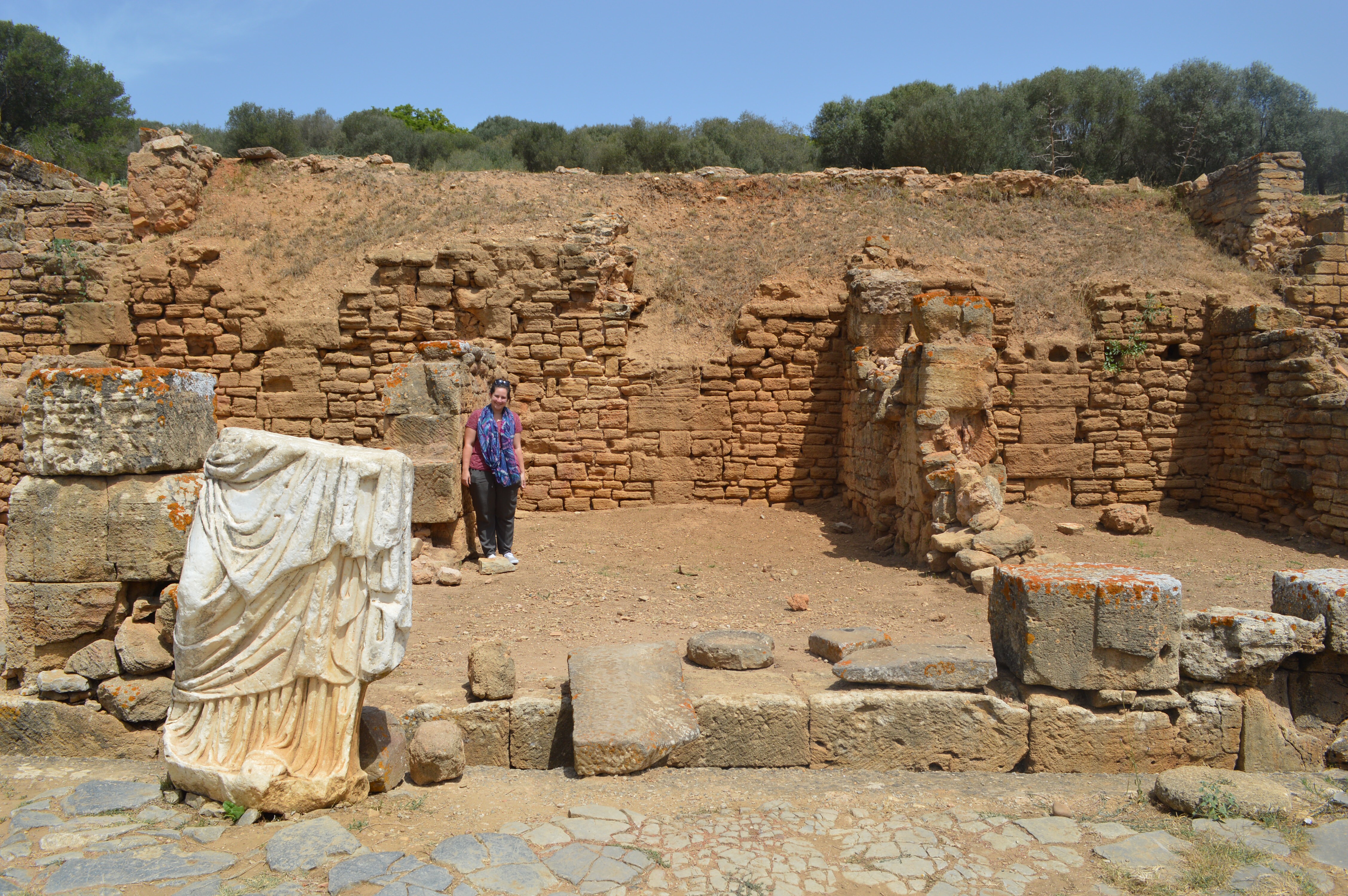
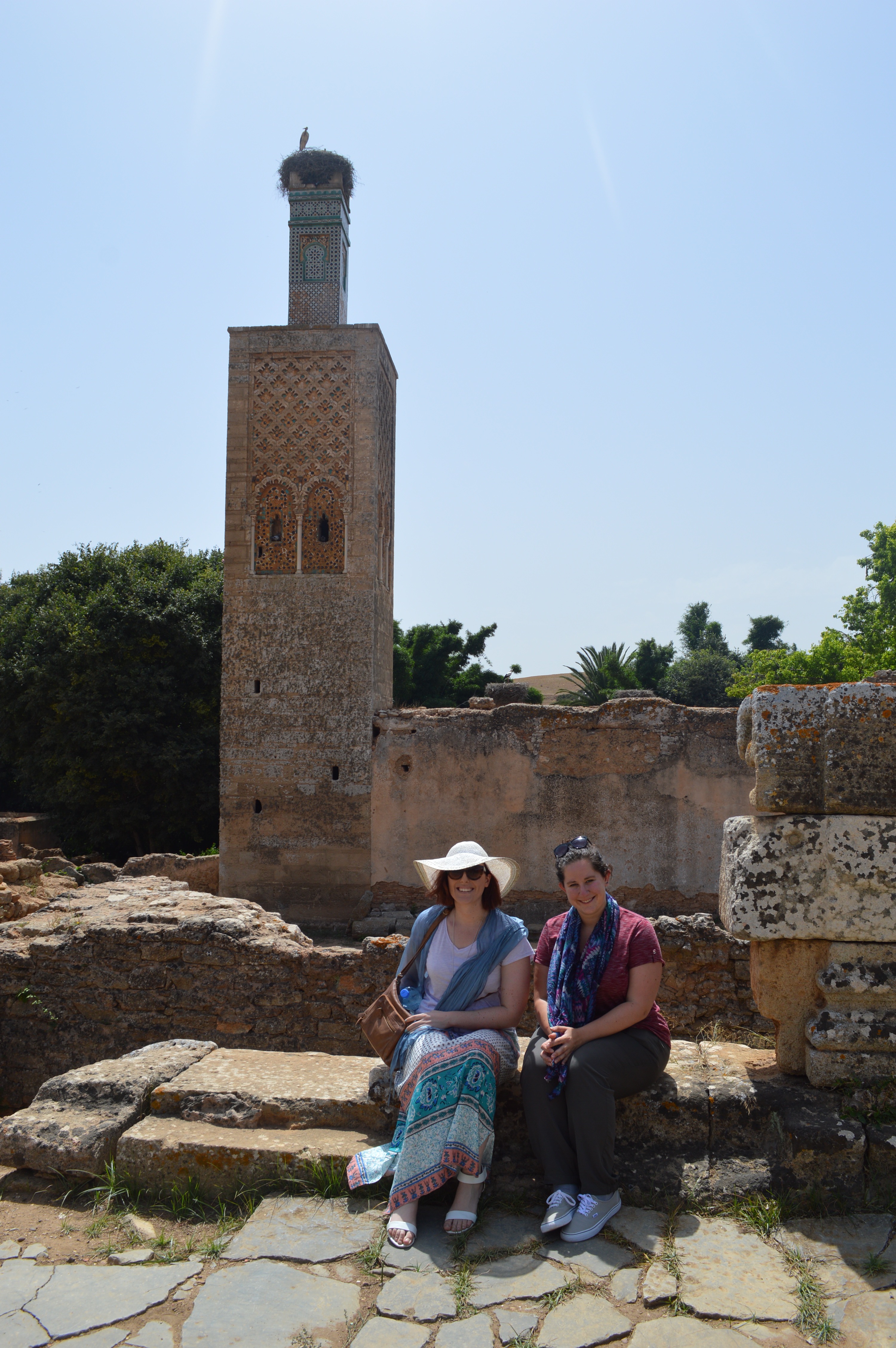
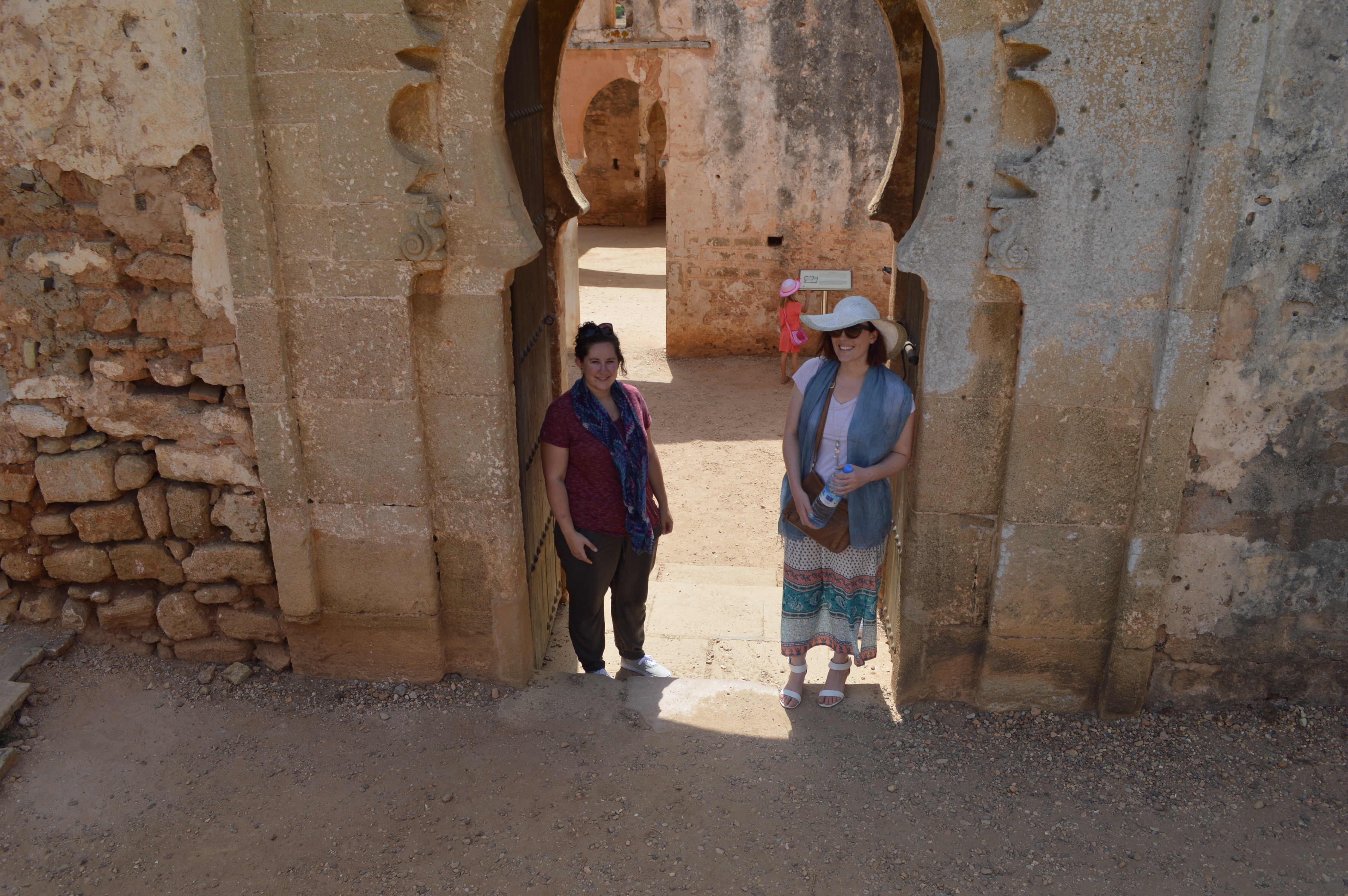
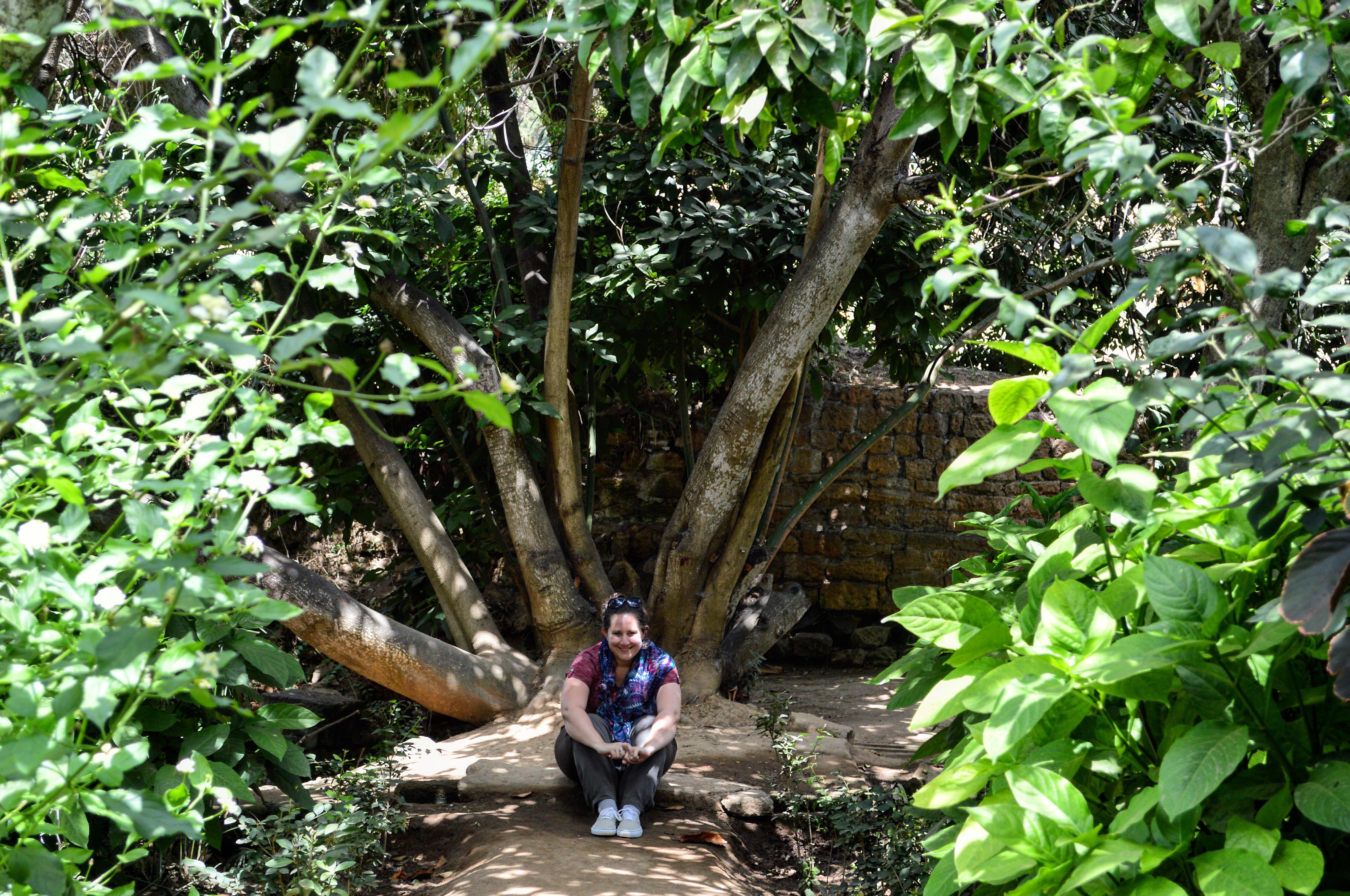
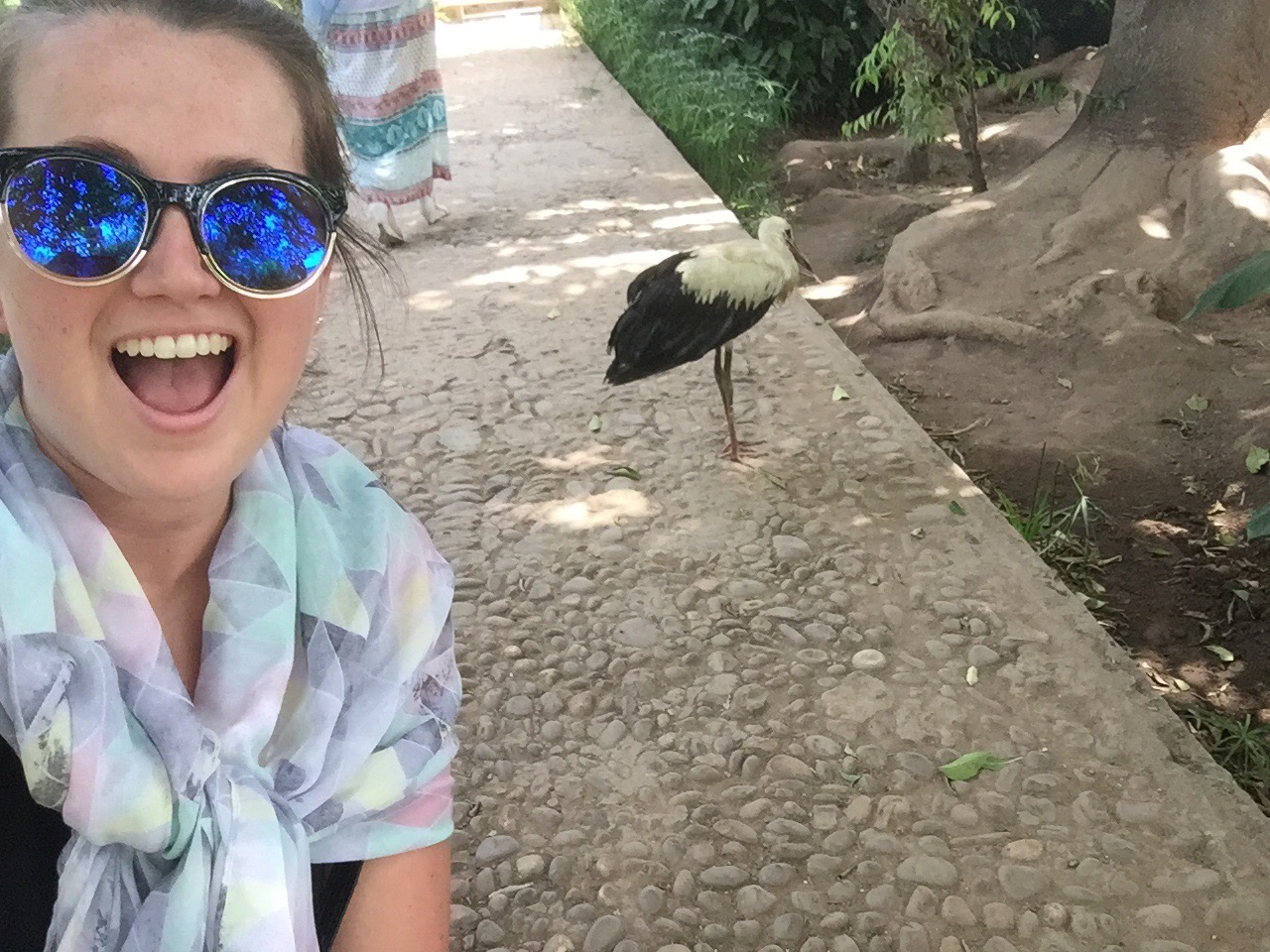
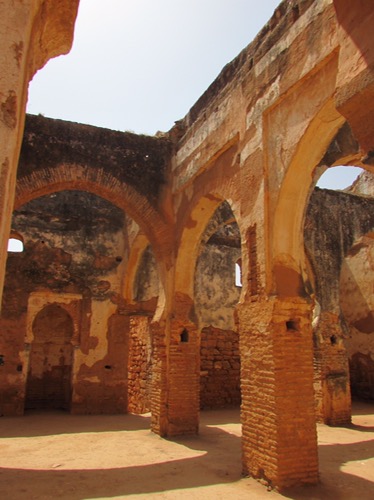
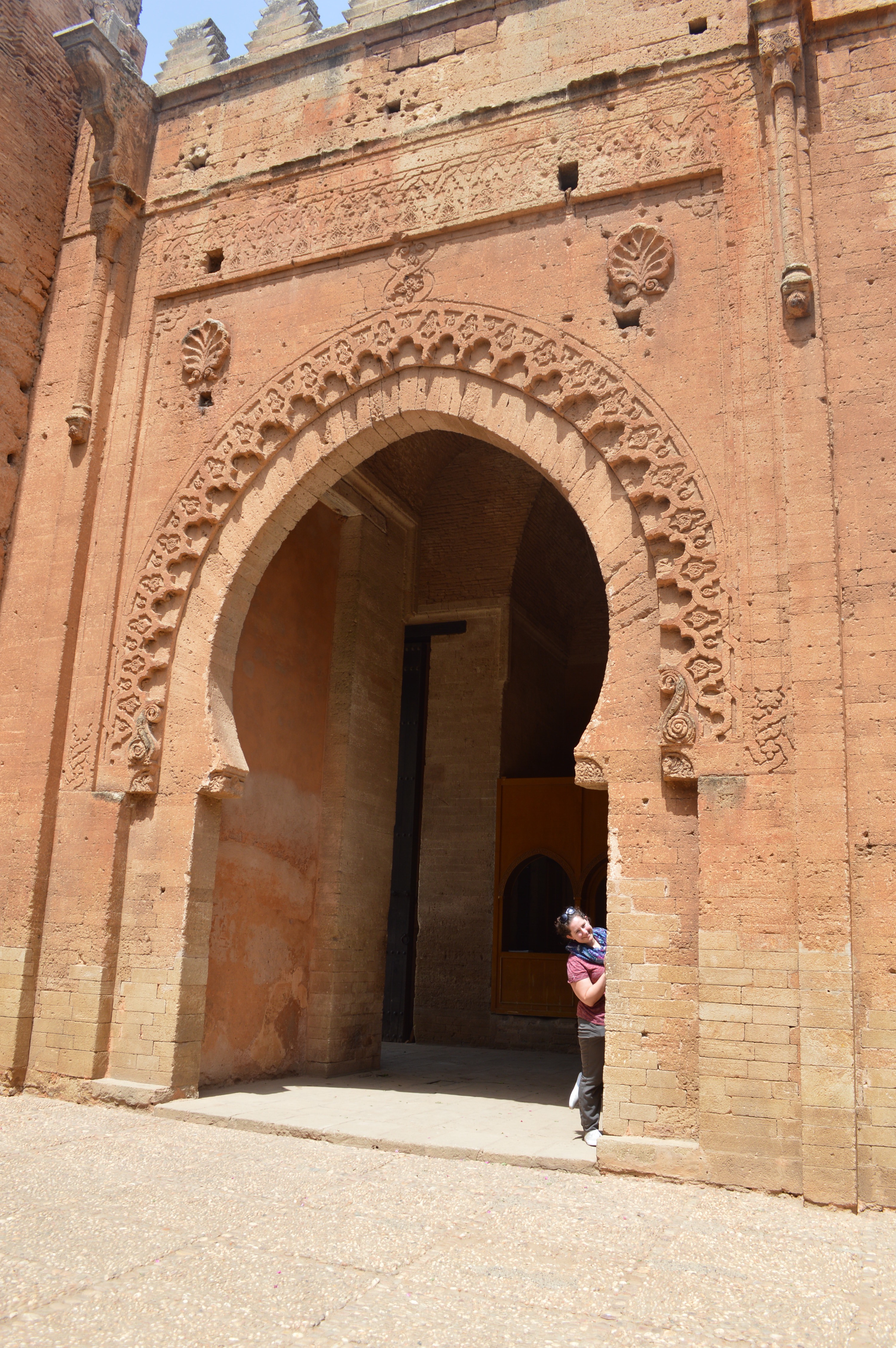
Our next stop was the Merenid necropolis of Chellah – the abandoned, crumbling and overgrown, old Roman city of Sala Colonia. You cannot see much of it at all of from the outside – just an old wall. But as soon as we were inside there was just lush green plants as far as the eye could see. We couldn’t help but stand around in awe as our guide described the history of the area we had just entered. To summarise from what I remember – the Phoenicians were the first to settle on the grassy slopes above the river, but the town really grew when the Romans took control in about AD 40. The city was abandoned in 1154, but in the 14th century the Merenid sultan Abou al-Hassan Ali built a necropolis on top of the Roman site and surrounded it with the towers and defensive wall that stand today. We then started to walk down a path overgrown with wild flowers, through fragrant fig, olive and orange trees (there was a particularly cool tree that looked like a dragon) to a viewing platform that overlooks the ruins of the Roman city. From here our guide let us roam around. Exactly what some of the Roman structures were was difficult to discern, but we could identify more of the Islamic remains with an elegant minaret topped by a stork’s nest! As we continued to wander, we found more of the incredible colony of storks that have taken over the ruins. Potential the most unique feature was the murky waters of a walled pool (marked ‘bassin aux anguilles’ ) where you can feed boiled eggs to the eels that live inside to bring yourself fertility and easy childbirth. Or you can throw in a coin and wish for whatever you like – the Trevi Fountain of Morocco!


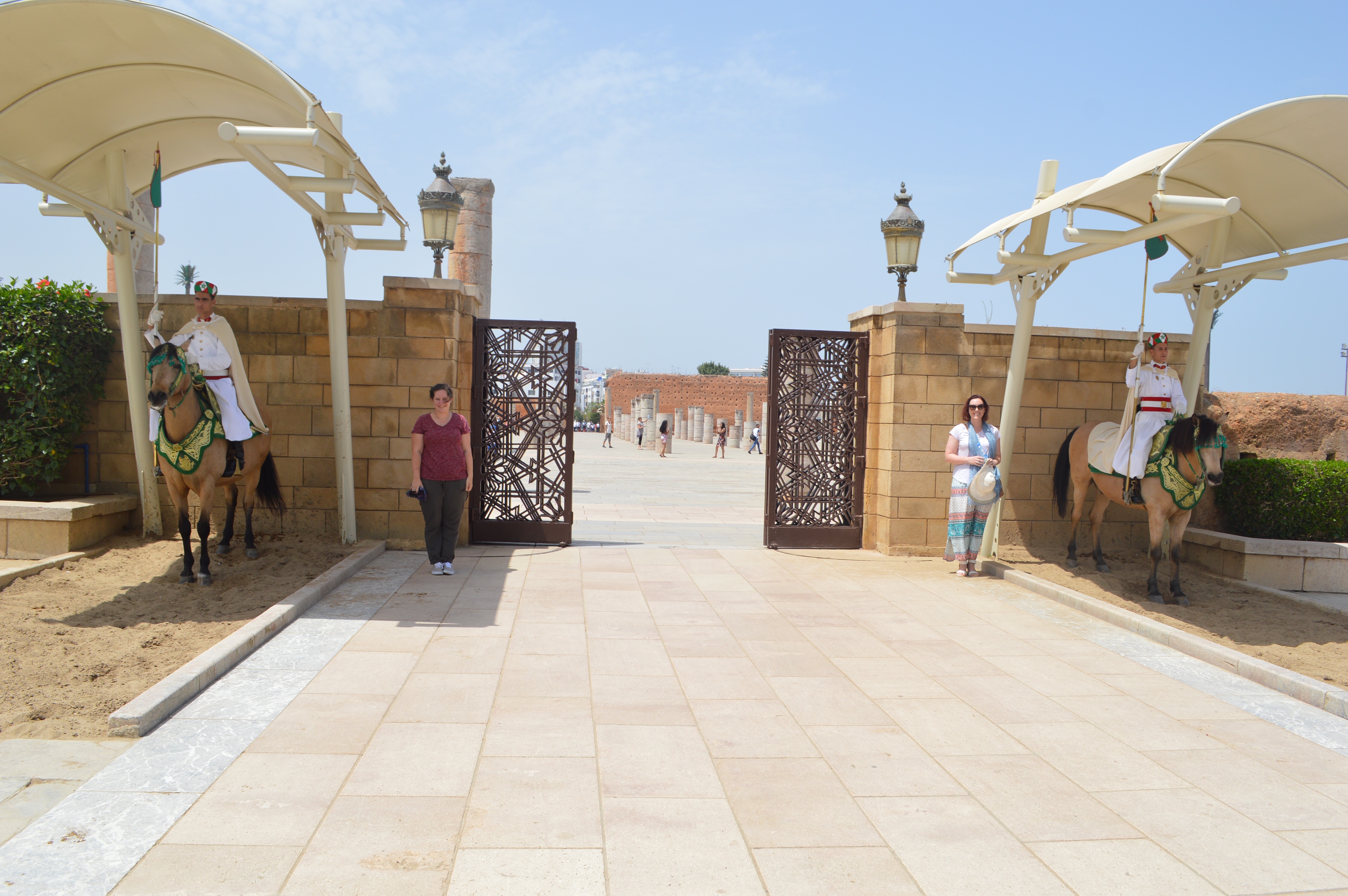
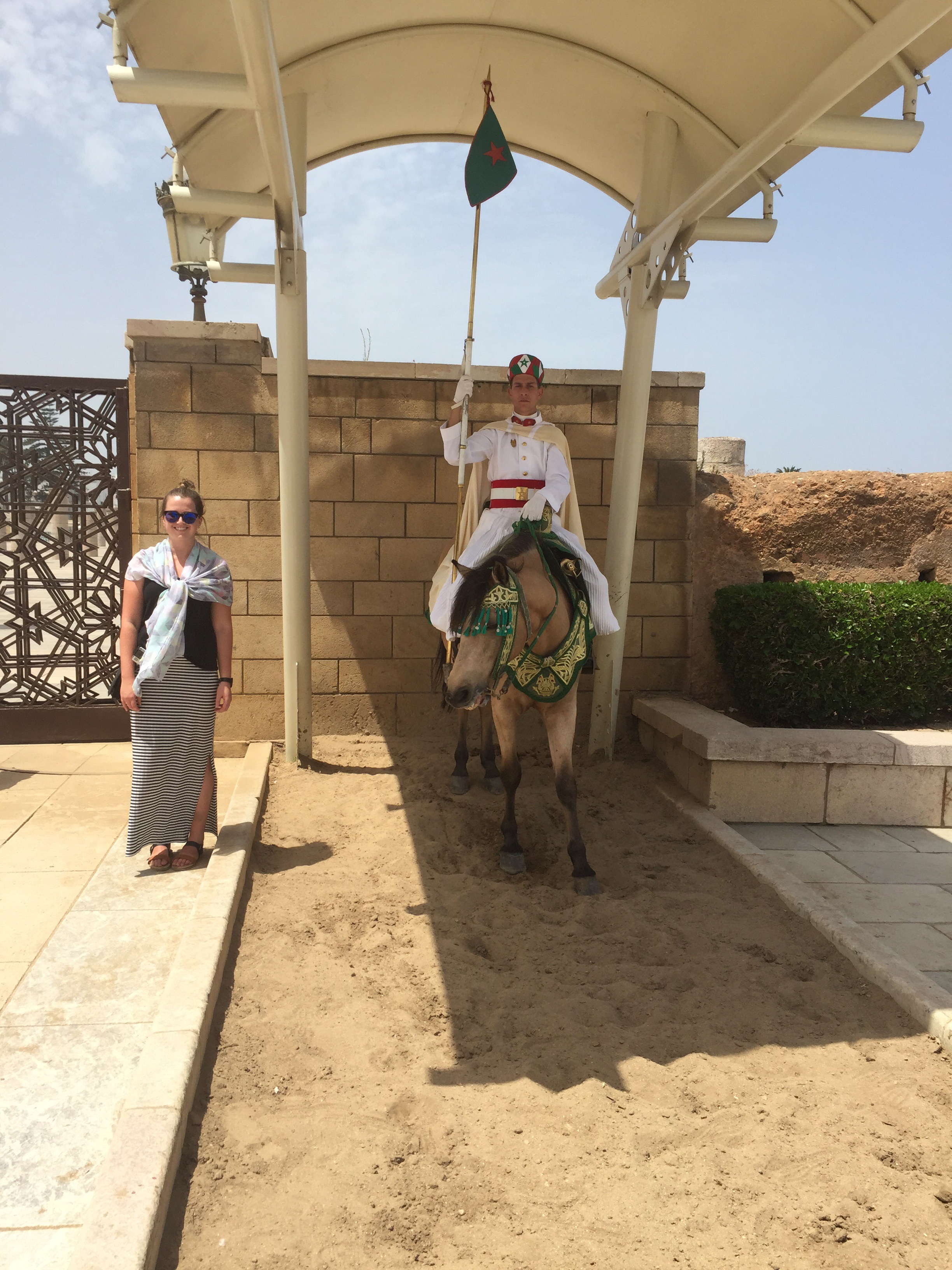
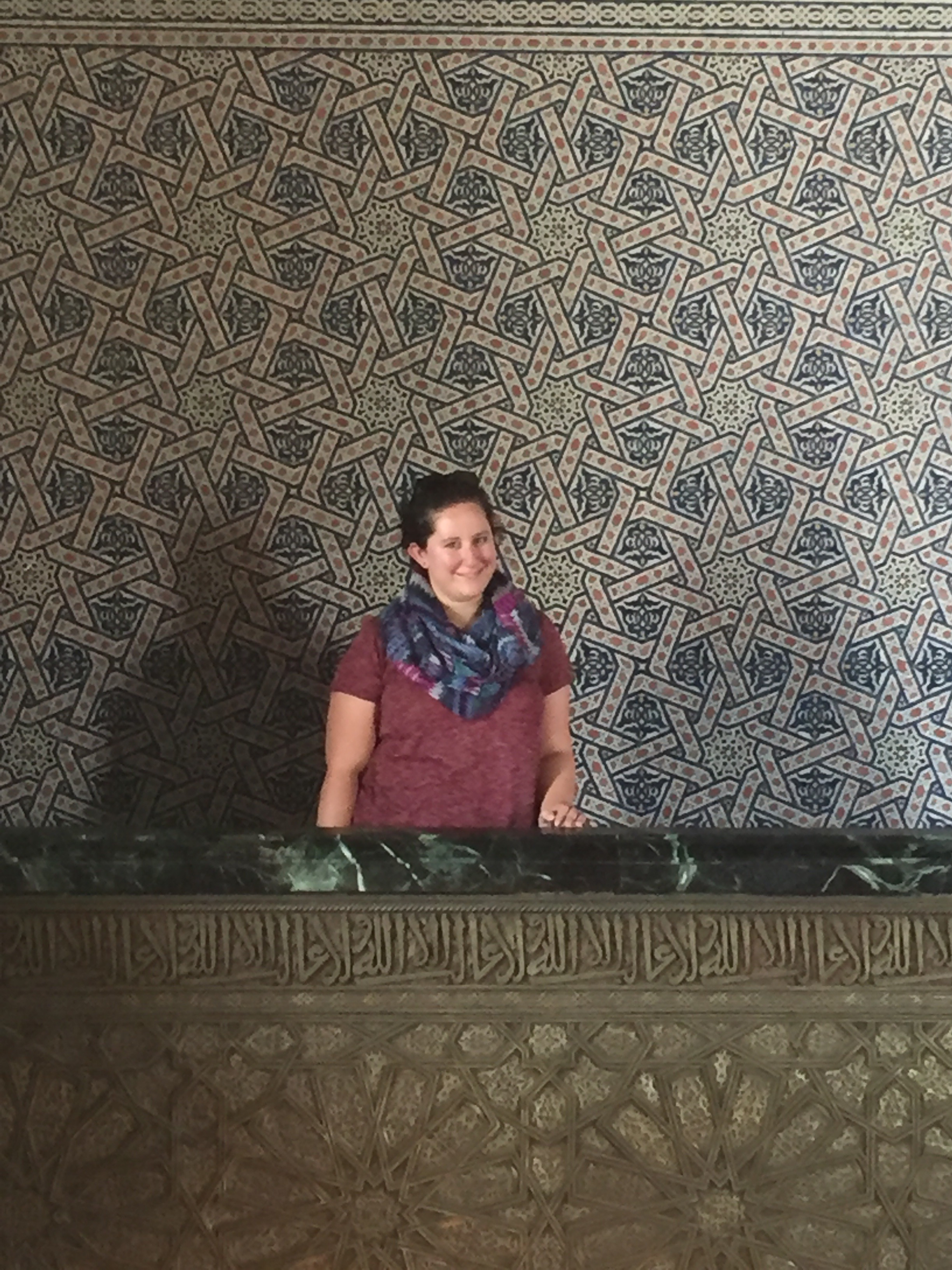
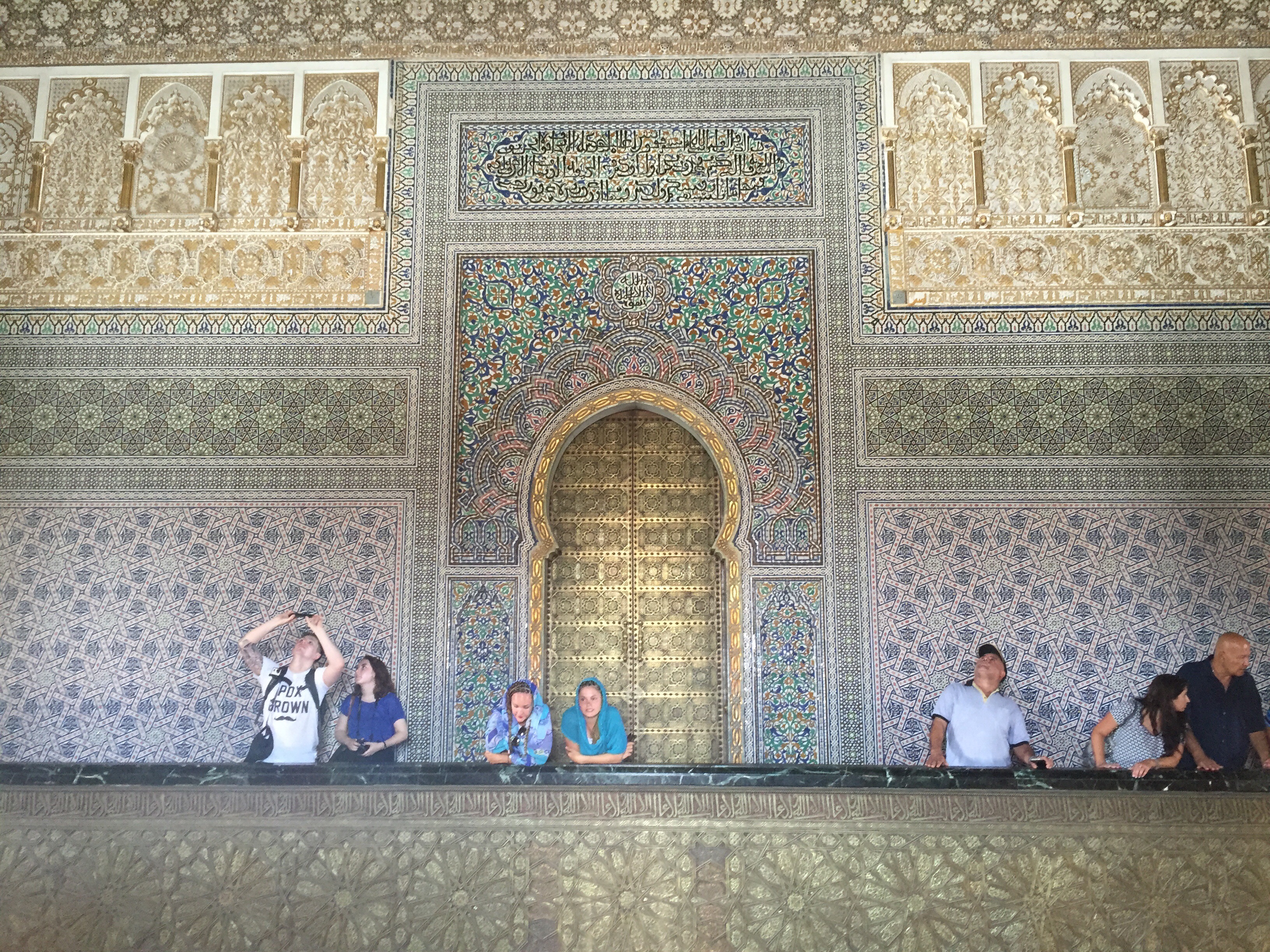
Next we headed to a square where there was the marble Mausoleum of Mohammed V and Hassan Tower. Before going inside the square we had to stop to take one of the most iconic photos you can take while traveling – a photo with guards! Apparently we were allowed to touch their horses but we decided it was probably best to keep some distance from the men with weapons (though to be honest I did think our guide had said hoses and I didn’t really understand…..). We were told to head straight to the Mausoleum to avoid some of the crowds. At each of the four entrances to the Mausoleum, as well as each of the four corners inside, there were stationed guards. They all wore slightly different coloured uniforms representing different things. Inside there are two men, at all times, reading quietly from the Koran as this is where the present king’s father (the late Hassan II) and grandfather have been laid to rest. We could look down on the tomb from a gallery which is a very tranquil place, despite the copious amounts of detailed decoration.
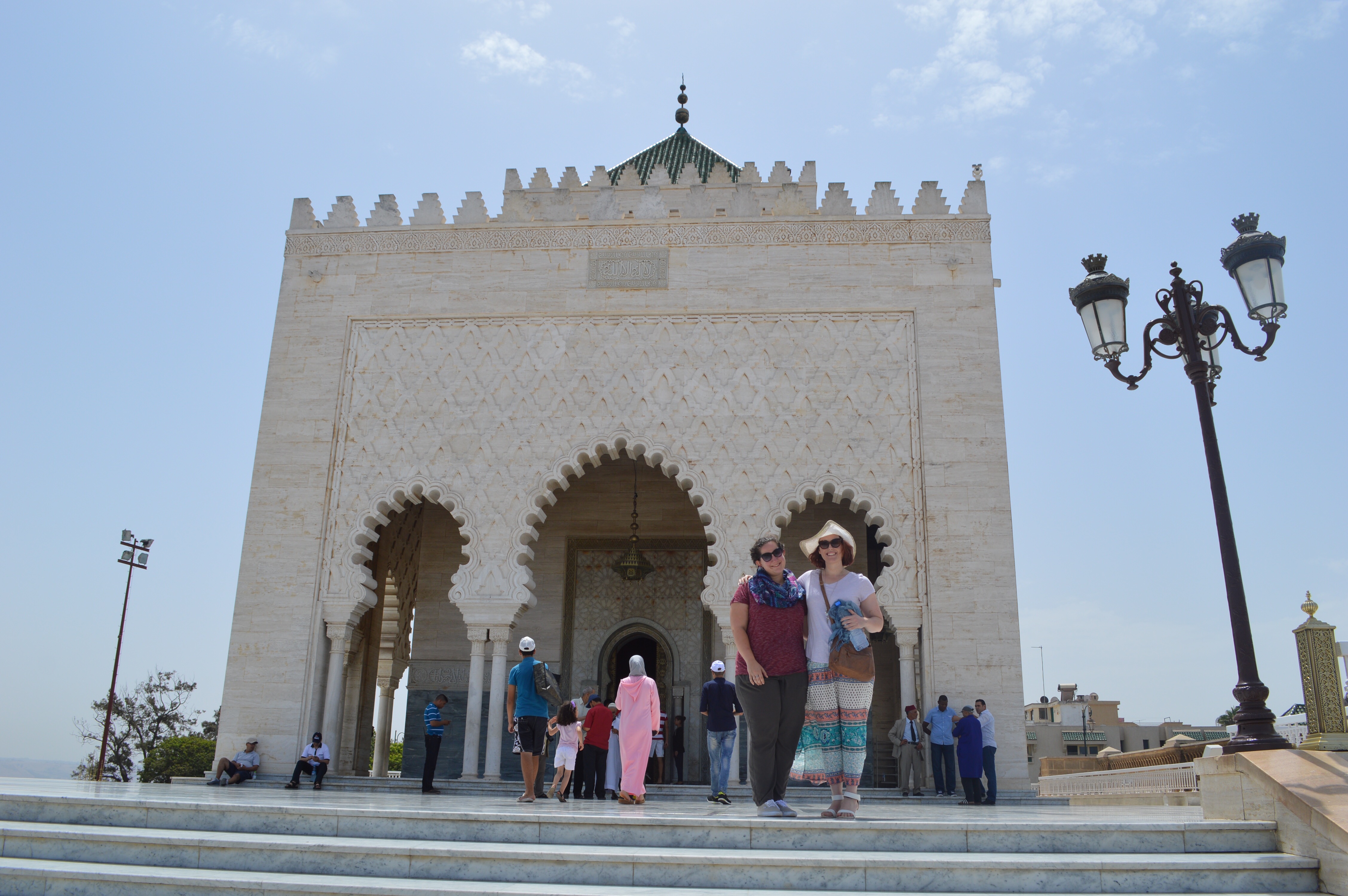
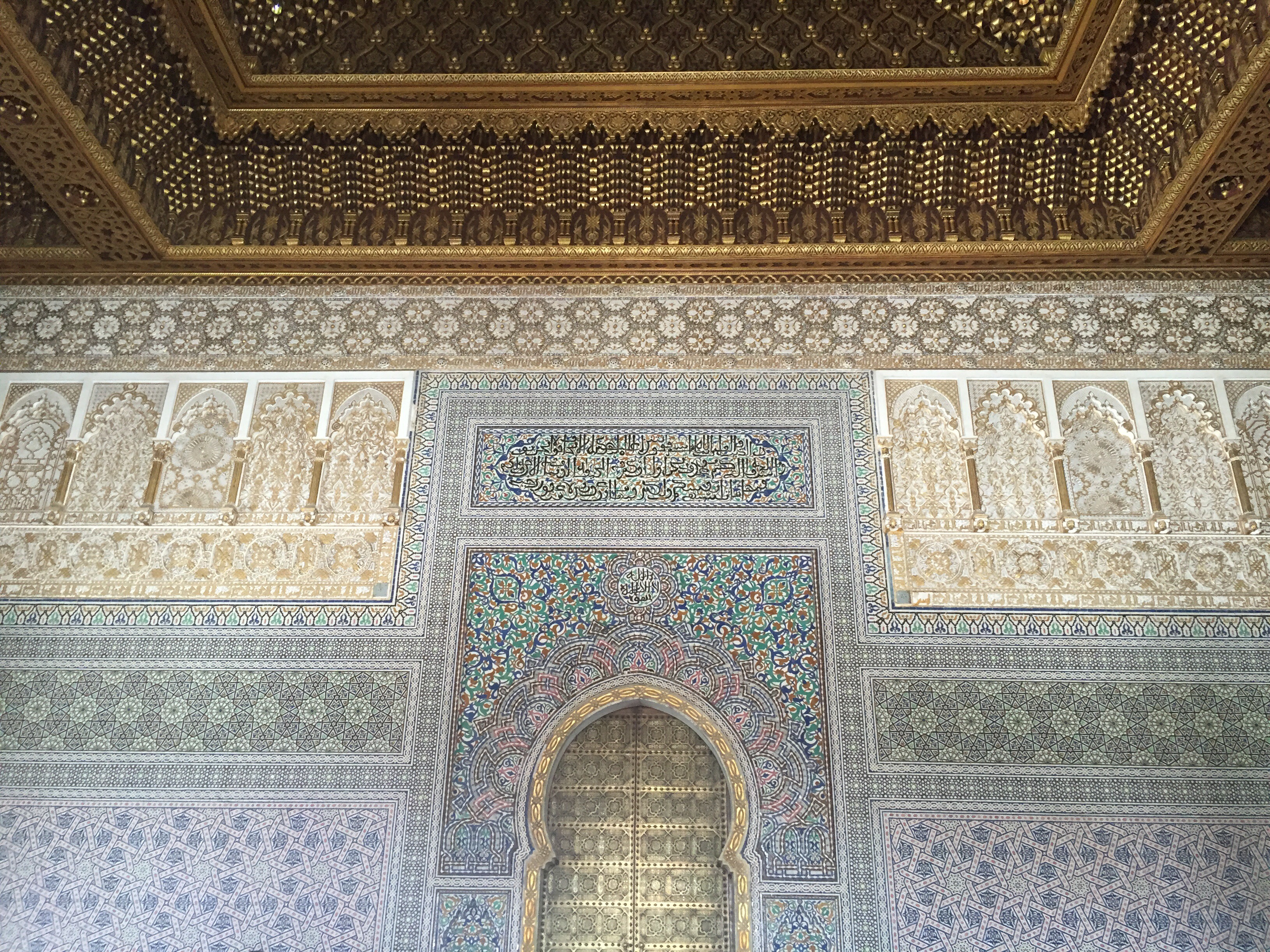
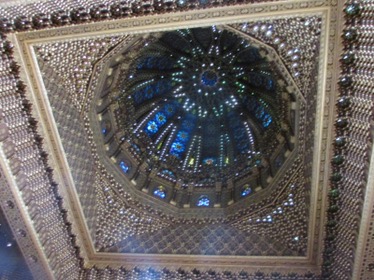
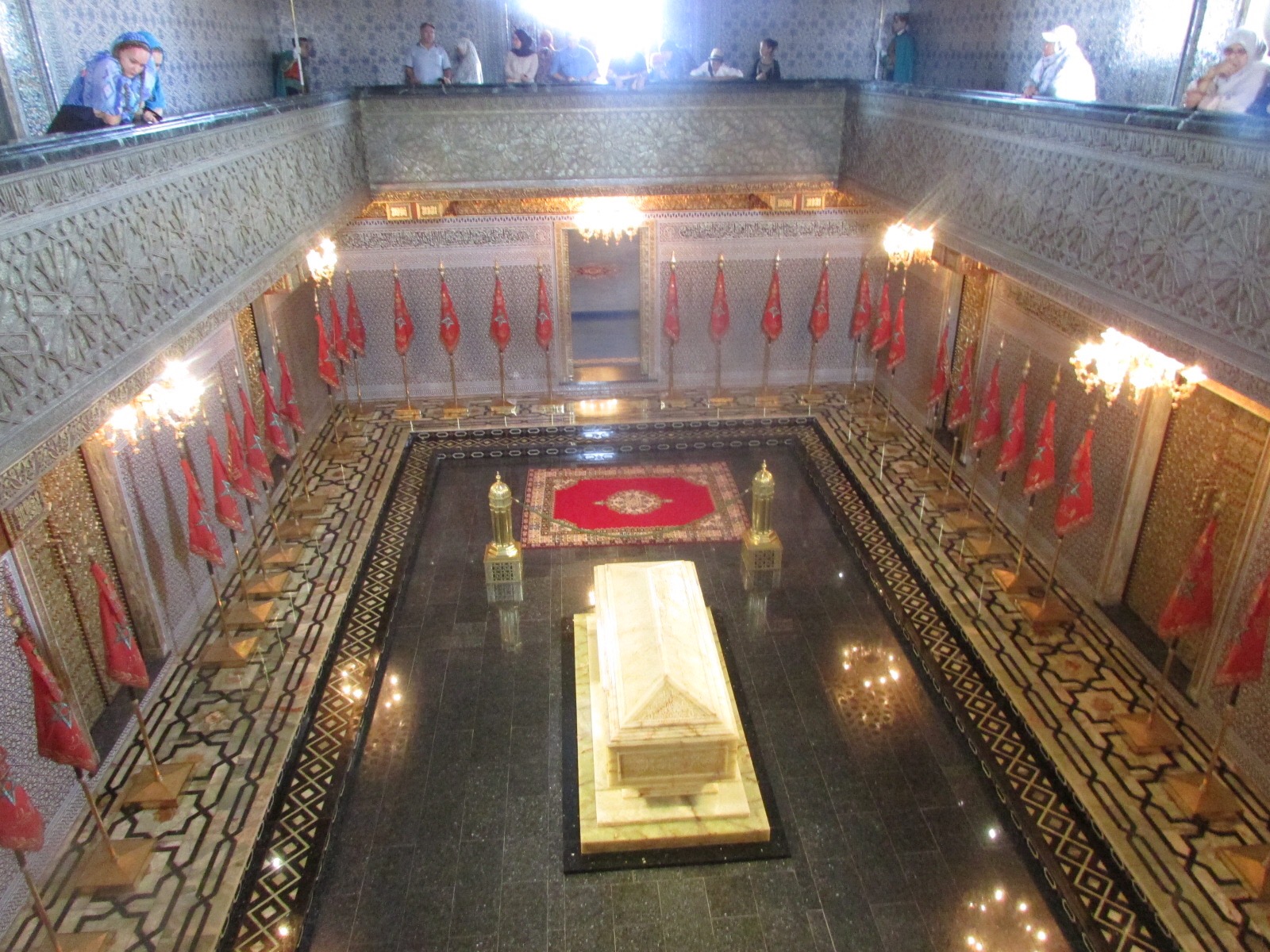
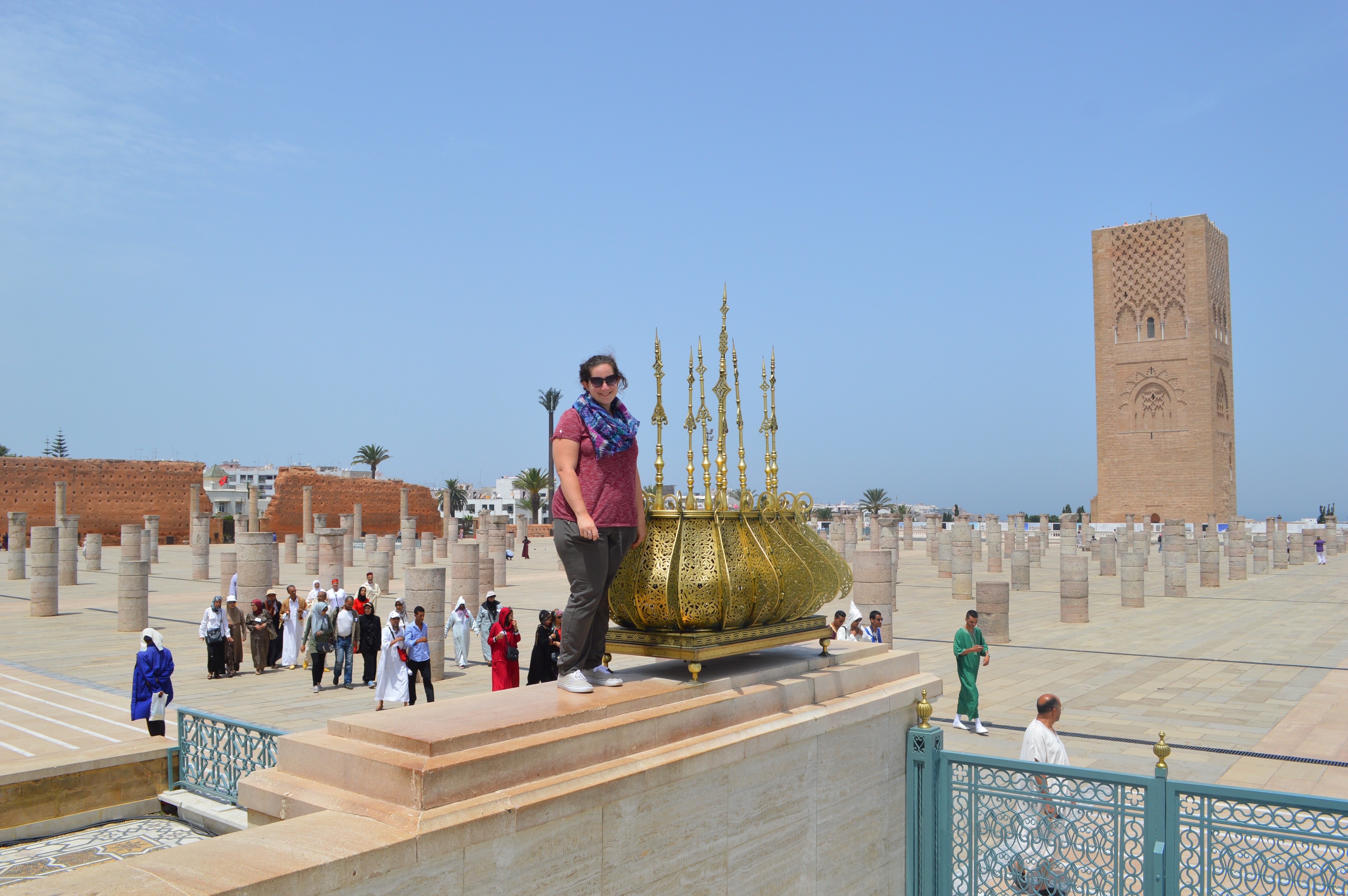
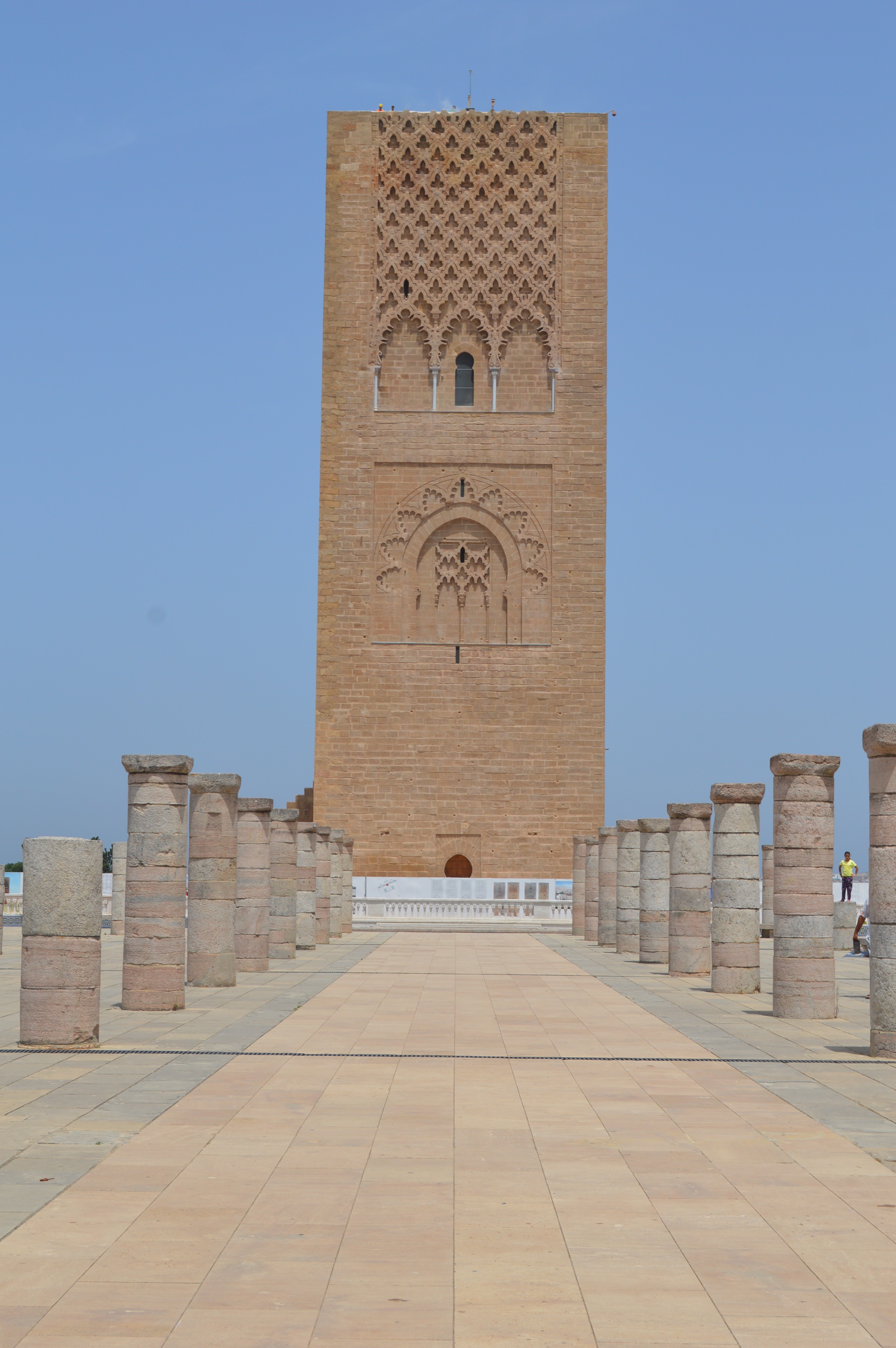
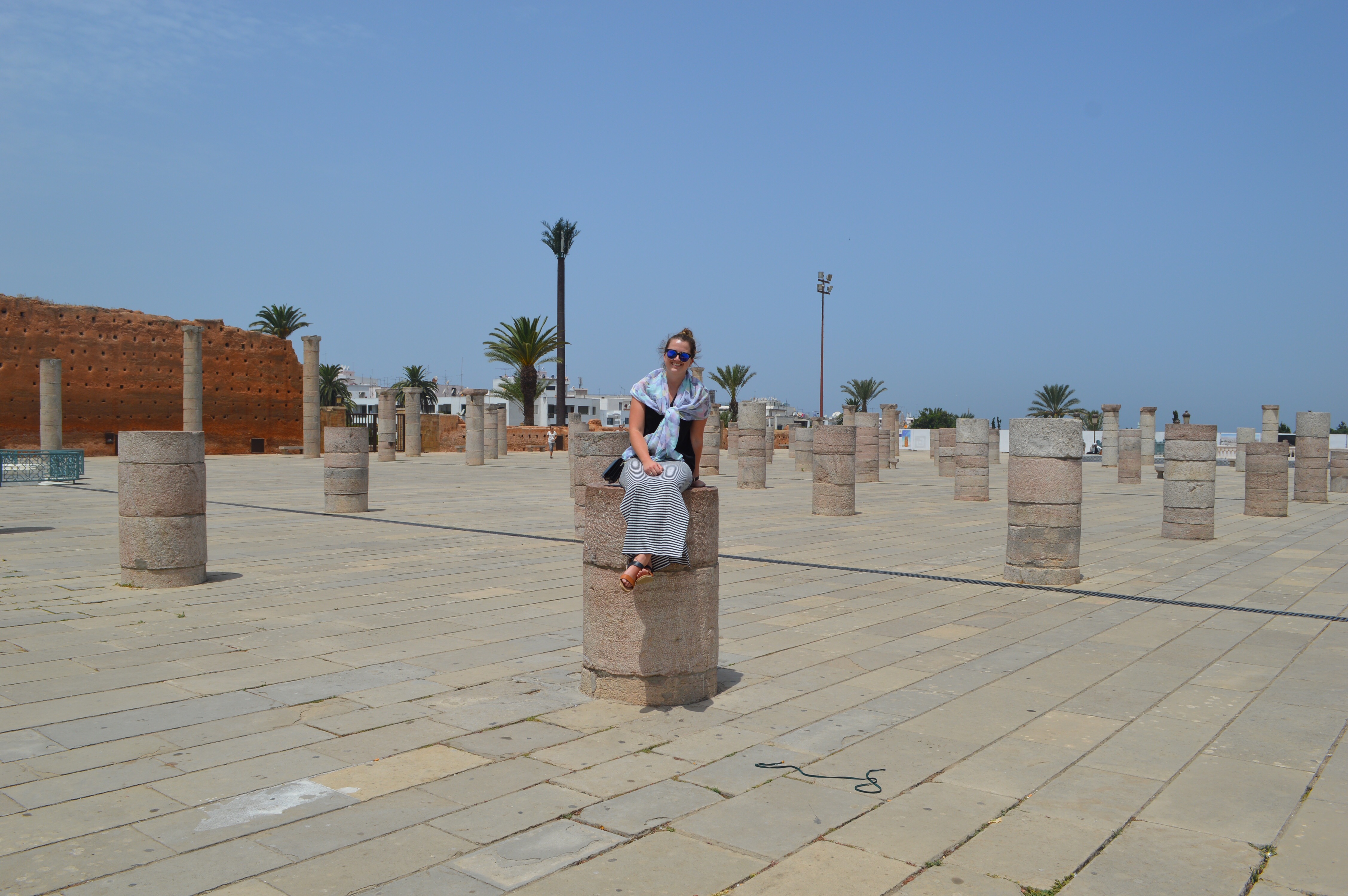
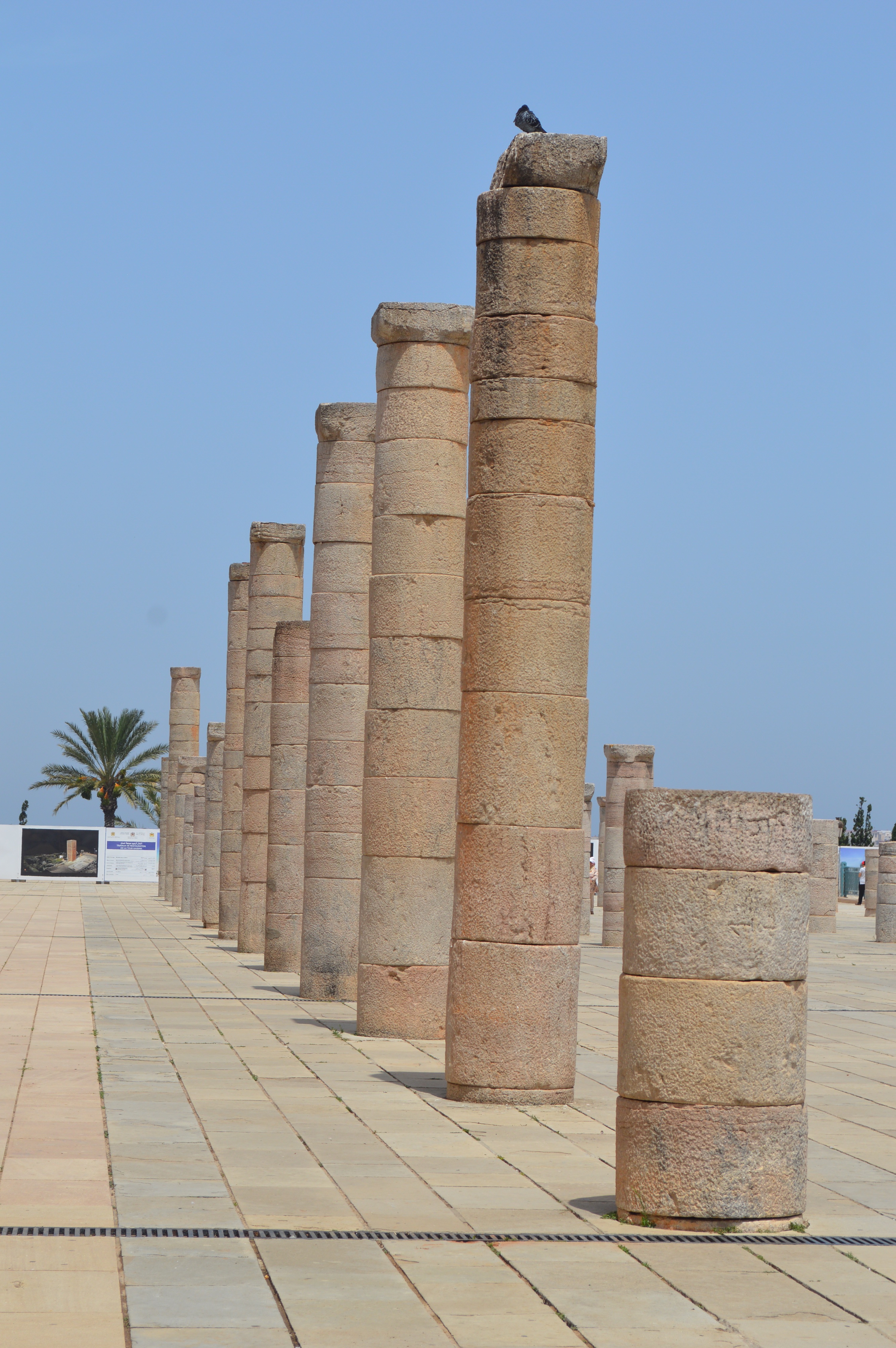
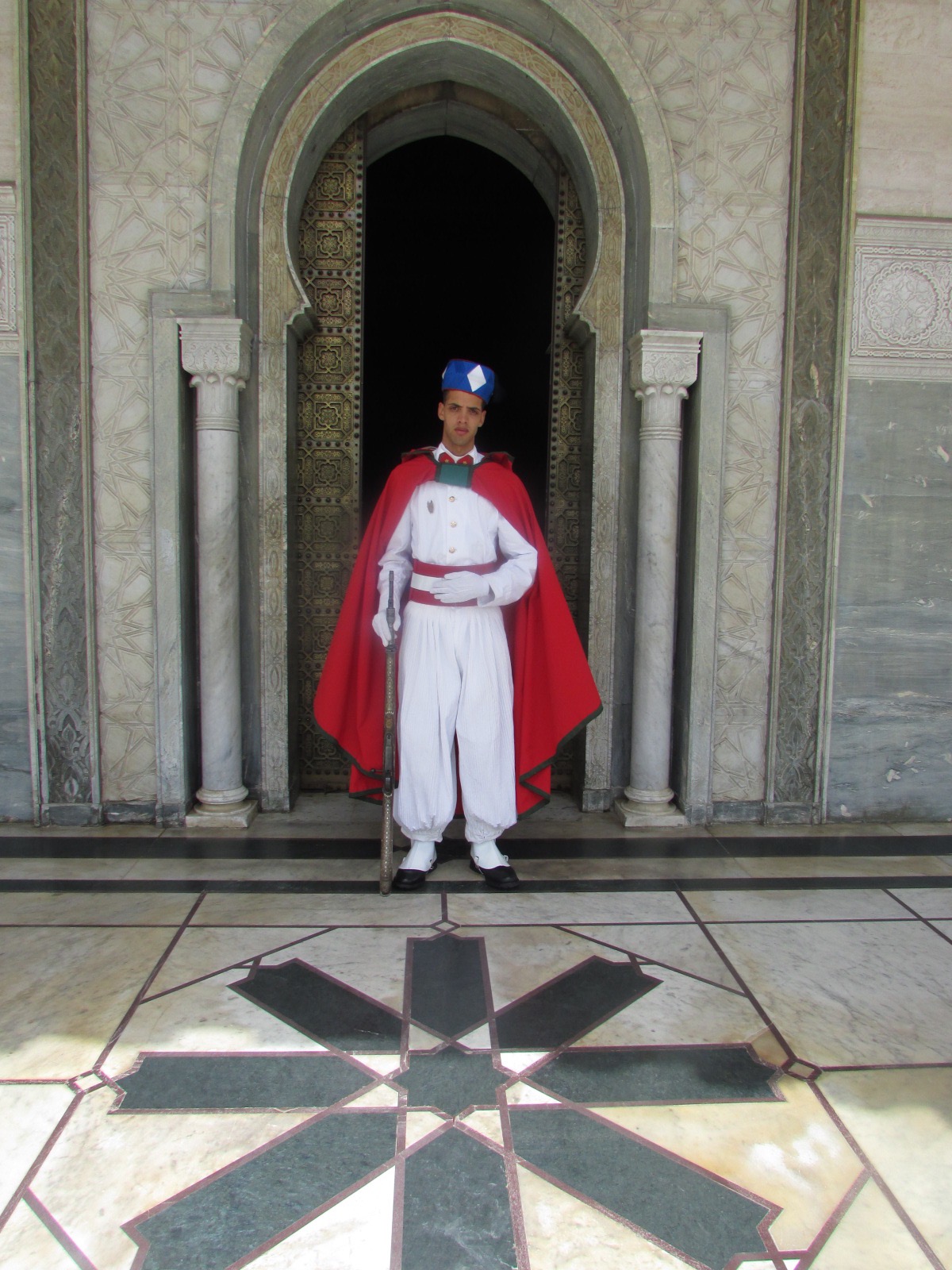 In the square in front of the Mausoleum is the Hassan Tower and the remains of a mosque which would have been the second-largest mosque of its time. The minaret was intended to be 60m-tall, but the tower was abandoned at 44m after the death of the Al-Mansour, who commissioned the build. The mosque was destroyed by an earthquake in 1755, and only a forest of shattered pillars remain.
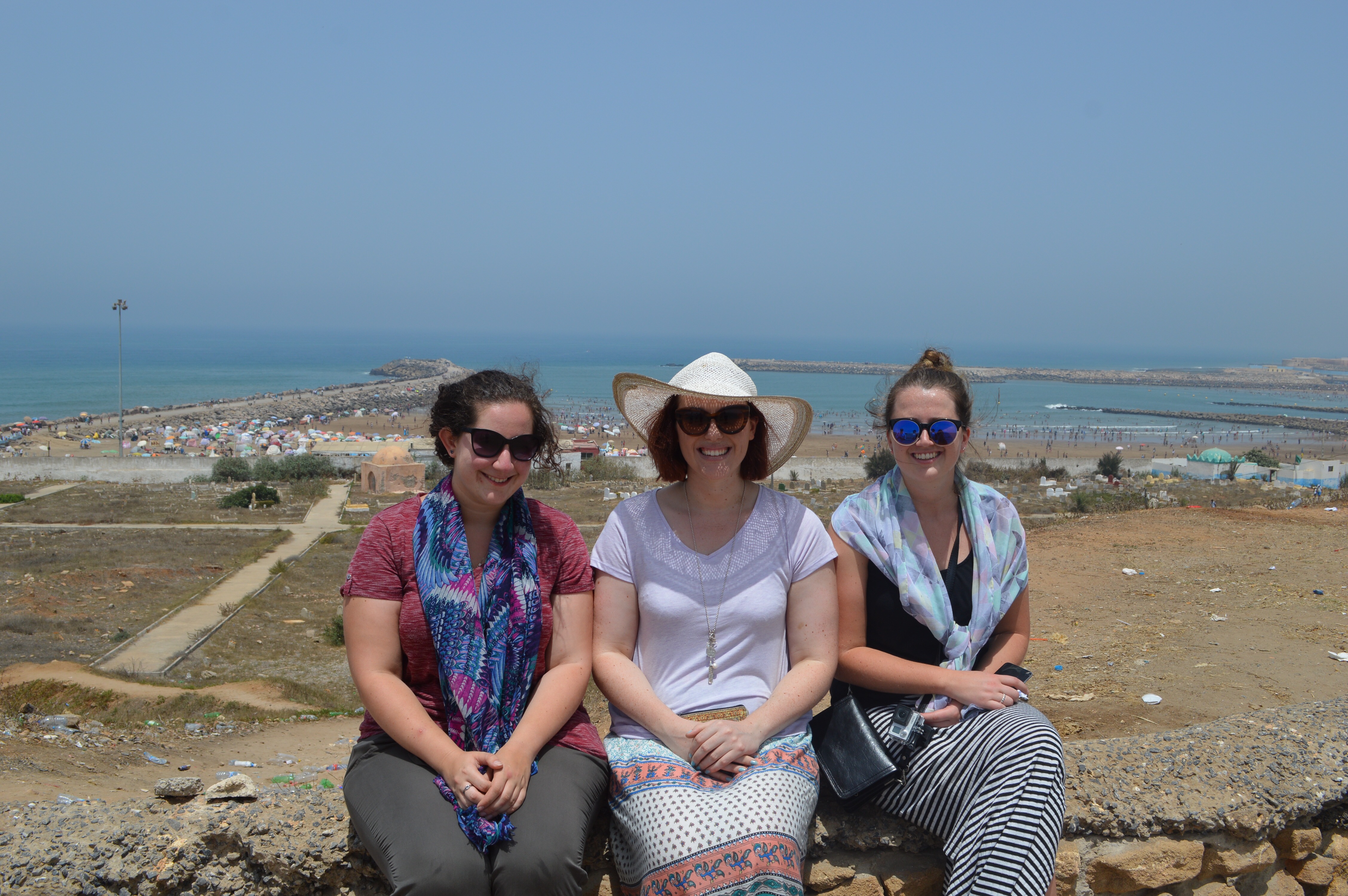
 Our final stop before lunch was the Oudaia Kasbah. This is the oldest part of the city, the site of the original ribat, and commands powerful views over the river and ocean from its cliff-top perch. They really were incredible.
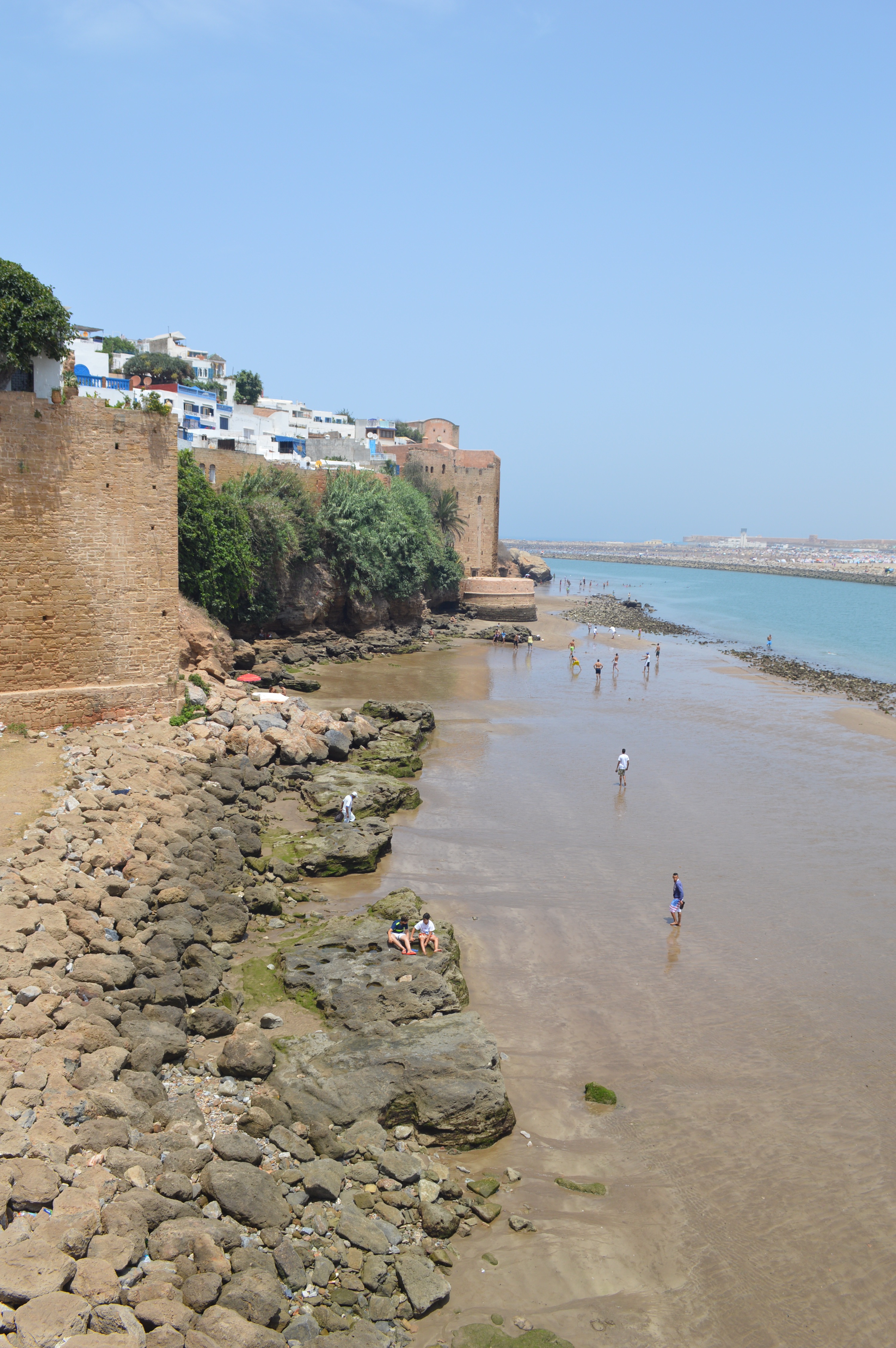

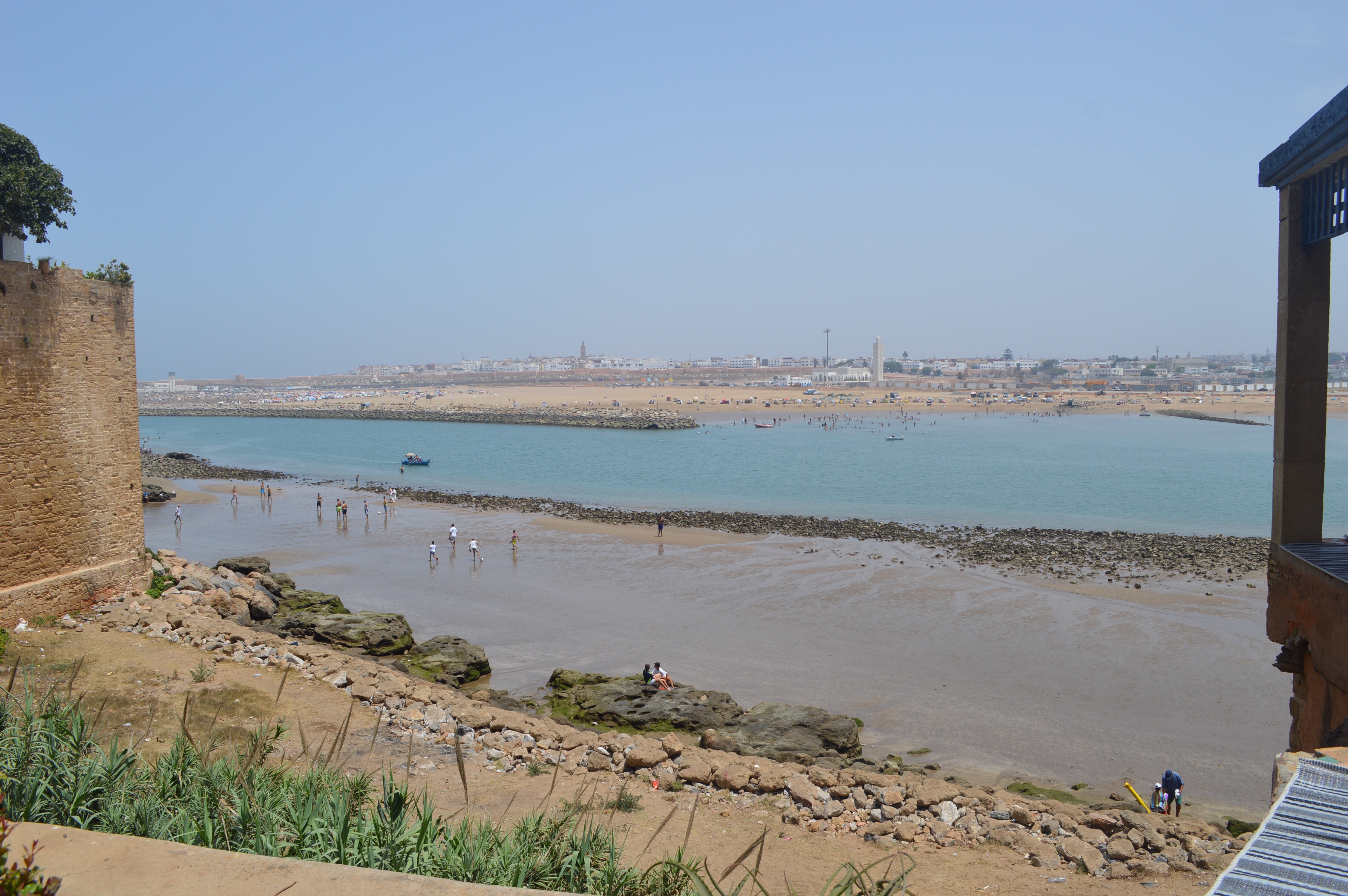
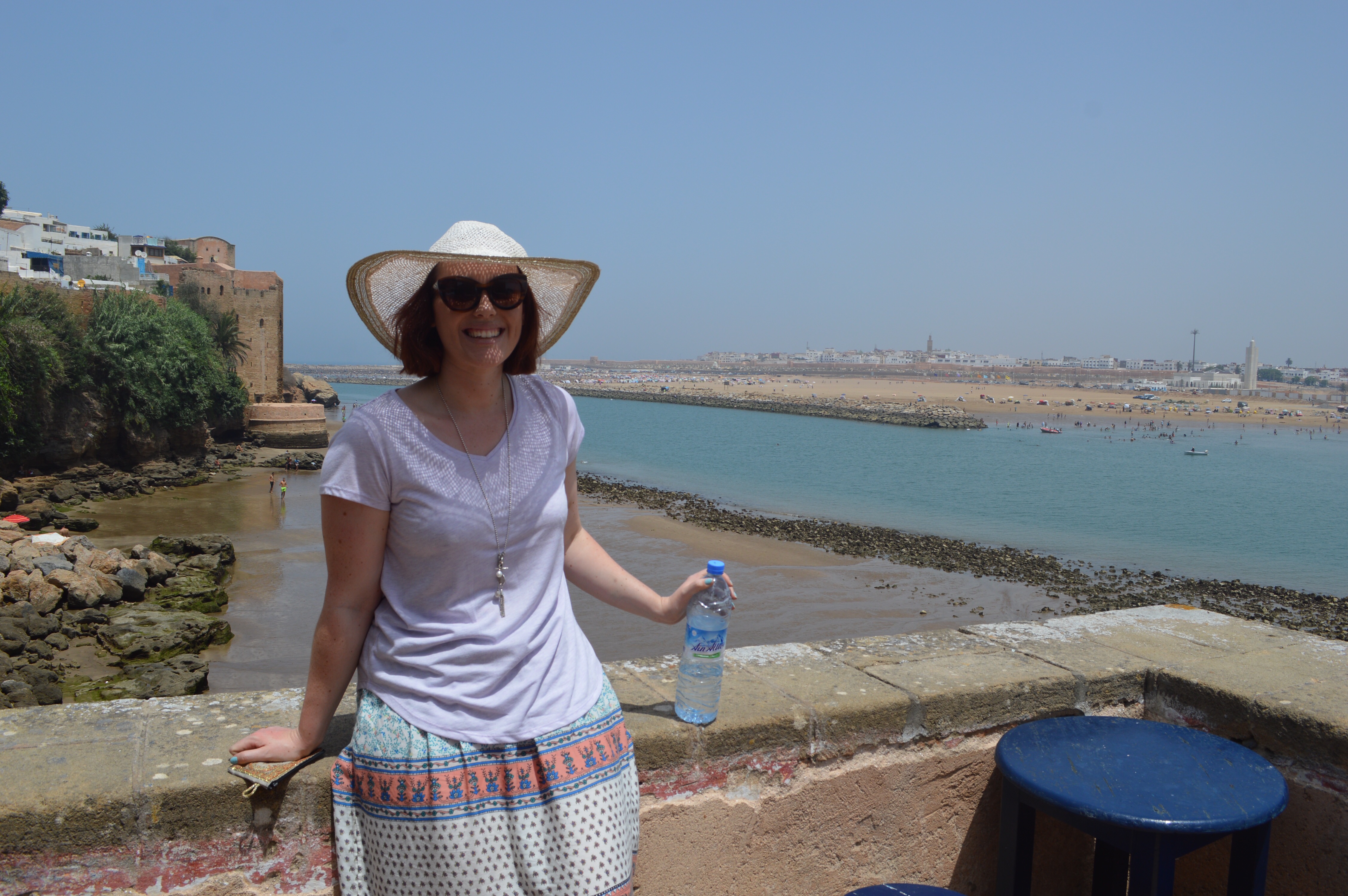
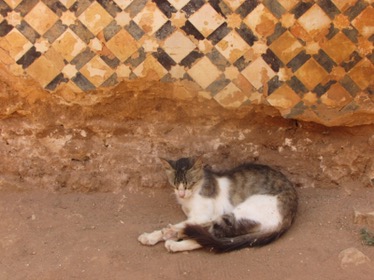
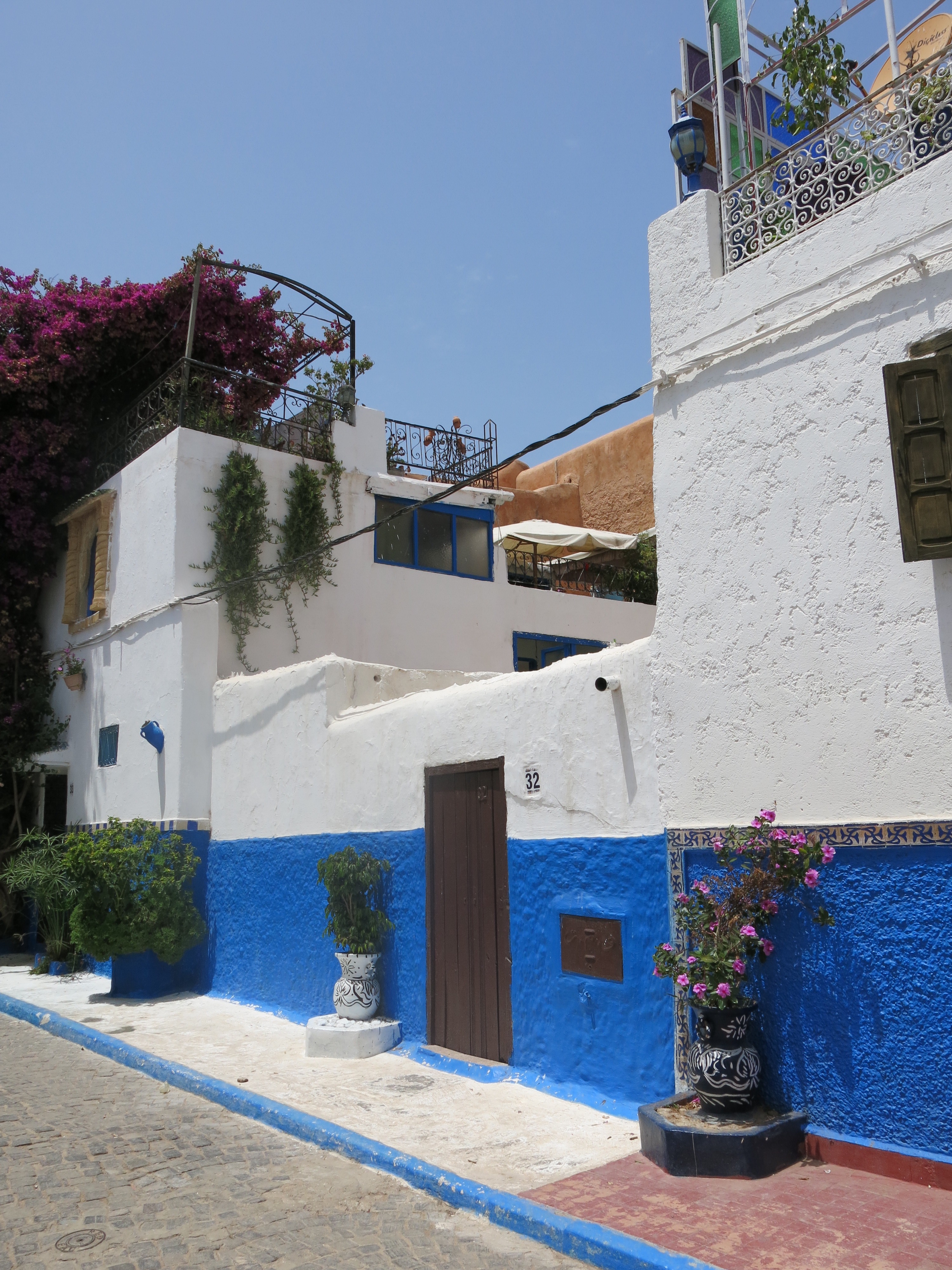
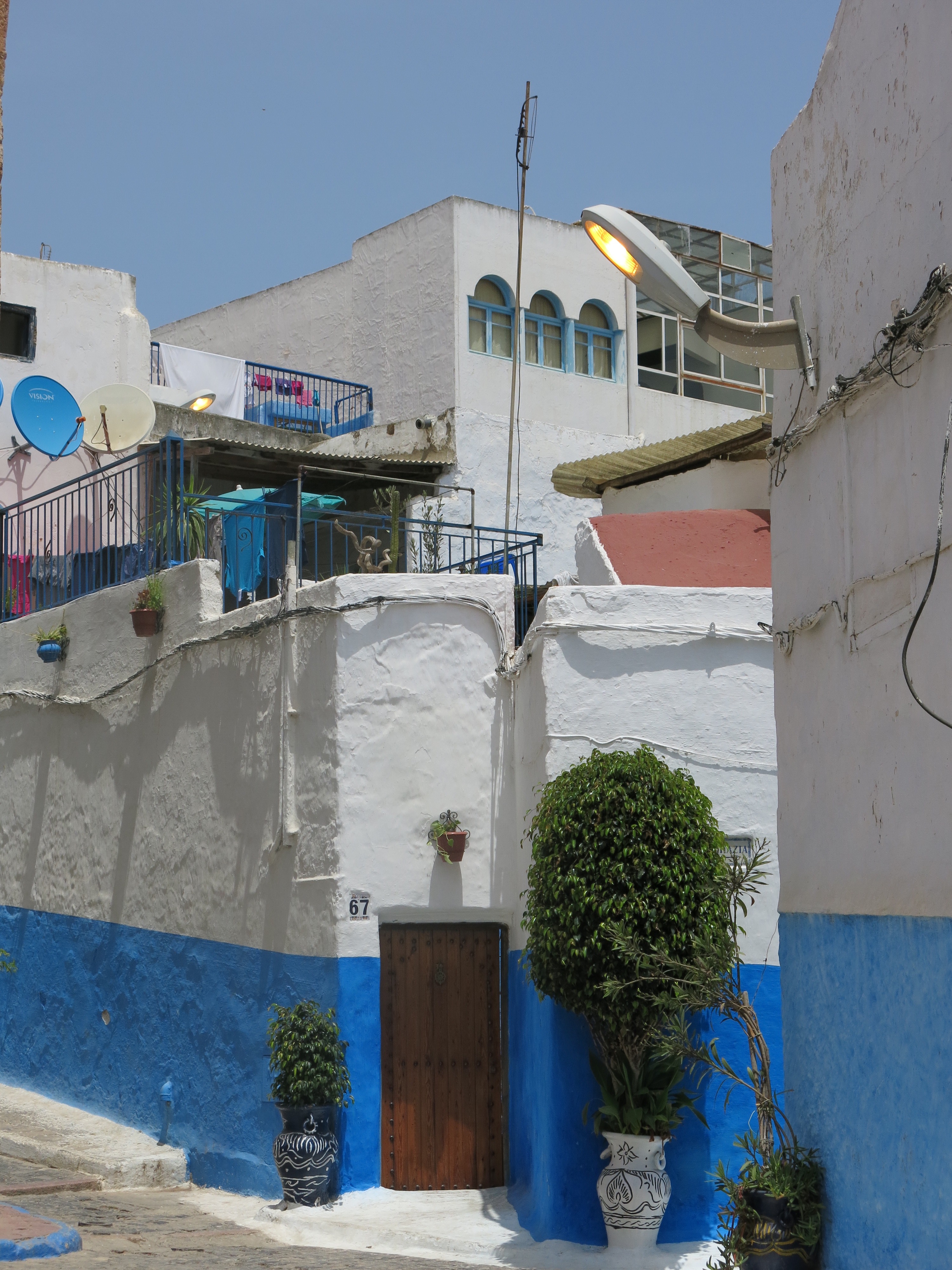
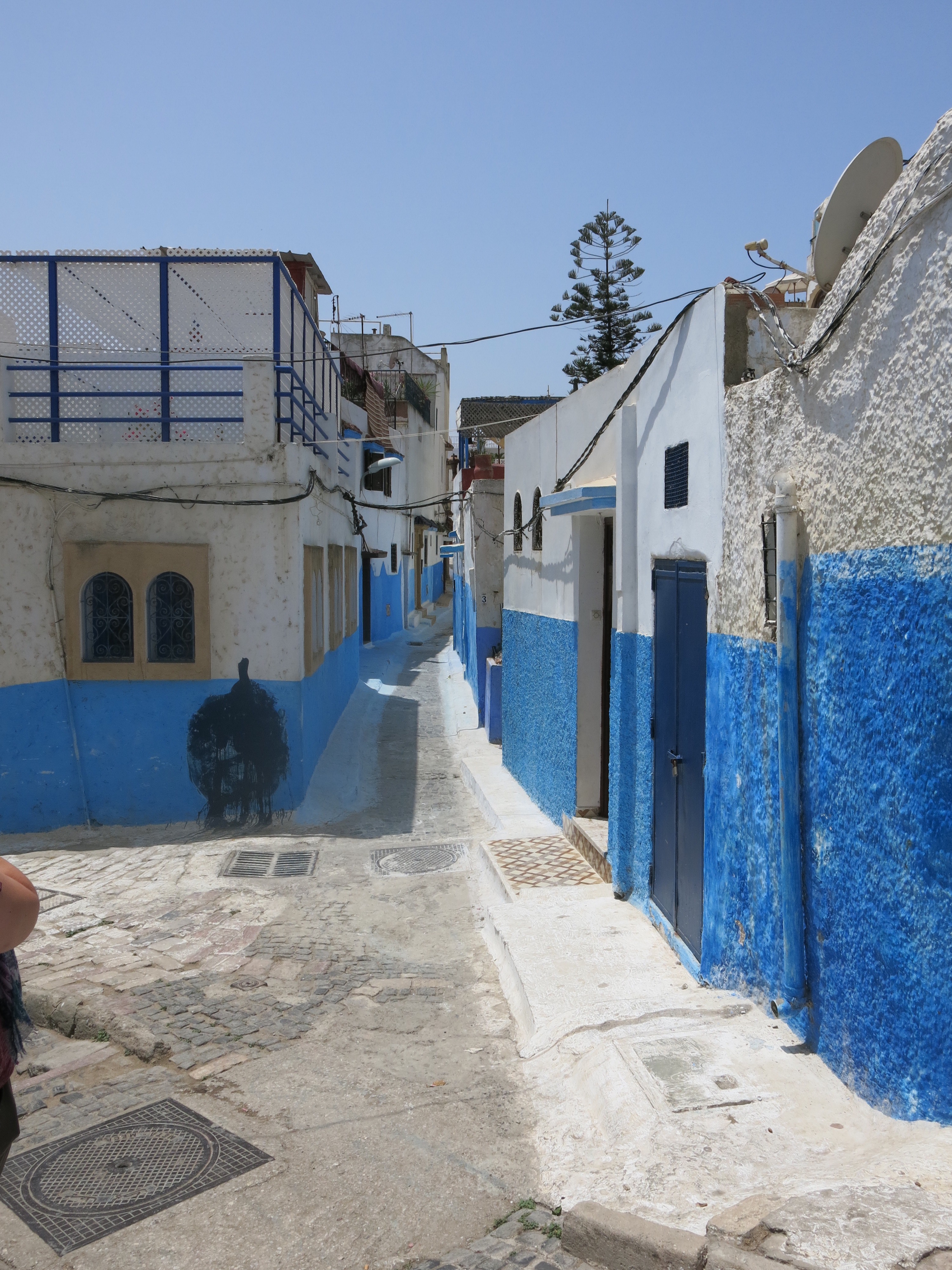
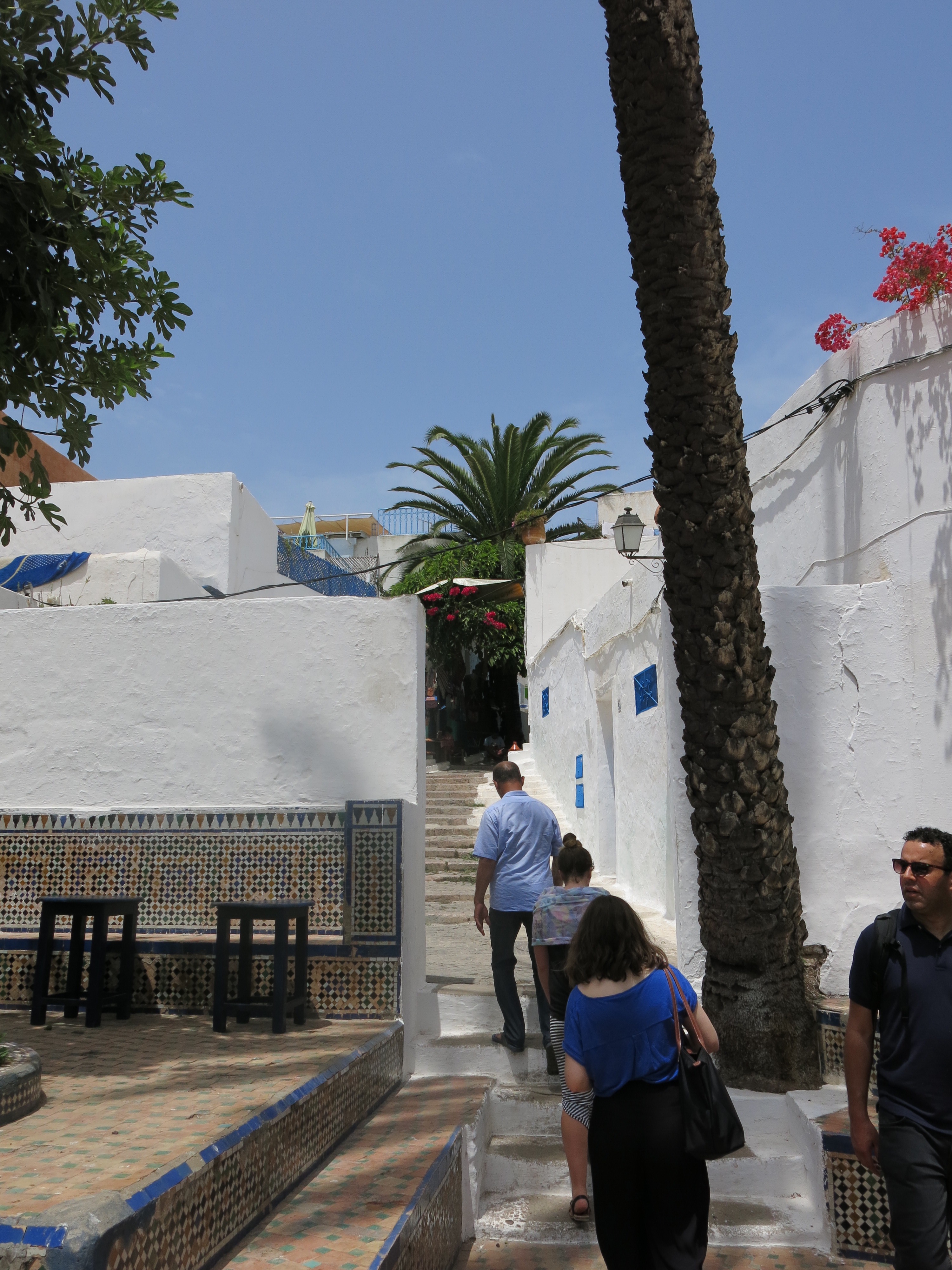
The kasbah is now predominately residential and our guide took us around some of the narrow and picturesque streets, lined with whitewashed houses – most of which were built by Muslim refugees from Spain. As well as about 1,000,000 cats, we also passed the oldest mosque in Rabat, built in the 12th century and restored in the 18th. We stopped multiple times for our guide to say hello to people he knew (which seemed to be everyone) and he took us inside a bakery, waking up the sleeping employees on their tea break as we went. They didn’t seem to mind being woken up though, and happily took us in to show us where they made the bread.
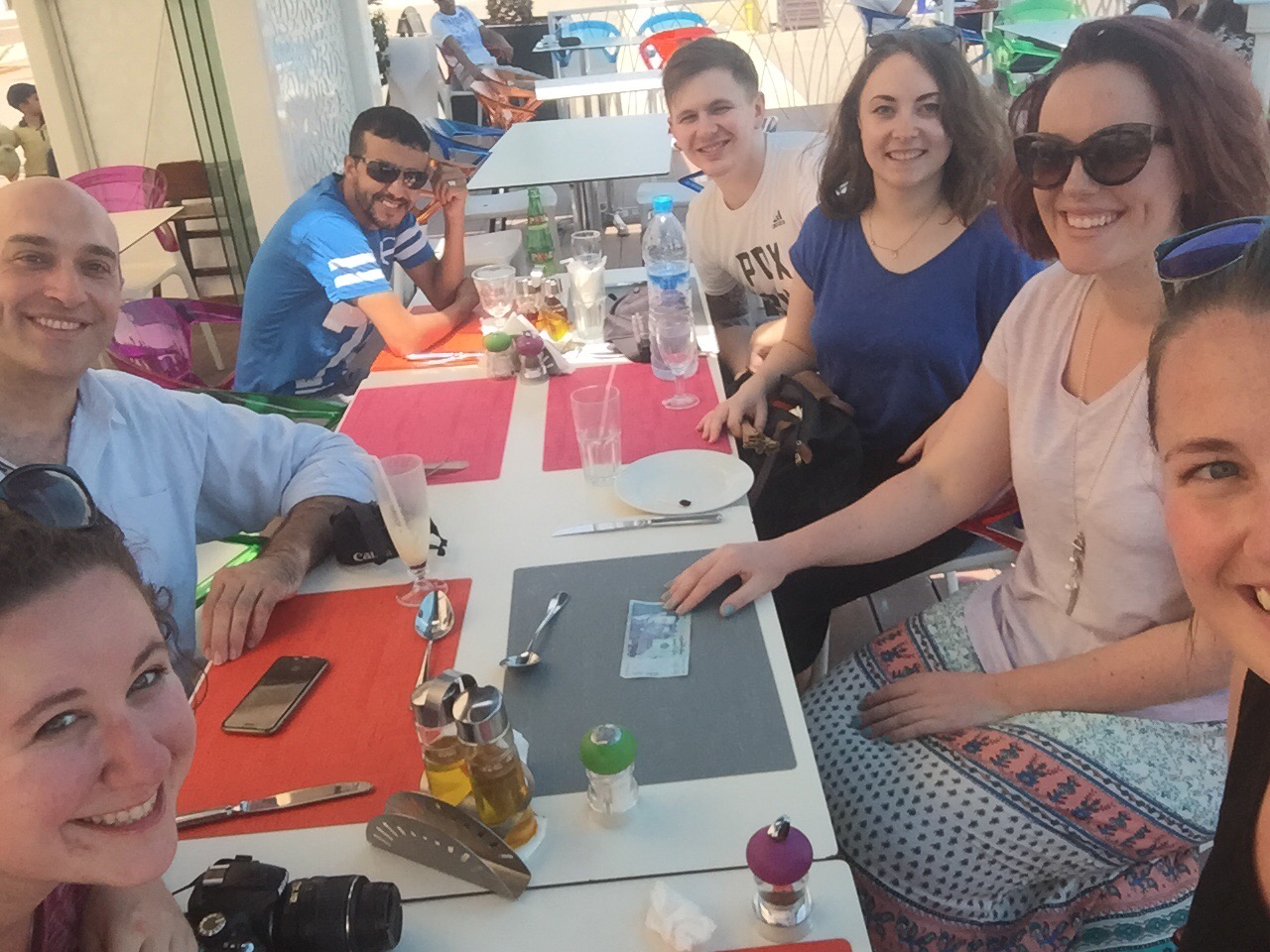
After what felt like a whole day of adventuring (and dying in the heat), but had actually only been the first part of our day, we headed to the marina for lunch. We were surprised to find guards at the marina. Apparently one of the restaurants is owned by the Kings family and all such businesses have increased security associated with them! No one was sure exactly what to have for lunch – the pizza and pasta looked delicious, but we were in Morocco! We decided to ask Mohamed. He said, without any hesitation, “pizza or pasta, by halfway through the trip you will be eating nothing but Moroccan food”. Everyone except Mohamed got pasta and it was amazing! We had a great time, telling Mohamed about our day and some of our guides funny moments. He looked at as all rather knowingly and nodding his head saying “oh yes, he is a crazy boy”. With full tummies and smiles on our faces we headed back to the van for our next destination – the quieter, smaller and more laid-back of the four imperial cities, Meknès!
The scenery started to change as we drove the 1h 48 min (150.2 km) towards Meknès. Mohamed informed us we were coming into more of an agricultural region with abundant production of cereals, olives, grapes, citrus fruit and more. On our drive into town we drove past the Royal Palace (no visitors allowed in this one) and it was striking how the vegetation on that side of the street was so green and lush, and the opposite side to the Palace was brown. We met our next tour guide a few kilometers outside Heri es-Souani – an area of immense granaries and stables built for 12,000 horses! The roof, as well as other parts of the building was destroyed a long time ago by the Lisbon earthquake, but they have restored a bit of it. The vaults are very impressive – row upon row across a huge area. Probably the most impressive part of the building was the cooling system. Tiny windows, massive walls and underfloor water channels kept the temperatures cool and air circulating. You could certainly tell the difference when you moved from inside to outside the building! It has also been used many times as a film location. Perhaps the more famous ones being The Last Temptation of Christ from 1988 and The Mummy.
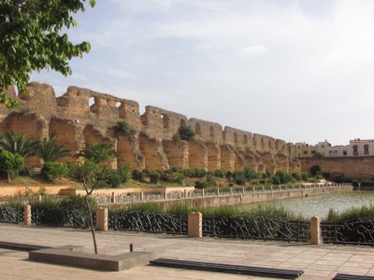
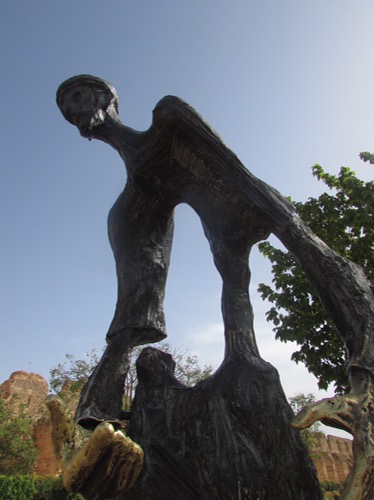
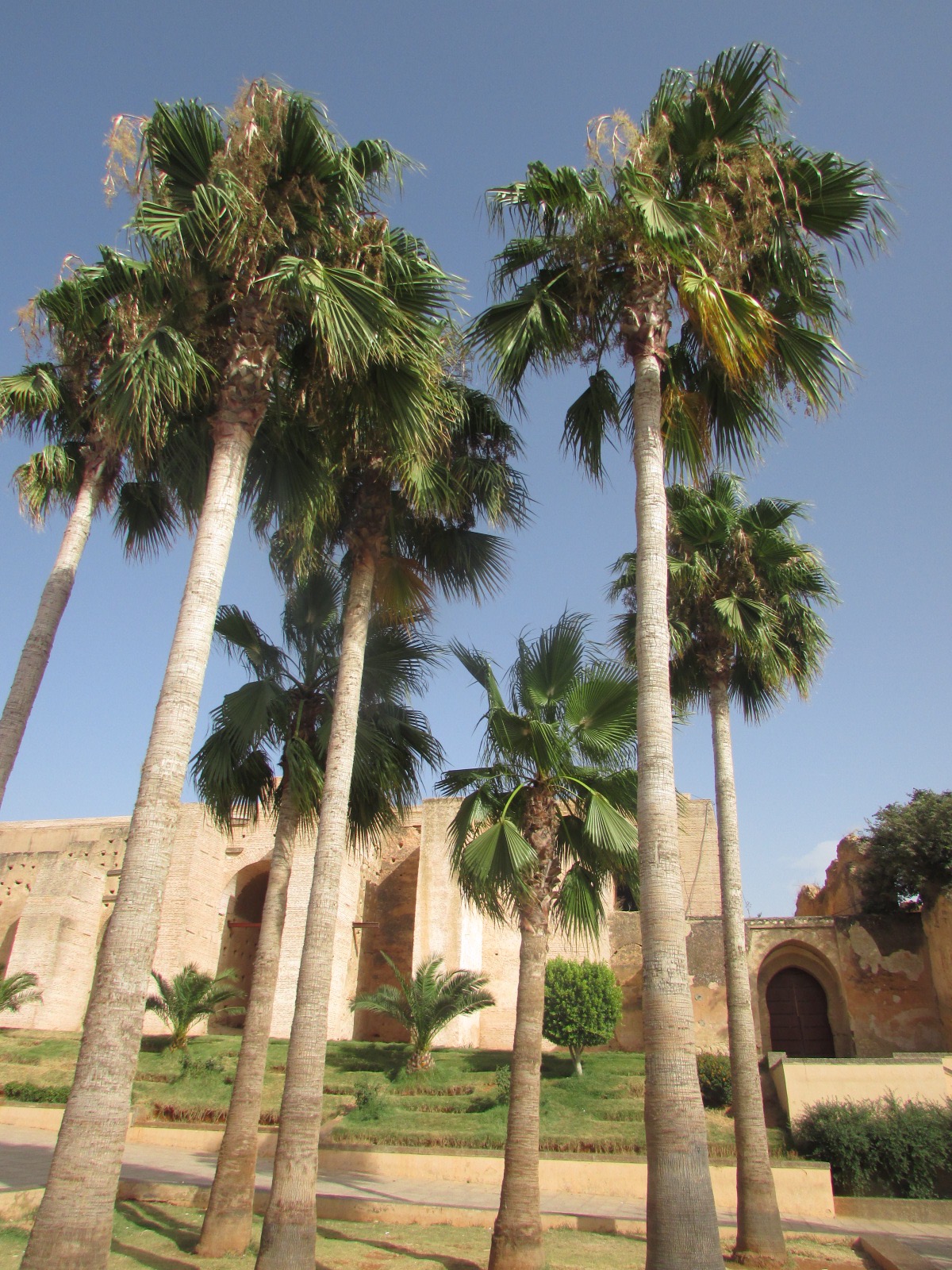
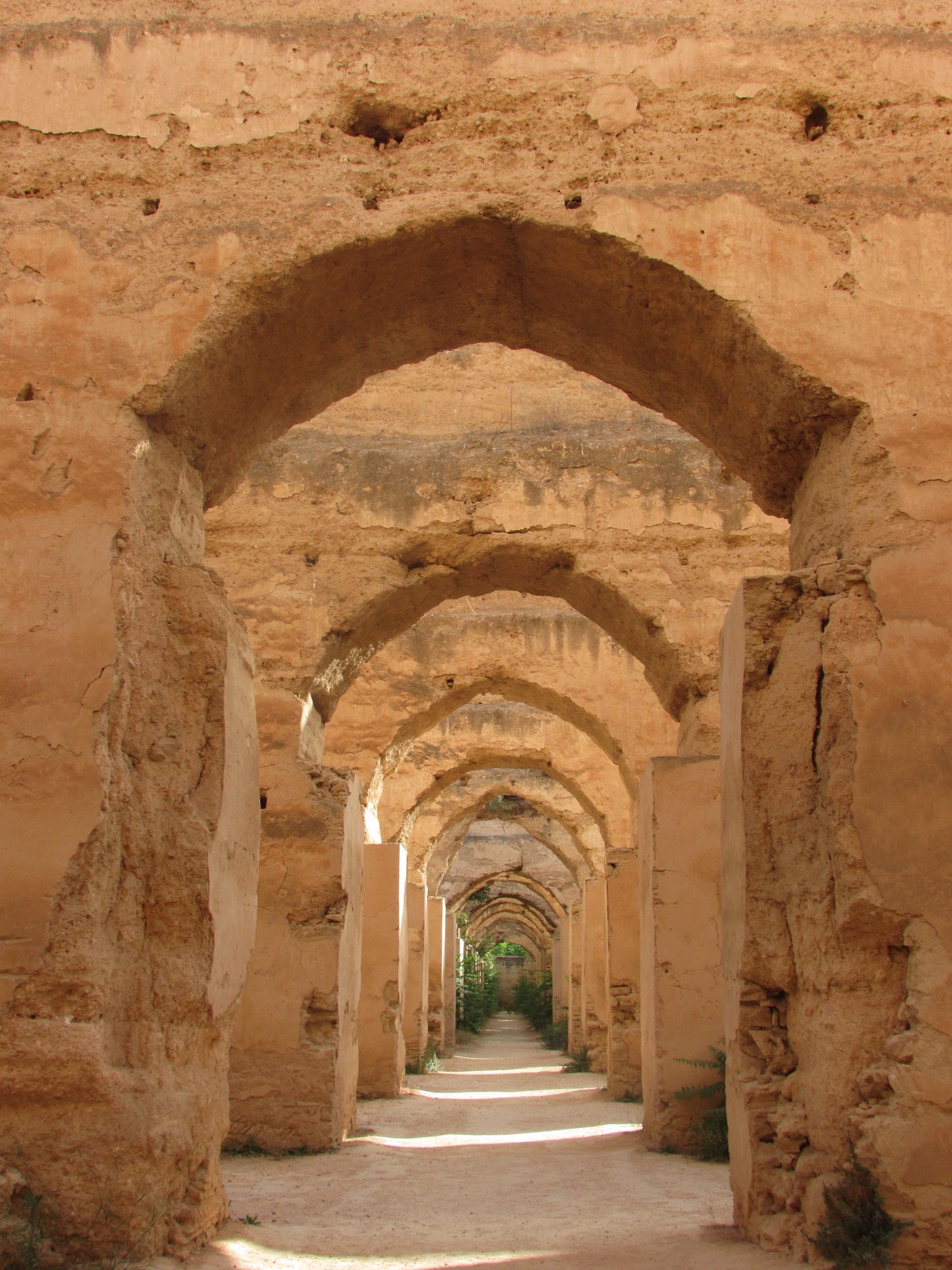
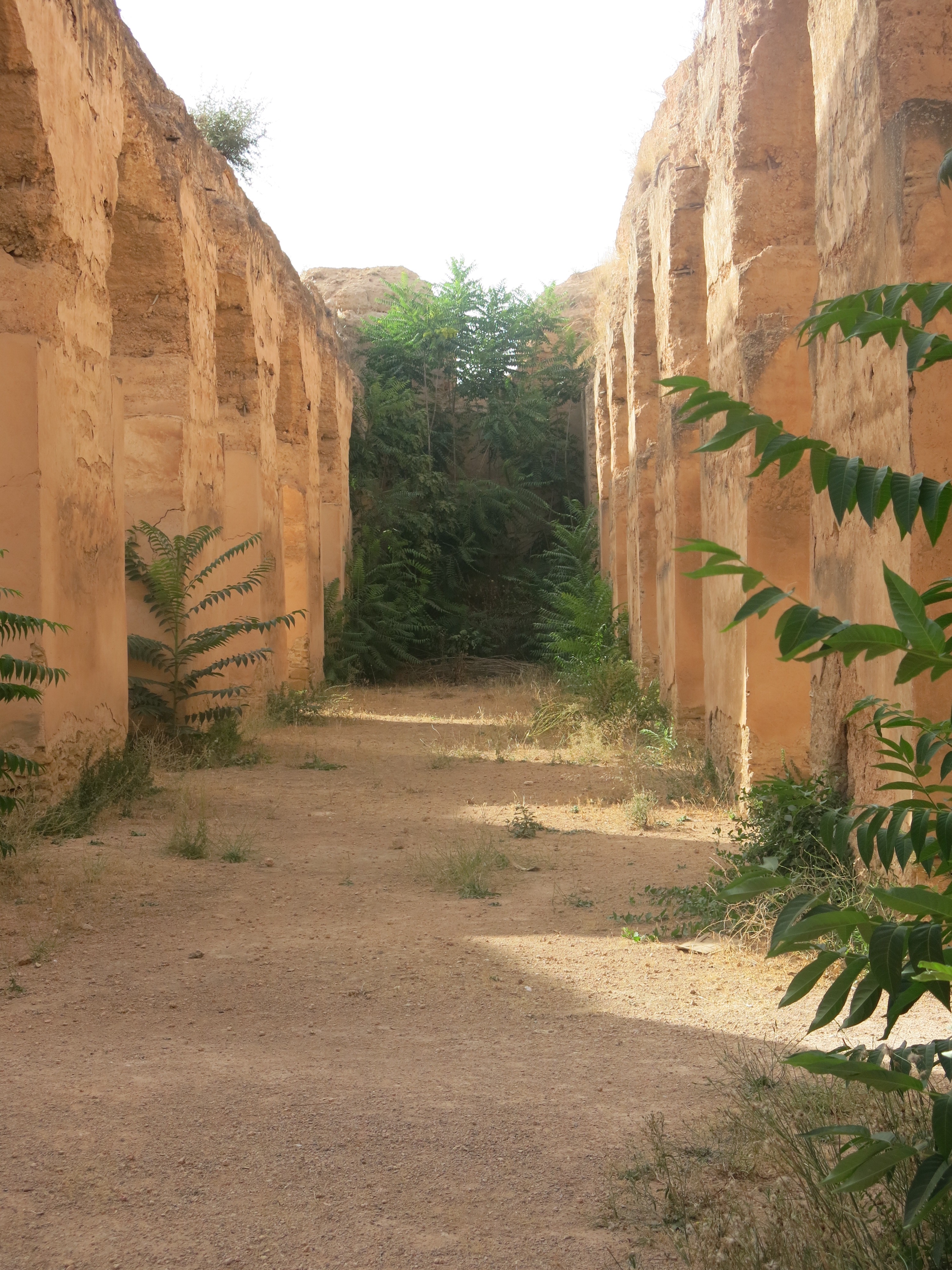
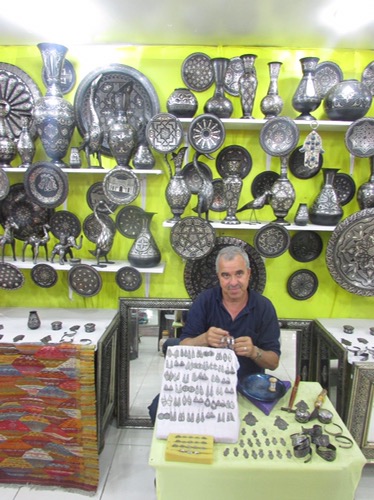
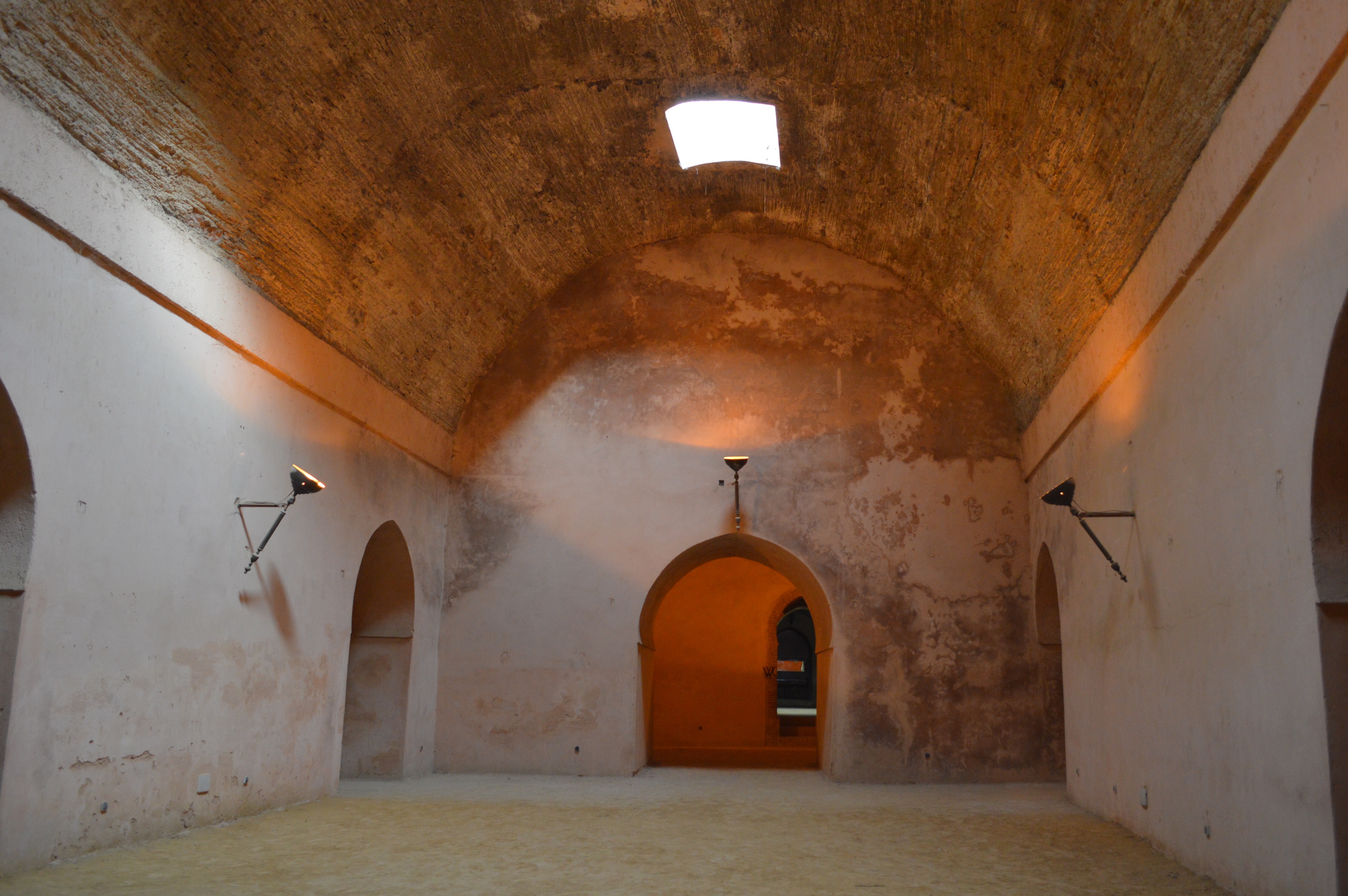 Next our guide took us into the city of Meknès – surrounded by high walls with great doors, the style was described to us as a Spanish-Moorish blend. Even though it is smaller than the other imperial cities, it still had all the winding narrow medina streets and grand buildings! First we stopped over at a small store where we saw some metal work and had a demonstration/explanation of how it is all made as well as seeing some beautiful embroidery completed by the local nuns and orphan girls – it was incredible.
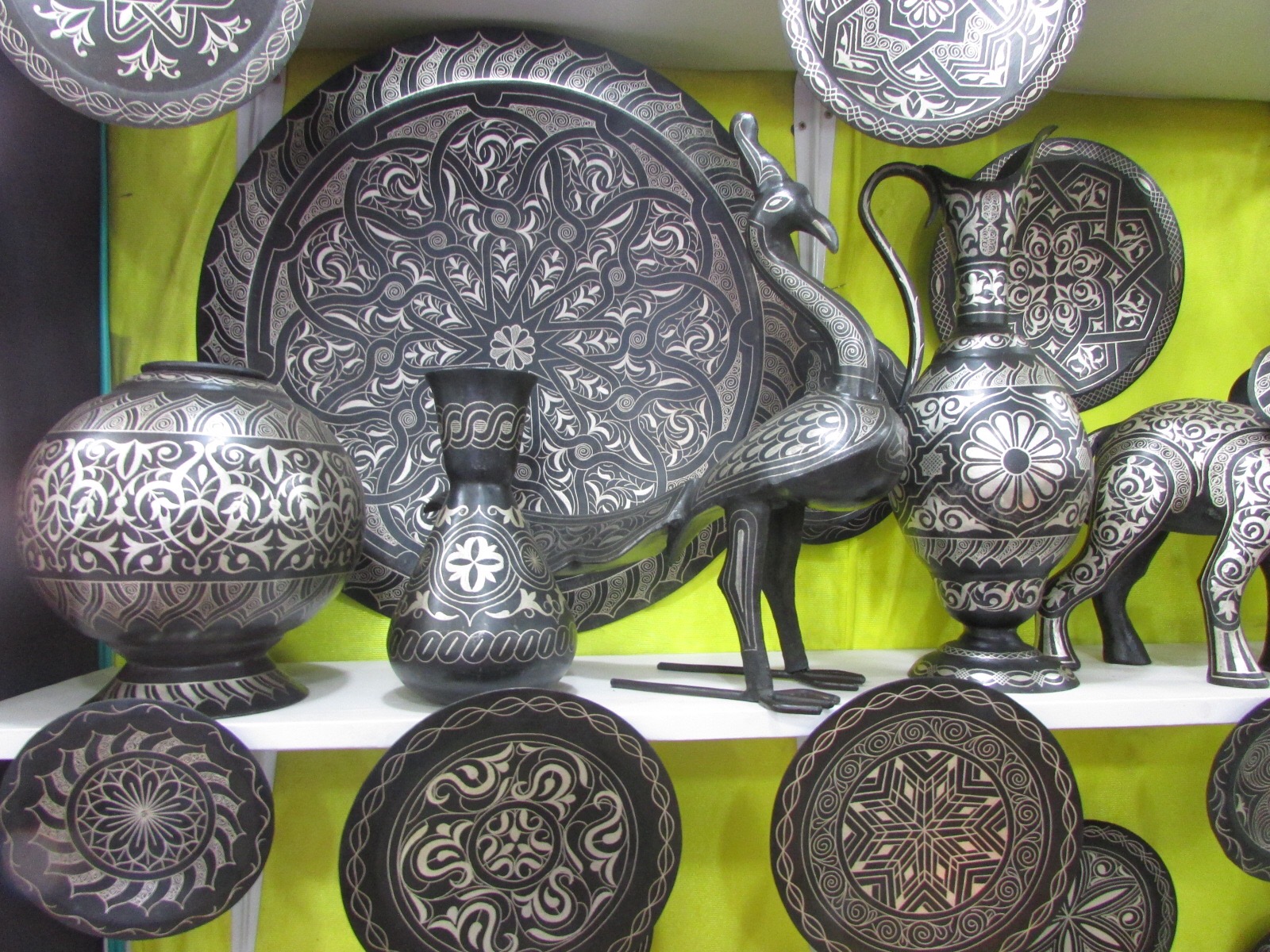
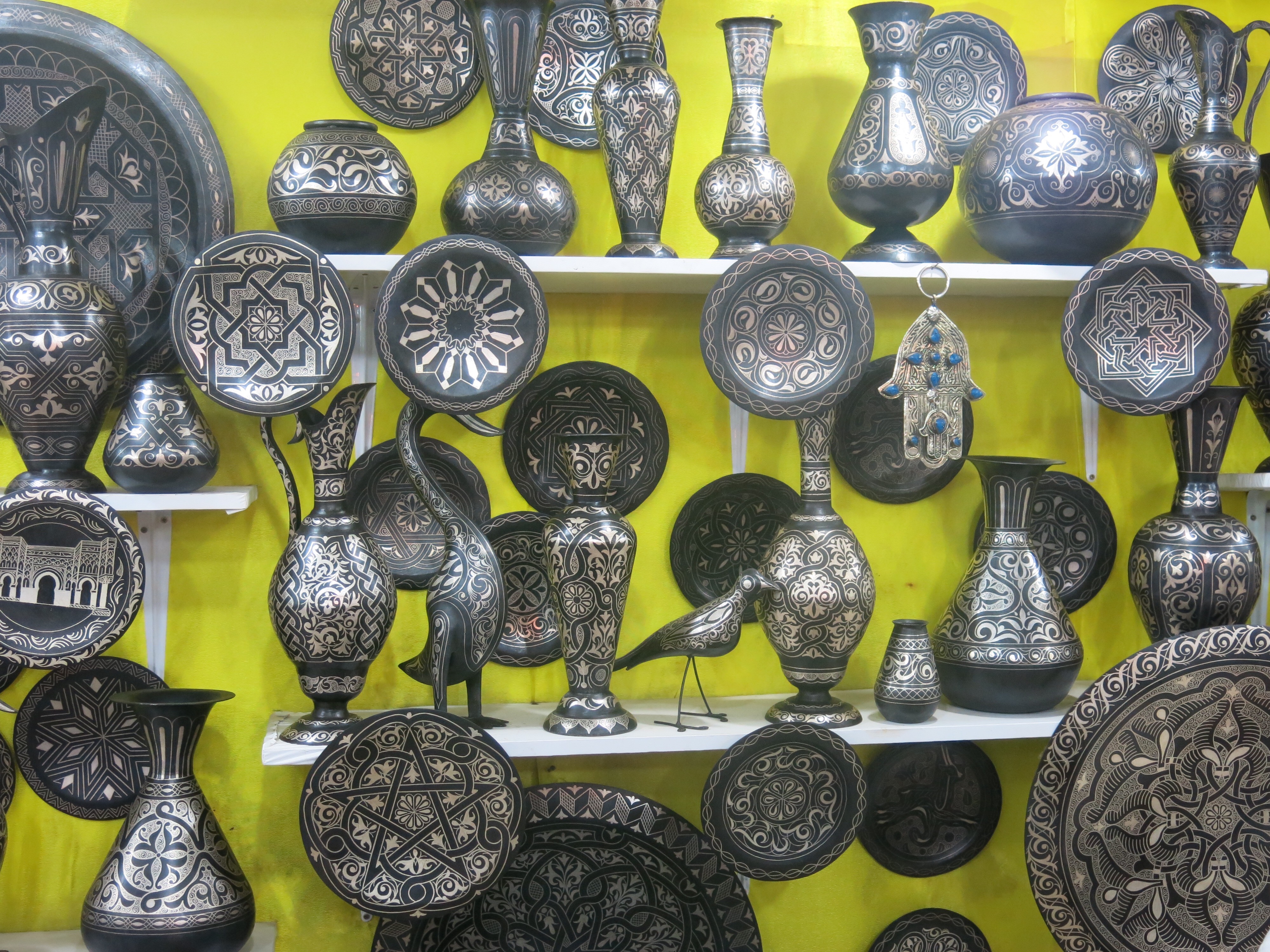
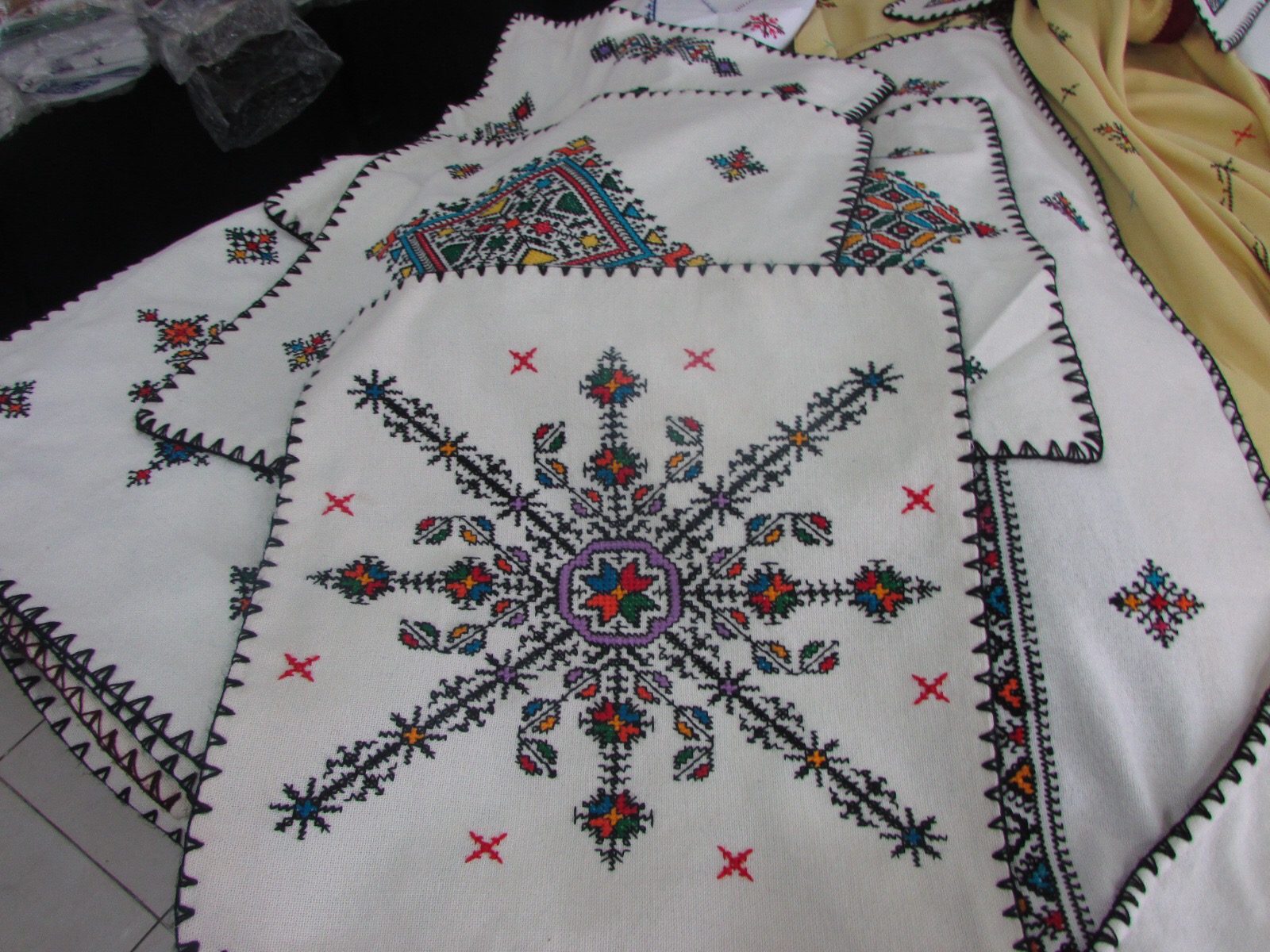
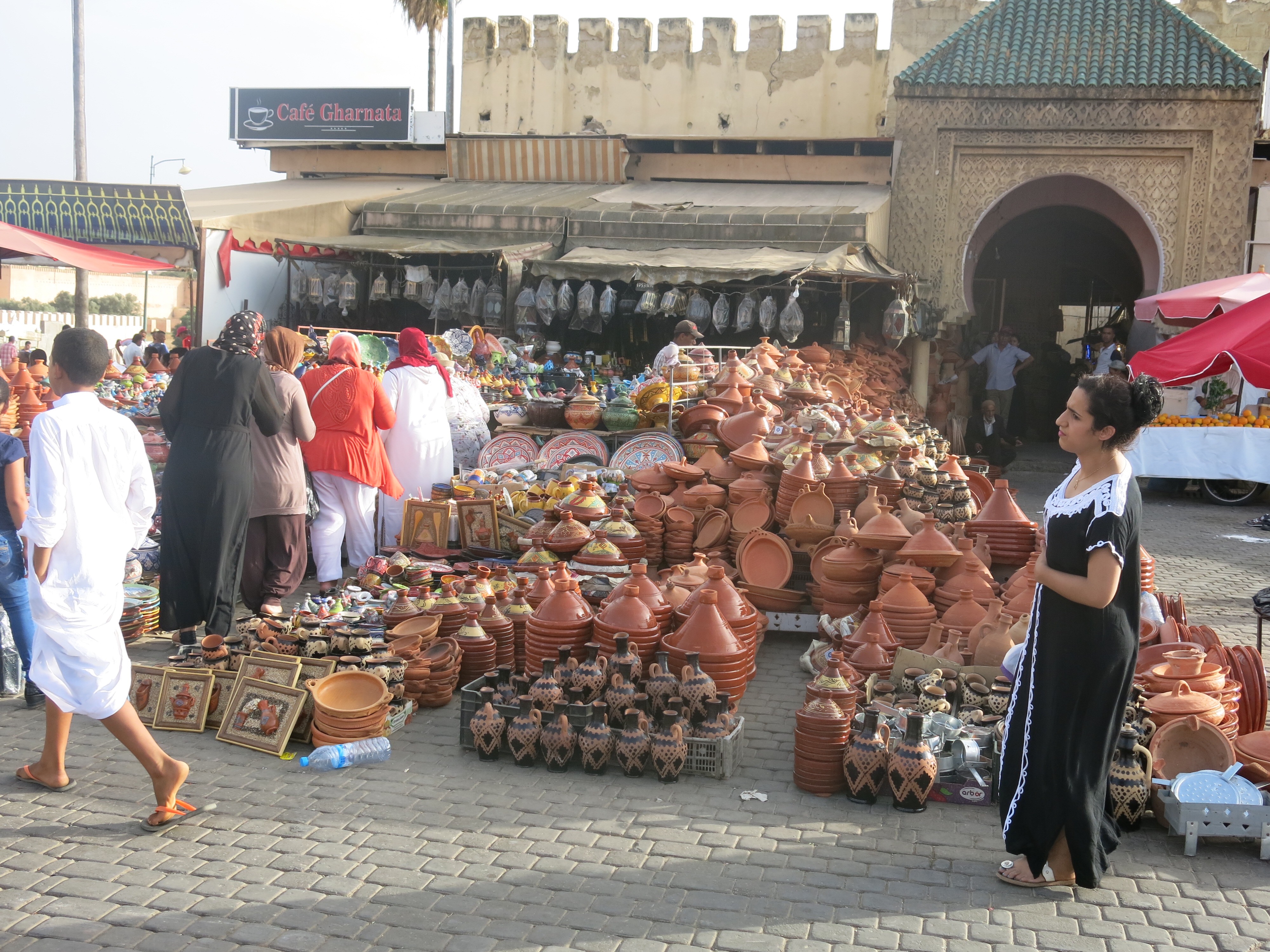
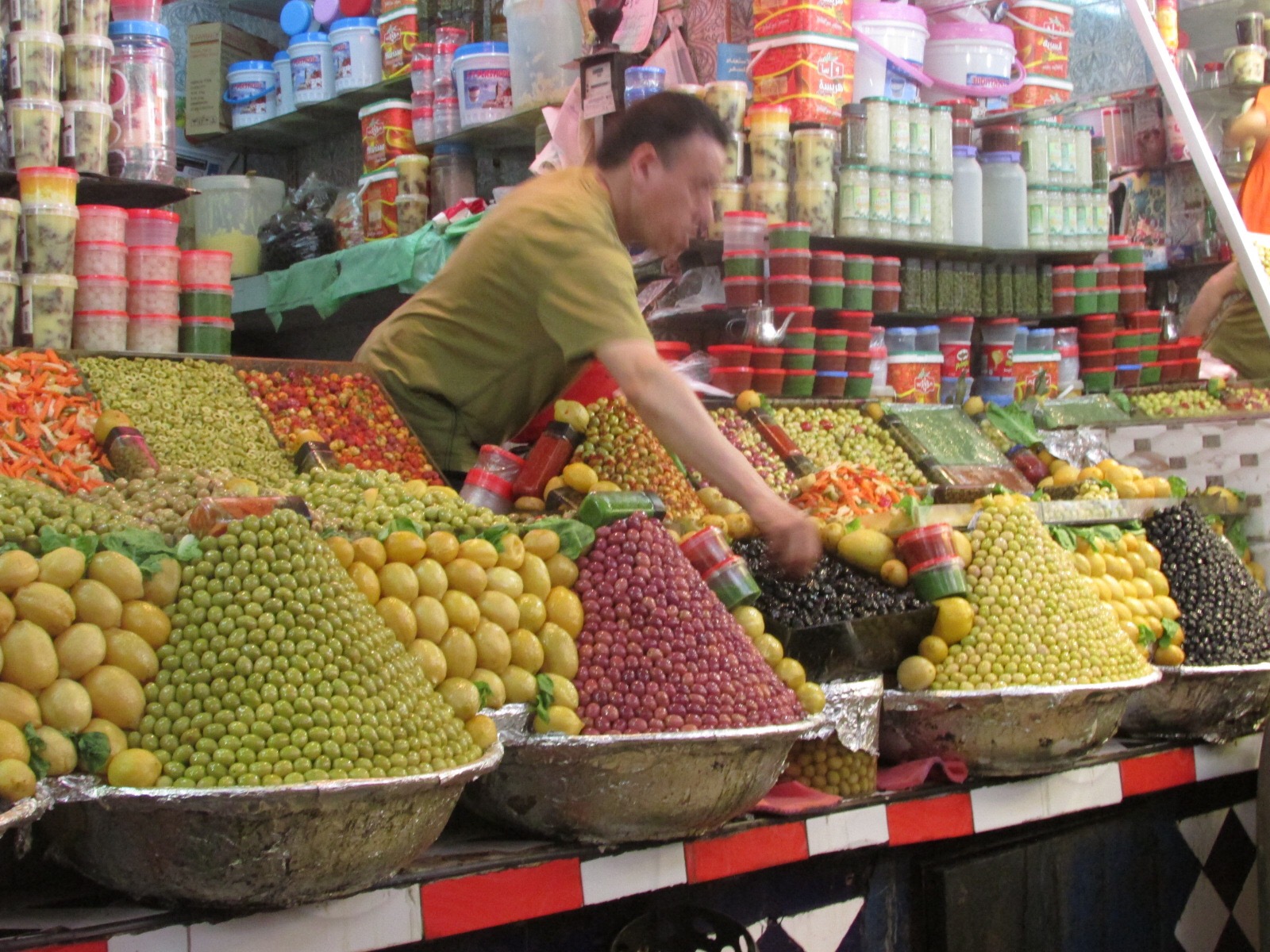
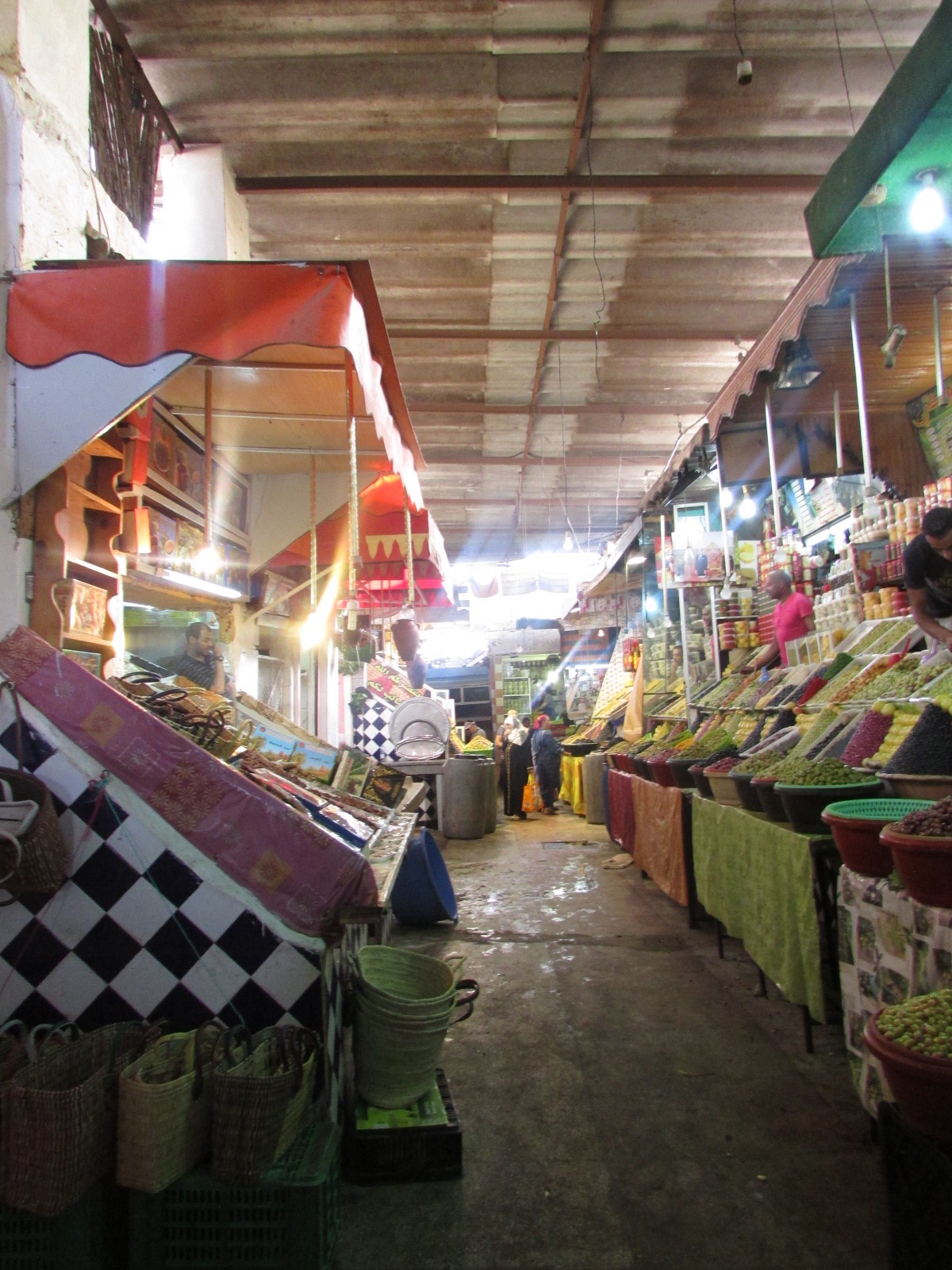
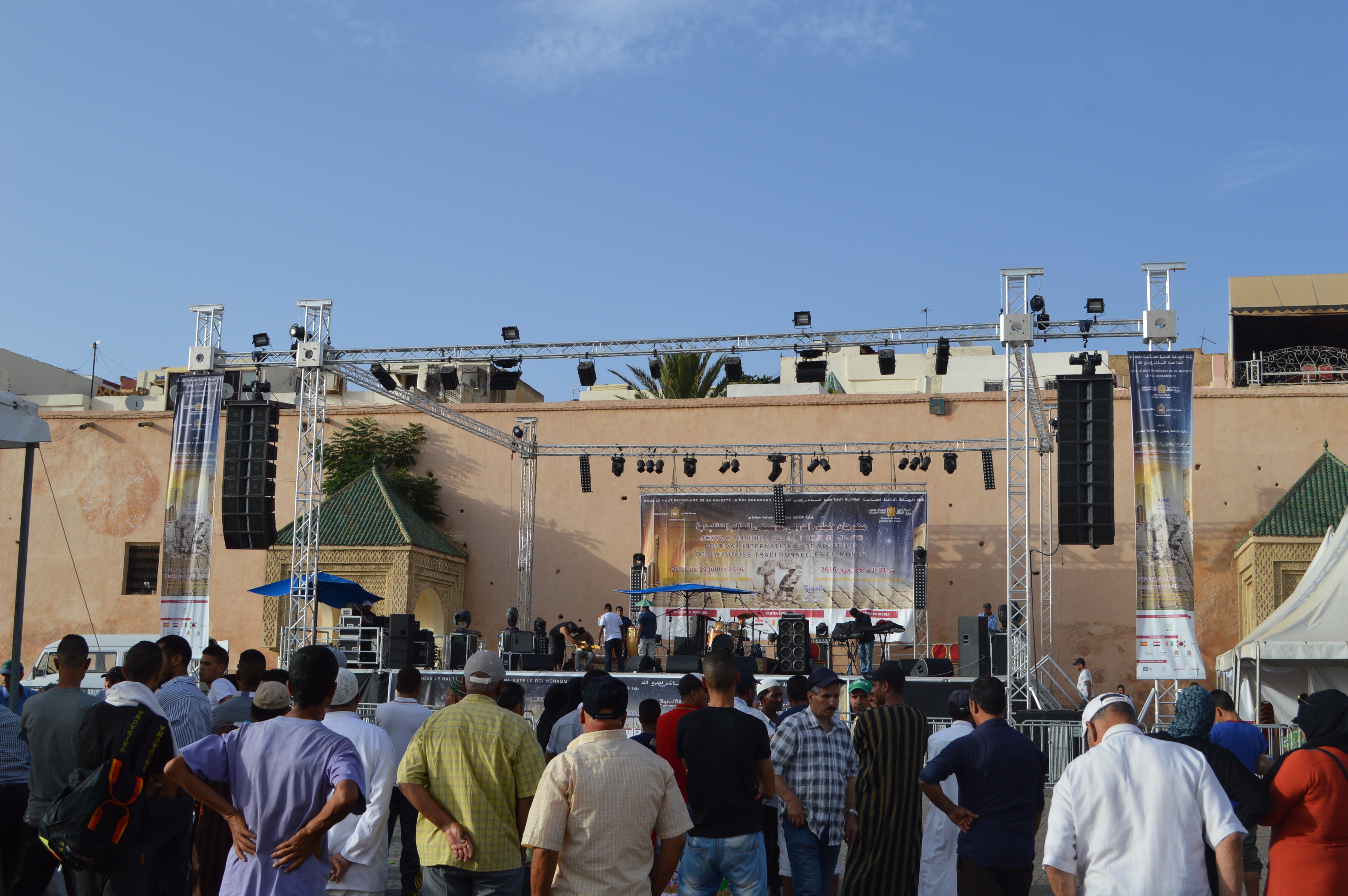
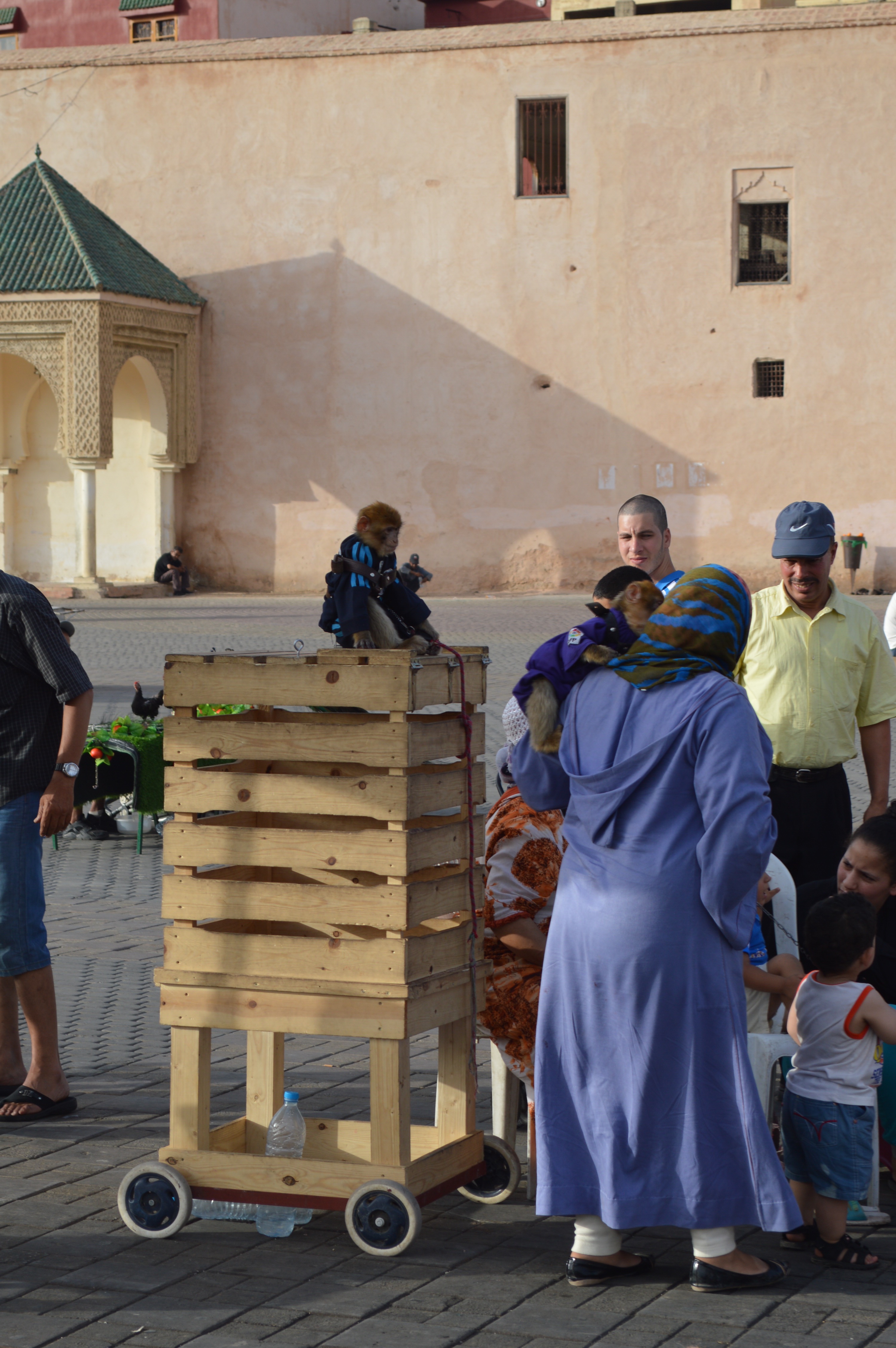
Lastly we headed into the market. All the sights, smells and sounds mingled together in the tiny streets in a way that is quite difficult to describe in words. To start with, the square there were dressed up monkeys, Shetland ponies and peacocks. Once I’m the market there were swarms of bees all over the piles and pile of food, all kinds meat (also covered with bugs) hanging from hooks/lying around as well as chickens and rabbits just…waiting to be killed. Can’t say I loved the experience, but it was interesting. After that we went back on the van and headed to our hotel for the night. Fairly exhausted from our whirlwind, sight-seeing day, we decided to have a supermarket dinner back at the hotel and turn in for the night to rest up for our adventures tomorrow!
 stefanysees